Testing Brazilian Power Supplies
Presenting partial test results from power supplies included in a LinusTechTips video.

If you're reading this article then you likely have the luxury of opening up Amazon or Newegg and selecting components from a variety of familiar, (arguably) reputable brands at (relatively) reasonable prices. This is not the case for customers and PC enthusiasts in many regions around the globe.
The LinusTechTips YouTube channel recently published a video exploring two PC builds with components available in Brazil, where it can be prohibitively expensive to import many brands and models. This video included LTT Labs test results for two Fonte power supplies, which are presented in more detail below.
The two power supplies selected for the video are the Fonte BRX Rainbow RGB 650 W(approximately $40 USD) and the Fonte Duex Pulse Pro 800 W(approximately $90 USD). The BRX 650 W represents the cheapest option that they could find on the market while the Pulse Pro 800 W is a more expensive option, something you might buy for a mid-tier computer. This testing shows the difference that $50 USD can make.
Below are power efficiency, load regulation, voltage ripple, and brownout/hold-up test results from partial testing of the two power supplies. I recommend watching the video for a more wholistic evaluation of the systems; this article will focus on presenting our test results.
The power supplies were tested with our standard equipment and procedure, though we only conducted a subset of the tests. Full results for more accessible power supplies you're likely to purchase can be found here!
Efficiency
Fonte BRX Rainbow RGB 650 W
Fonte Duex Pulse Pro 800 W
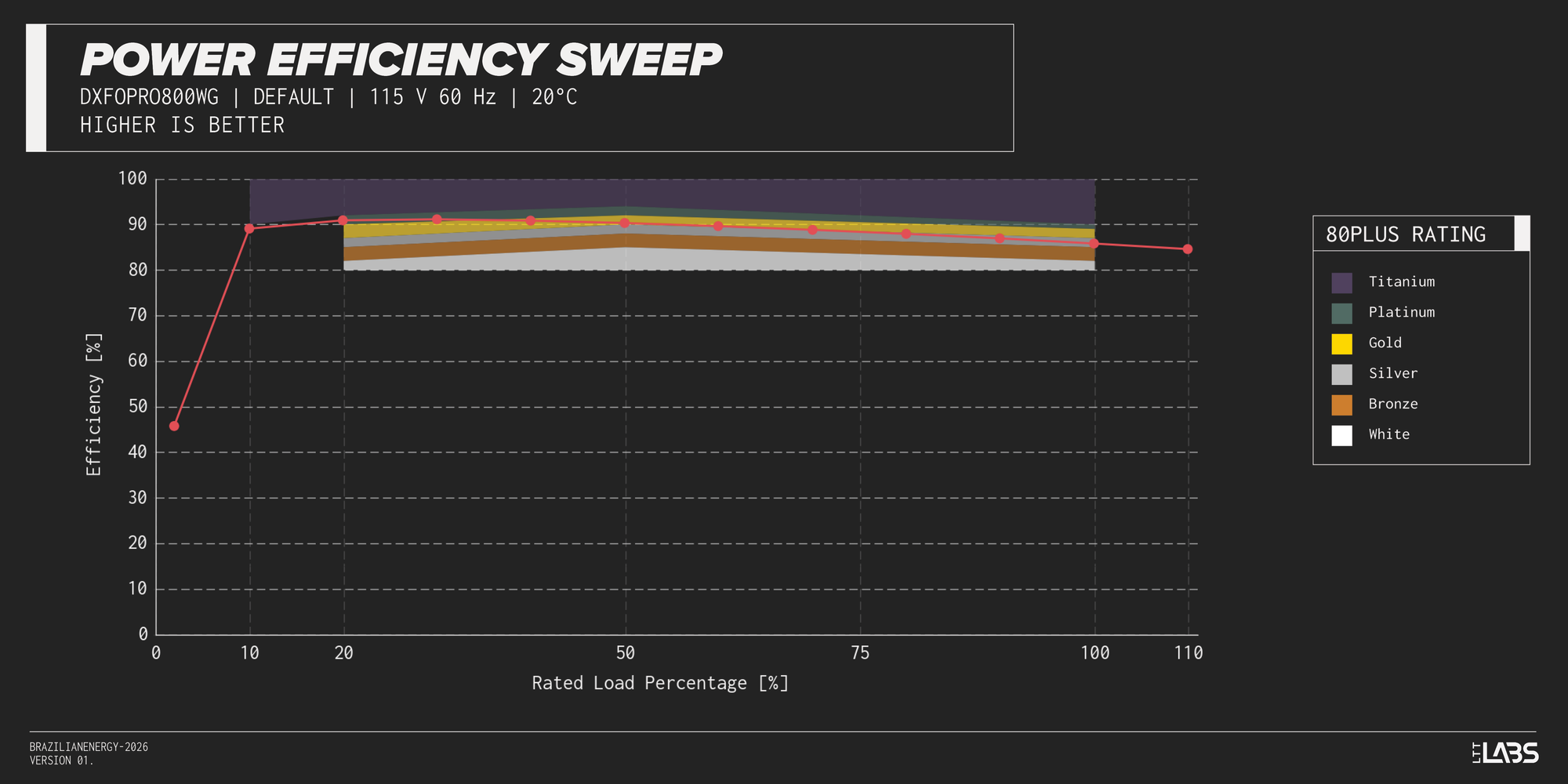
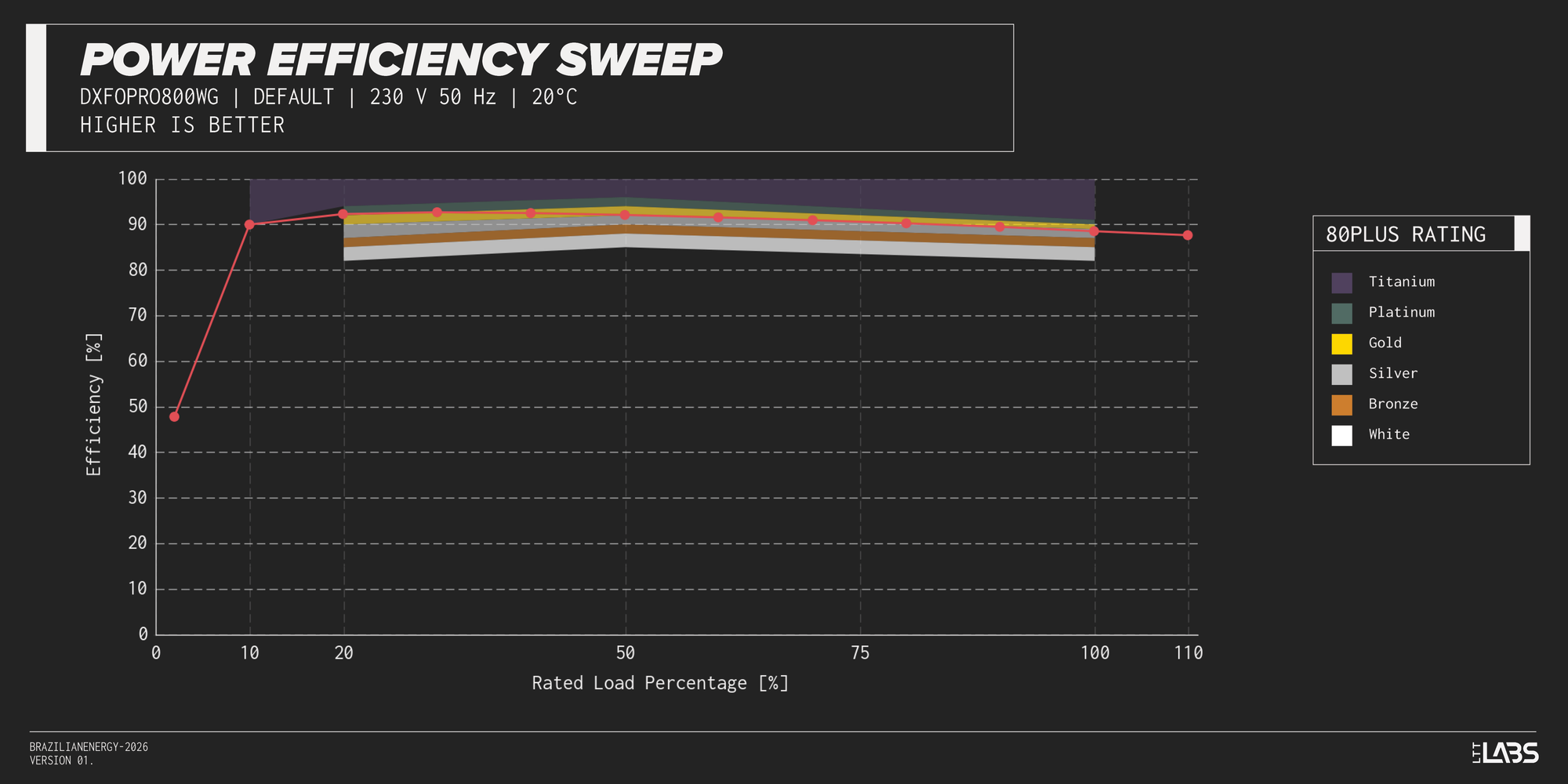
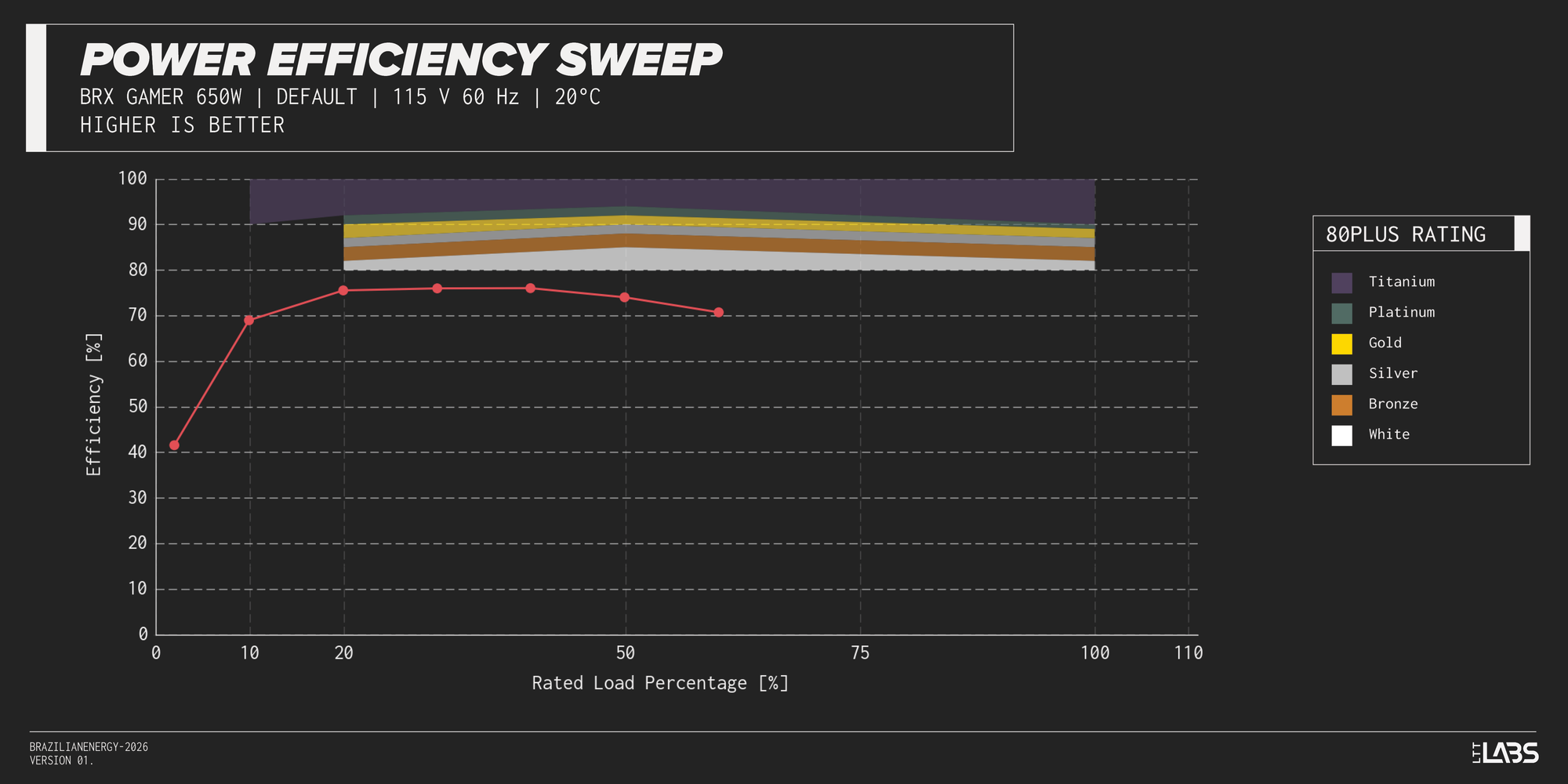
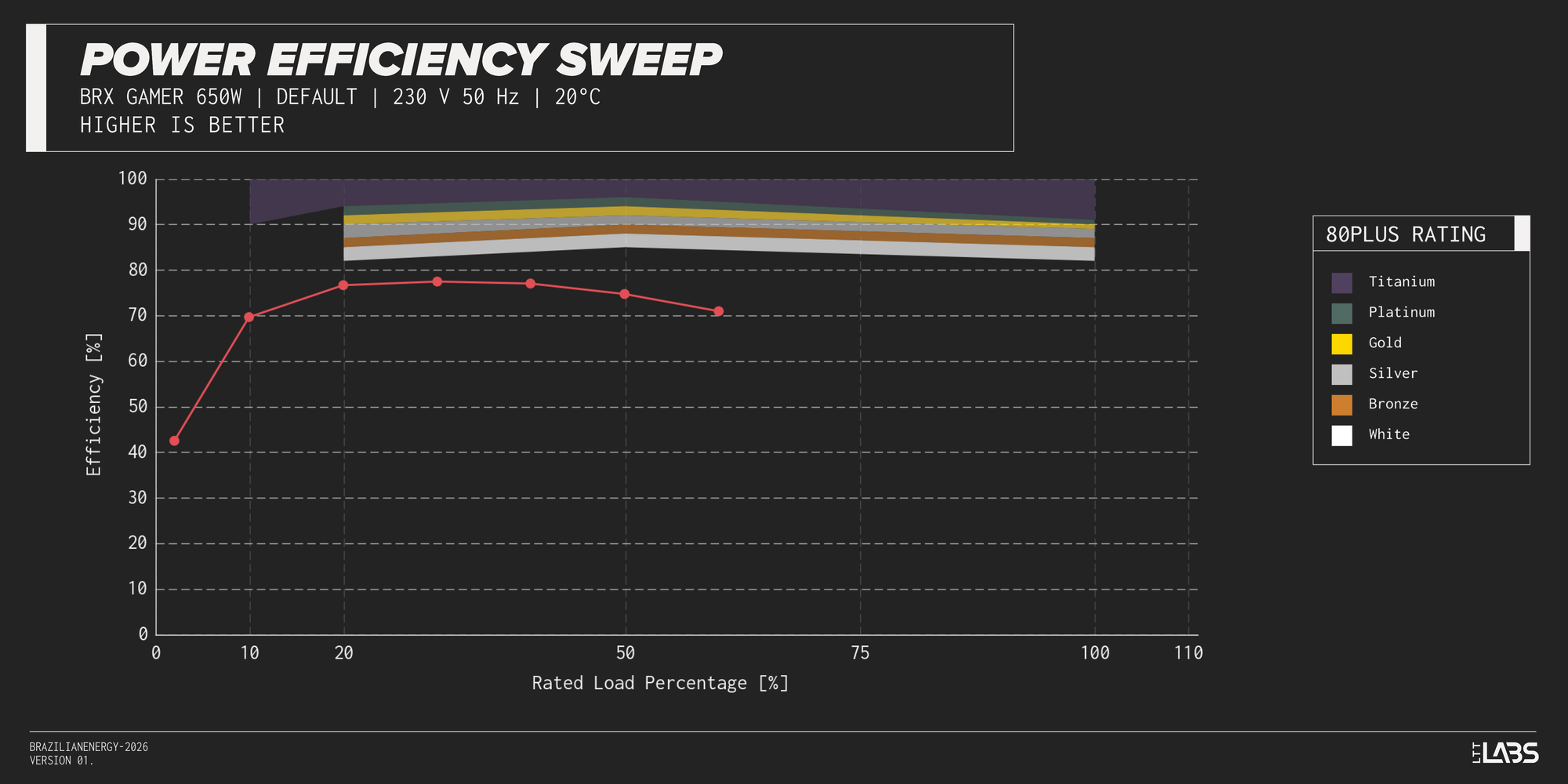
The output of the BRX 650 W was limited to {{tooltip: At least with our test equipment/procedure. There is a small chance that it was interacting poorly with the equipment despite efforts to adjust the setup.}}under 400 W{{/tooltip}}, and the peak efficiency was below 80%. This level of efficiency is passable if the power supply could output the full rated load. The Pulse Pro 800 W performed far better. While our testing didn't quite reach the measurements of it's valid Cybenetics Platinum rating, the efficiency was well within the 80PLUS Gold and Silver range.
The 2% load efficiency of the Pulse Pro is quite low, but efficiency is less critical in the extremely low wattage range. The total energy wasted will be much lower than if the power supply had poor efficiency at high wattages.
We also noticed that the BRX 650 W has an extremely low power factor. It peaked at 0.603, while typically operating with a power factor between 0.5 and 0.6. A good power supply will have a power factor over 0.9 for loads above 10%. A low power factor won't have an effect on your equipment or power bill, but equipment with a low power factor can be detrimental to the power grid.
Load Regulation and Ripple
Fonte BRX Rainbow RGB 650 W
Fonte Duex Pulse Pro 800 W
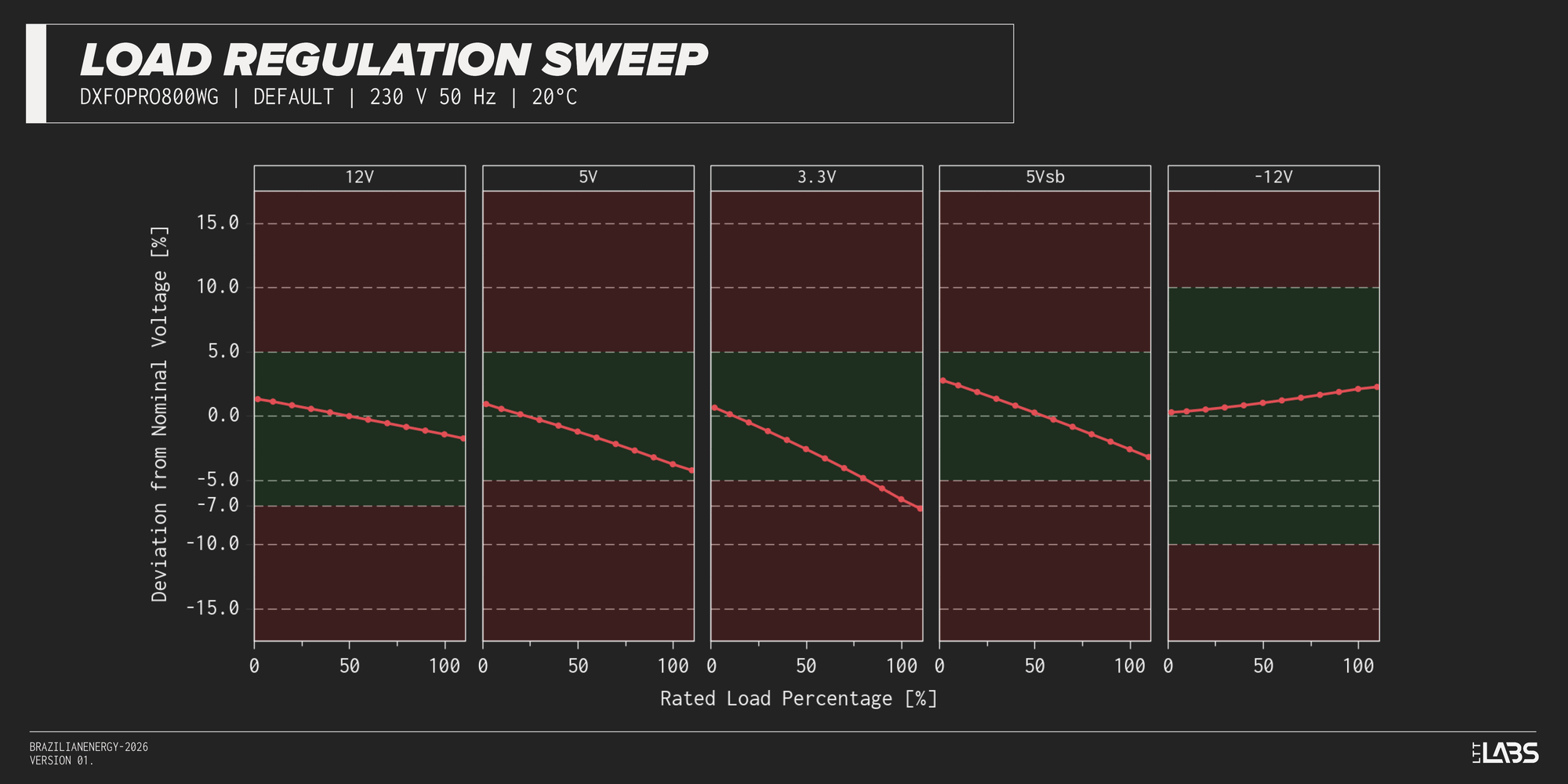
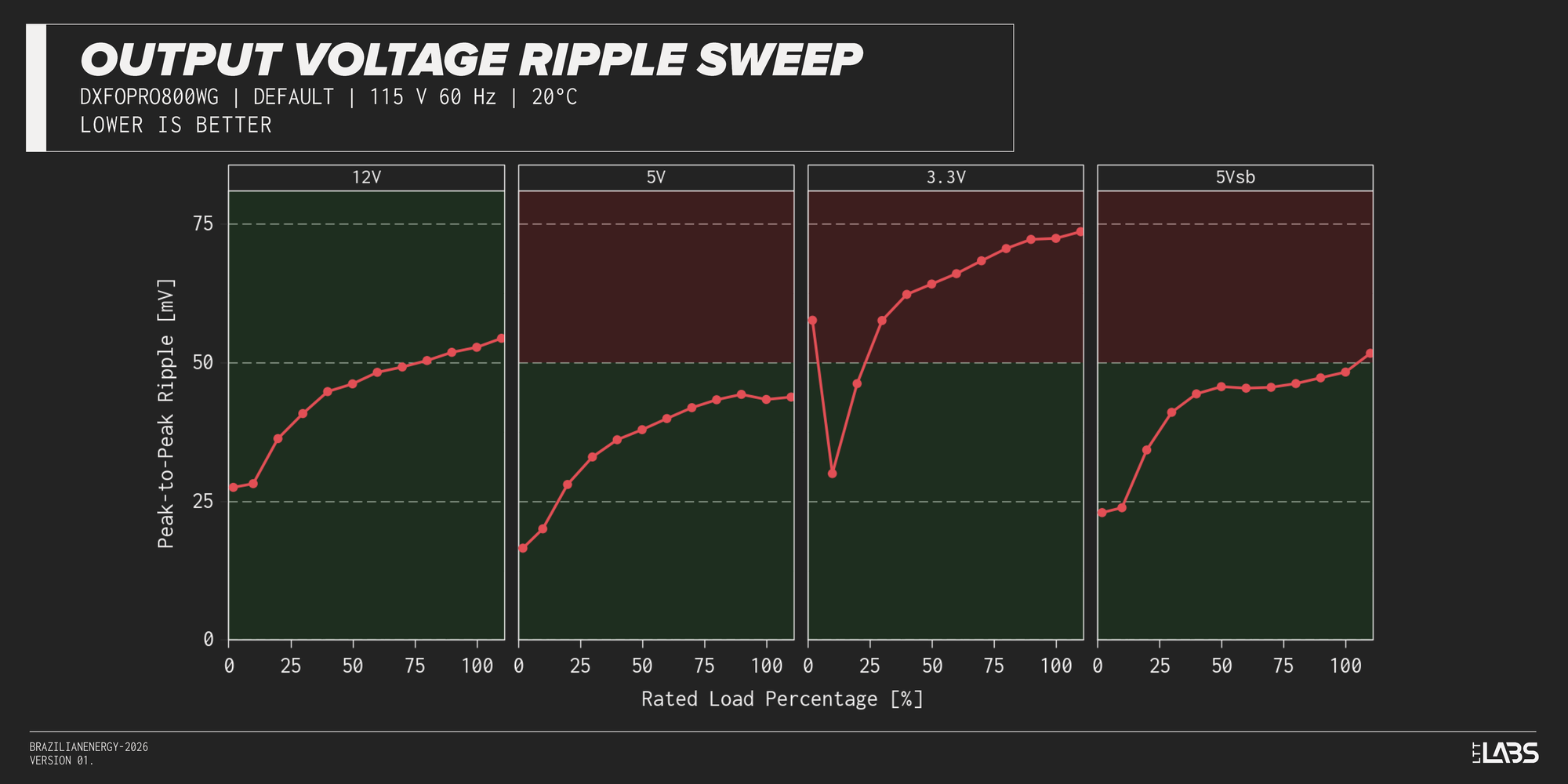
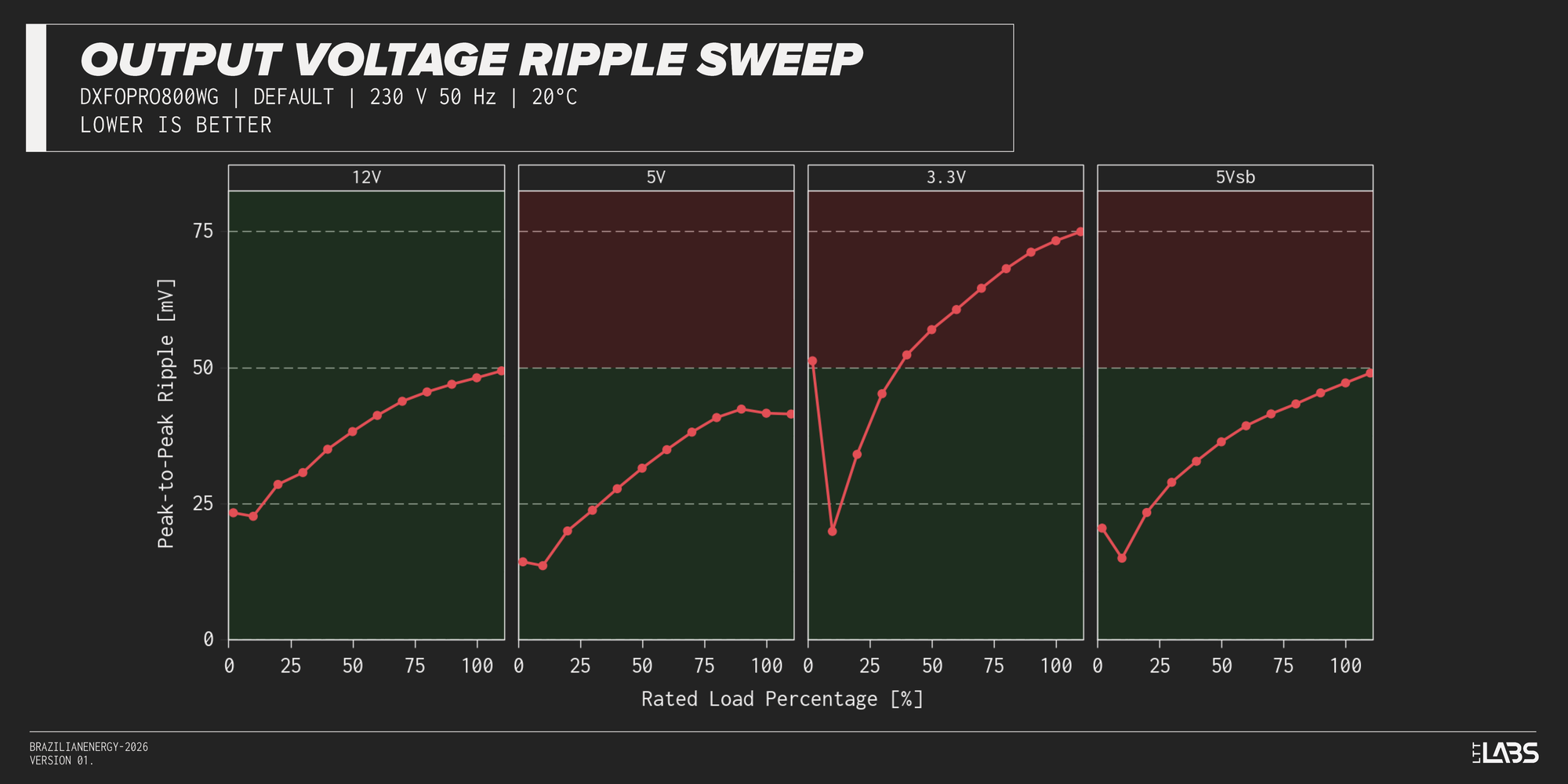
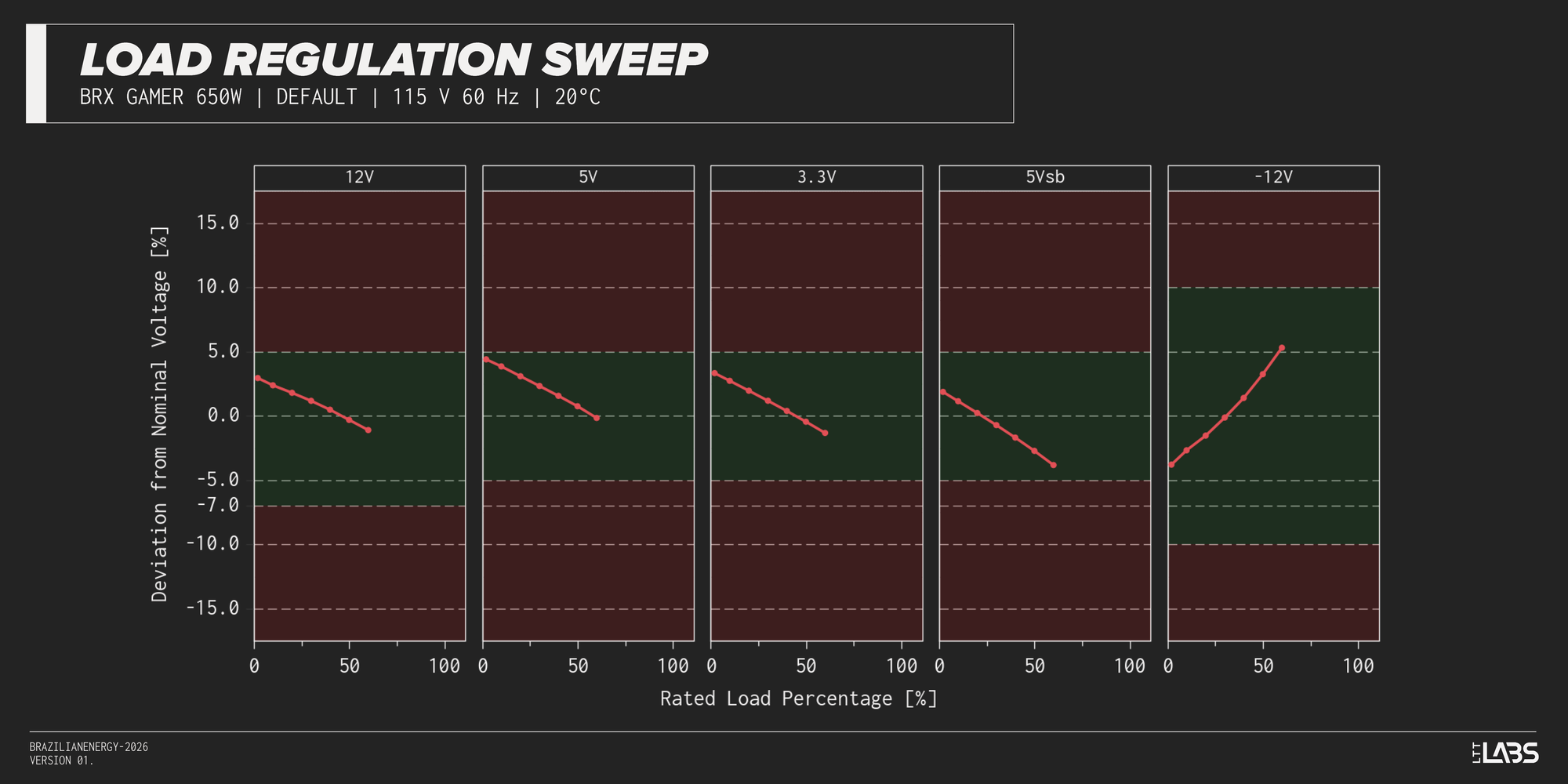
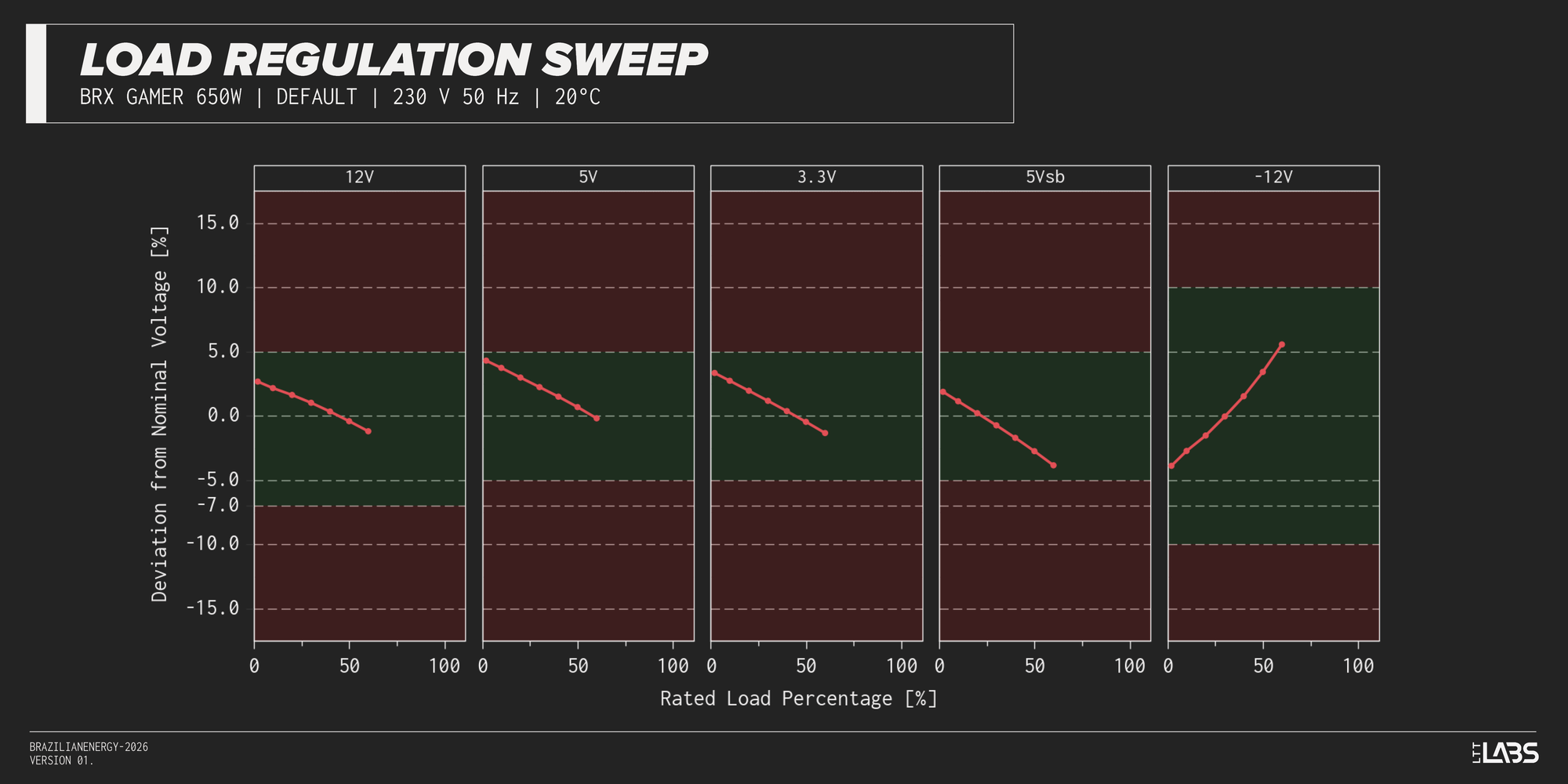
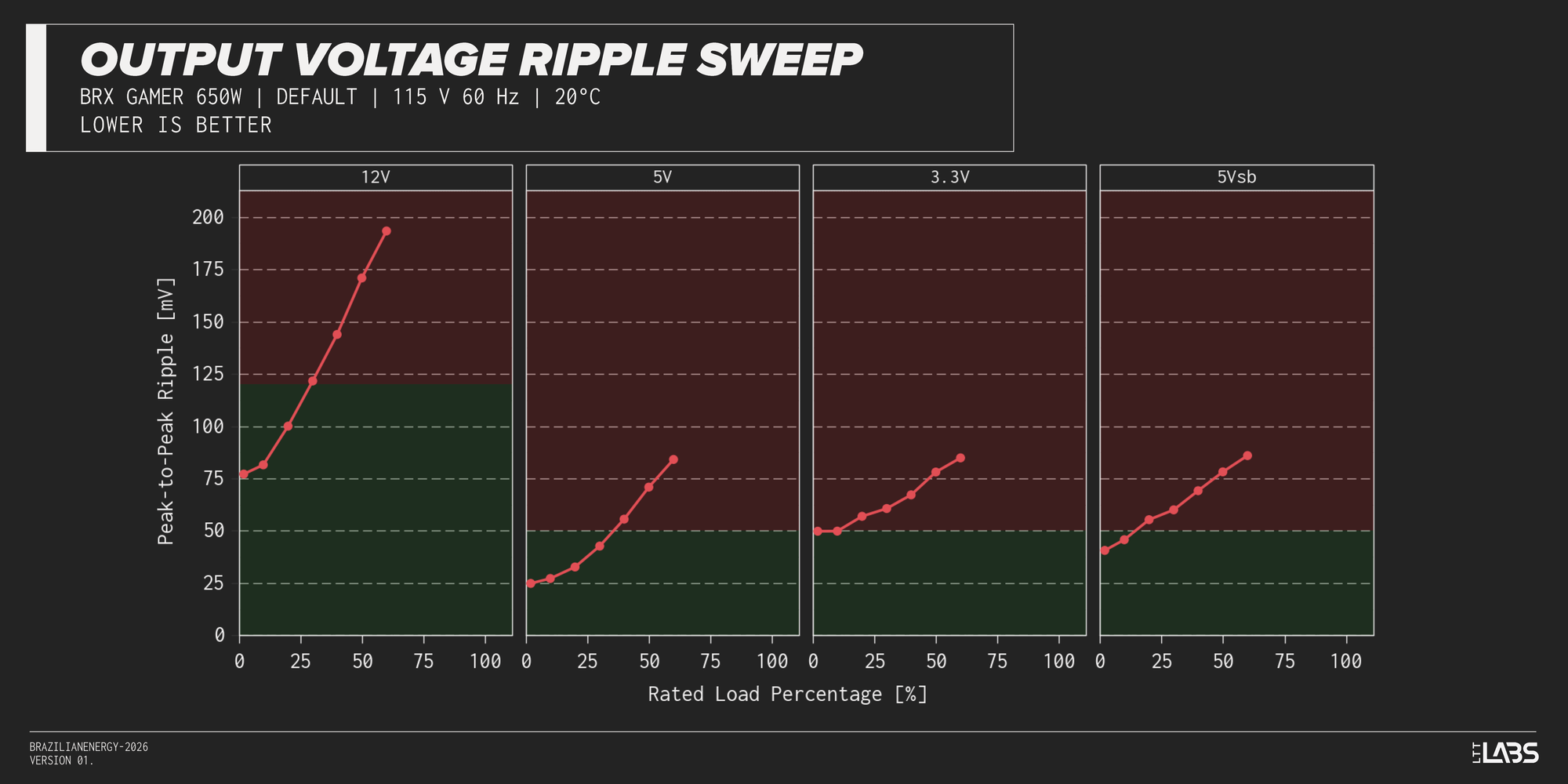
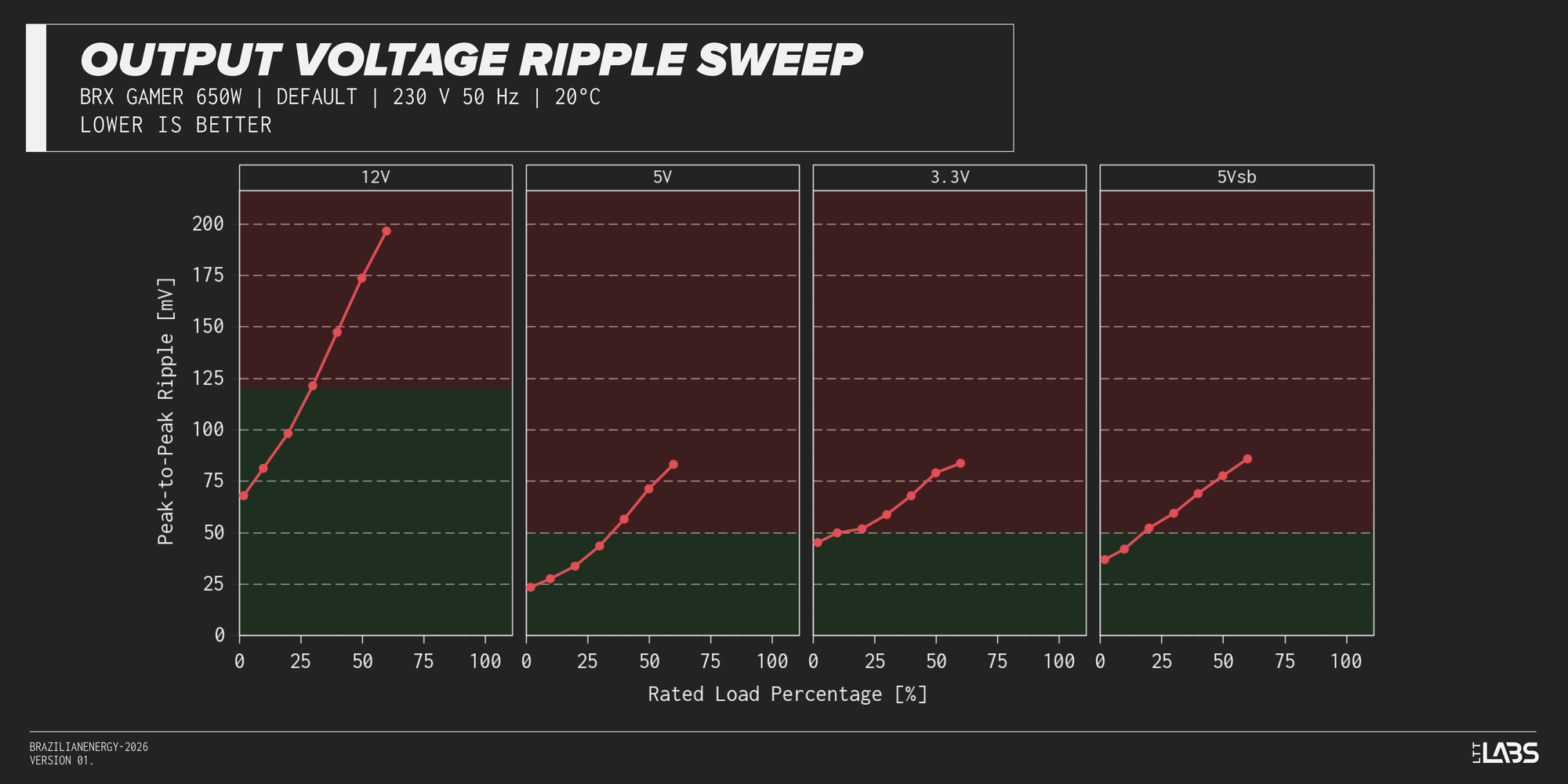
We see that the BRX 650 W was again unable to sustain an output of more than 400 W, 60-70% of it's load. Before it failed, all of the output voltages were within ATX limits while the output voltage ripple exceeded the limits, and was worsening as the output power increased. This power supply may be able to serve a lower power and non-critical system, but it is not suitable for performance critical uses.
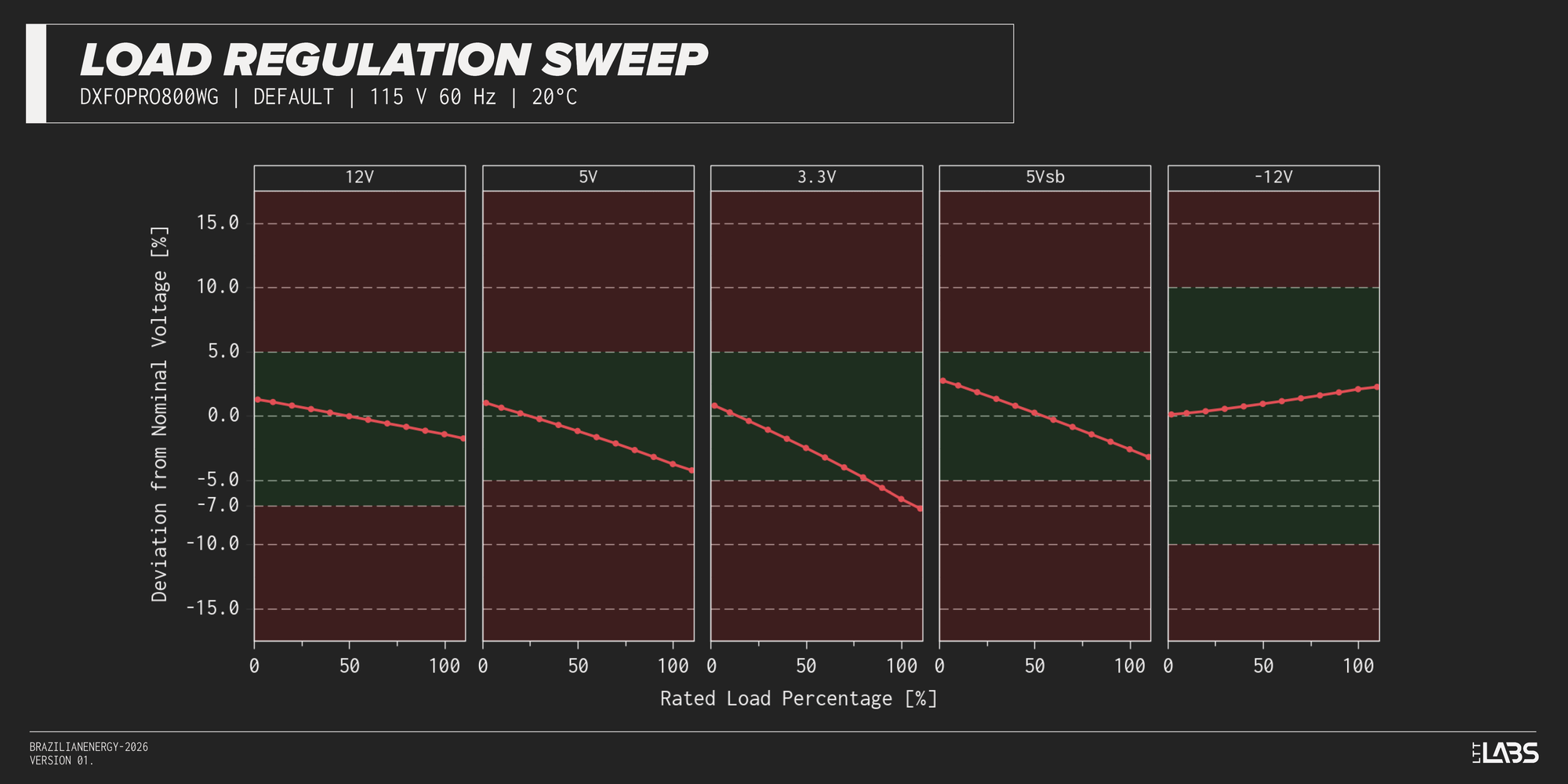
The Duex 800 W performed moderately well in both tests, with only the 3.3V rail exceeding ATX limits in load regulation and output ripple. This is not a dealbreaker as most computer components are supplied by the 12V rail, which had elevated output ripple, but is completely within specification.
Brownout
Fonte BRX Rainbow RGB 650 W
Fonte Duex Pulse Pro 800 W
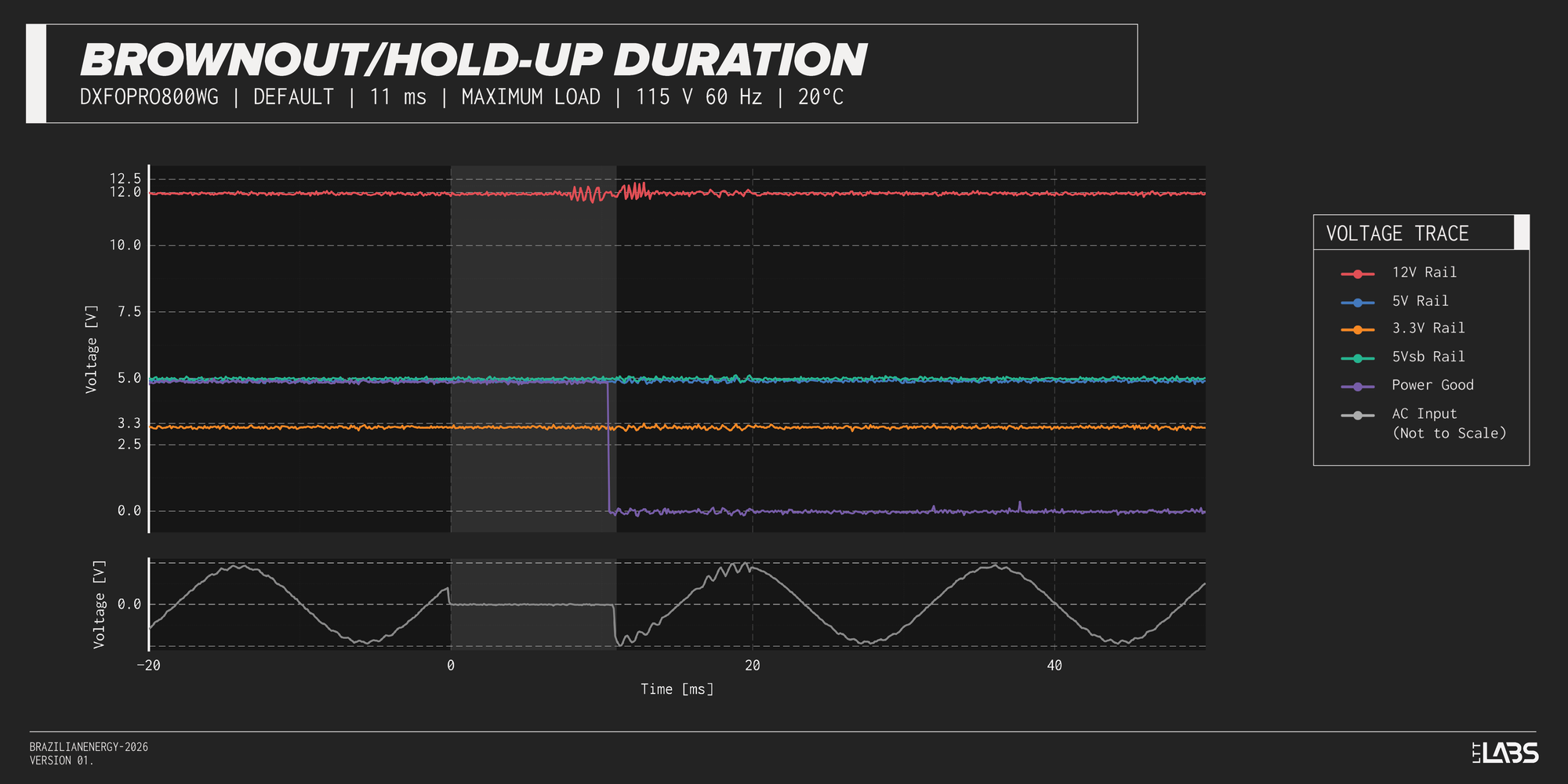
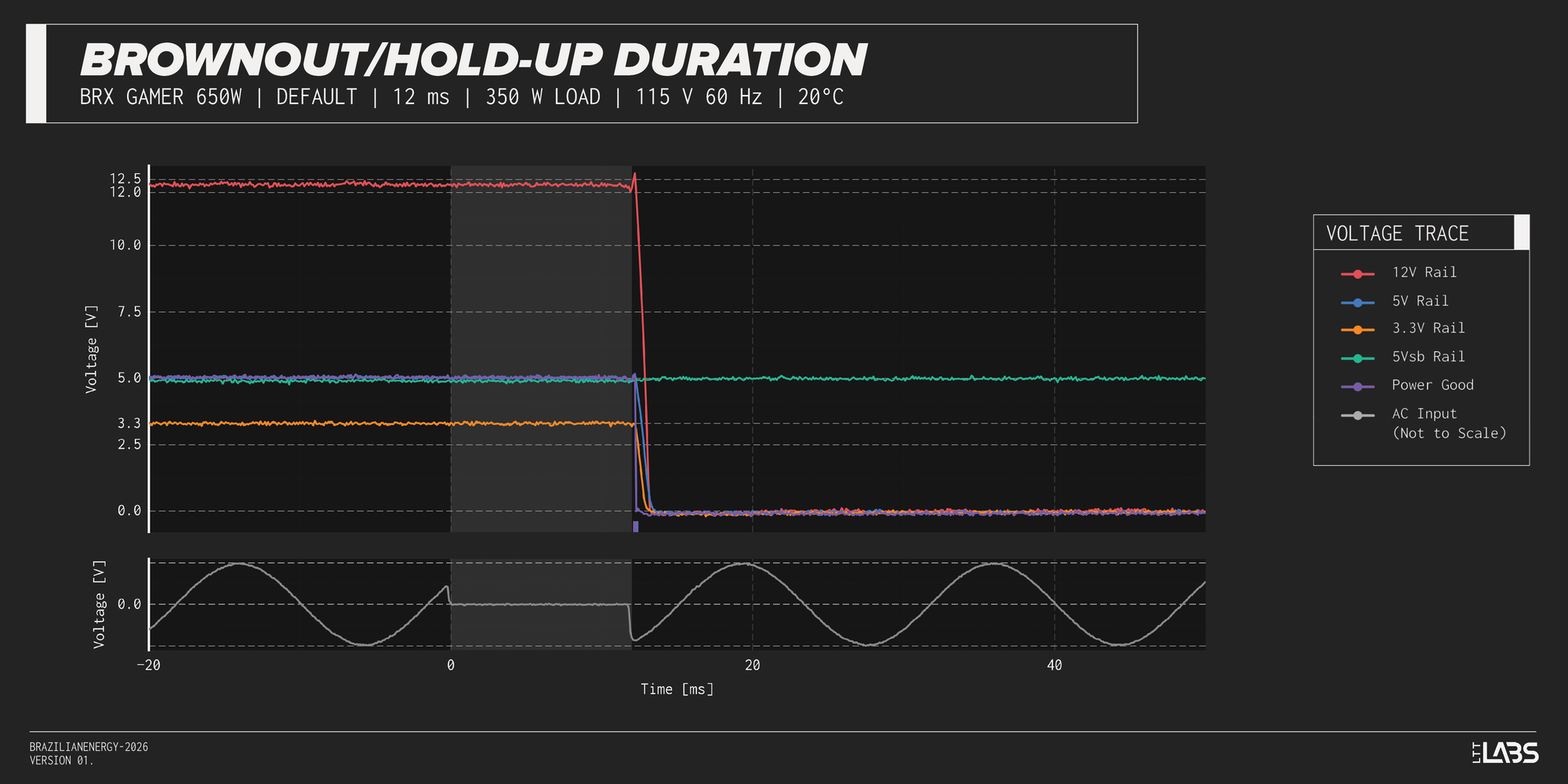
The Pulse Pro 800 W only sustained 10 ms brownouts/dropouts when operating at 100% load. The BRX 650 W was able to sustain an 11 ms brownout, but as with the other tests it was only operated at 350 W of it's full 650 W rating.
Both of these results are lower than desired, but the Pulse Pro 800 W performs as expected for a budget, relatively low wattage unit. It is typical to see 12-15 ms holdup times, which should provide more resilience to low quality power.