Intel Arrow Lake Refresh
Intel has released the Core Ultra 5 250K Plus and the Core Ultra 7 270K Plus and spoiler, they’re great. We conducted a suite of tests for the LinusTechTips video and included them here.

Intel has released the Core Ultra 5 250K Plus along with the Core Ultra 7 270K Plus and spoiler, they’re great. We conducted all of the tests below for inclusion in the LinusTechTips video on the processors. This article includes all of the same results, but will let you read and analyze at your own pace. We highly recommend that you check out that excellent review!
The Refresh
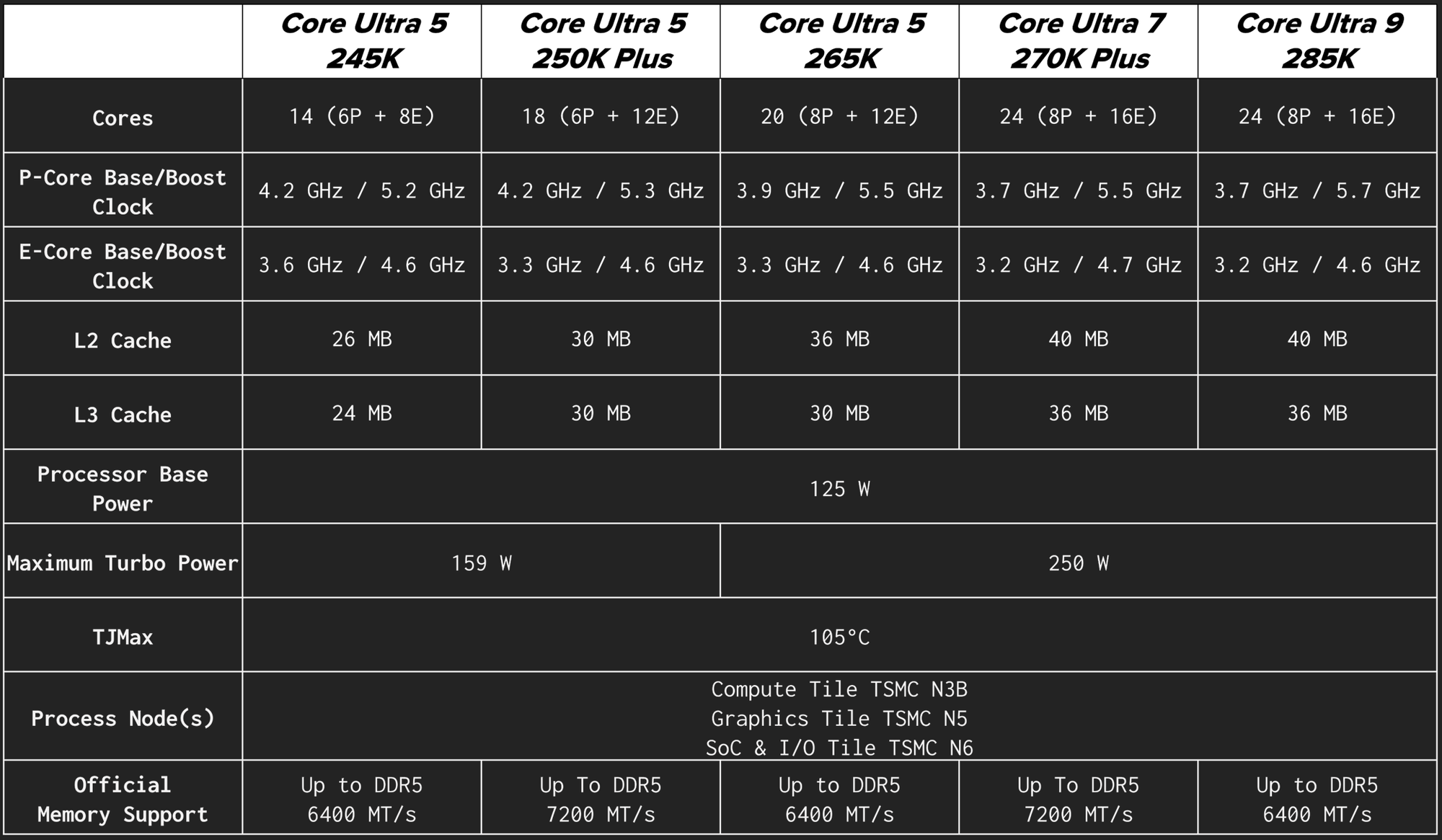
The 250K Plus seems {{tooltip: by name alone}}intended{{/tooltip}} to supplant the Core Ultra 5 245K but it nearly obsoletes both the 245K and the Core Ultra 7 265K. The 265K’s two additional performance cores help it stay relevant. Concerning the Core Ultra 7 270K Plus, it seems Intel didn't cancel the rumored 290K Plus, they merely rebranded it as a lower class product.
This is a welcome move if it means we get a lower price, instead of trying to pass an inferior product as something {{tooltip: looking at you RTX 4080 12GB}}greater than it is{{/tooltip}}. The new Plus SKUs retain the same base and maximum power consumption ratings despite a modest increase to all-core frequencies, a substantial bump to un-core frequencies, and an additional efficiency core island.
We did see the Plus chips chugging a bit more power than their predecessors in our F1 24 and Cinebench 2025 stress test, notably the 250K Plus is pulling more than the 265K and 245K in F1 24.
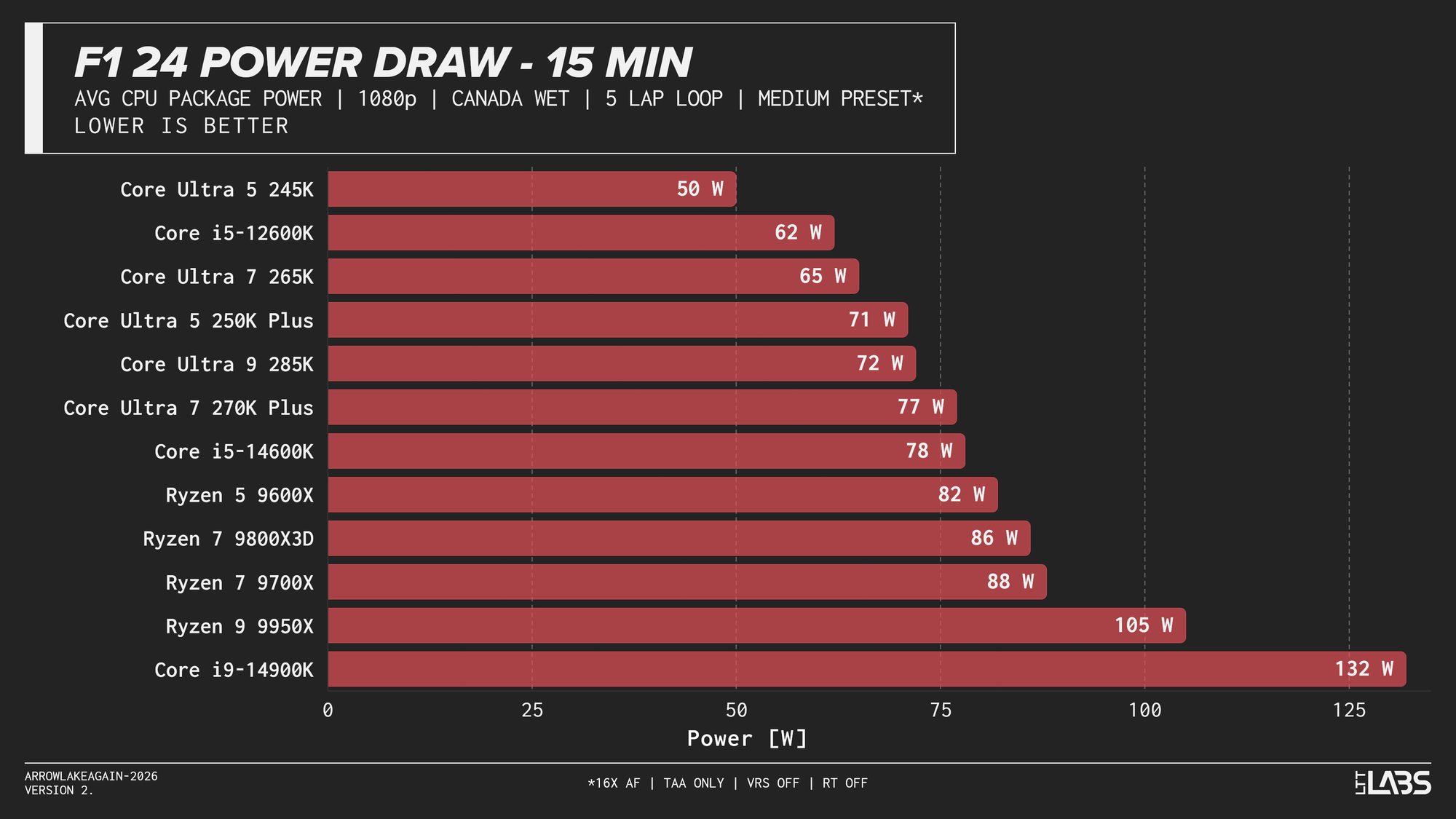
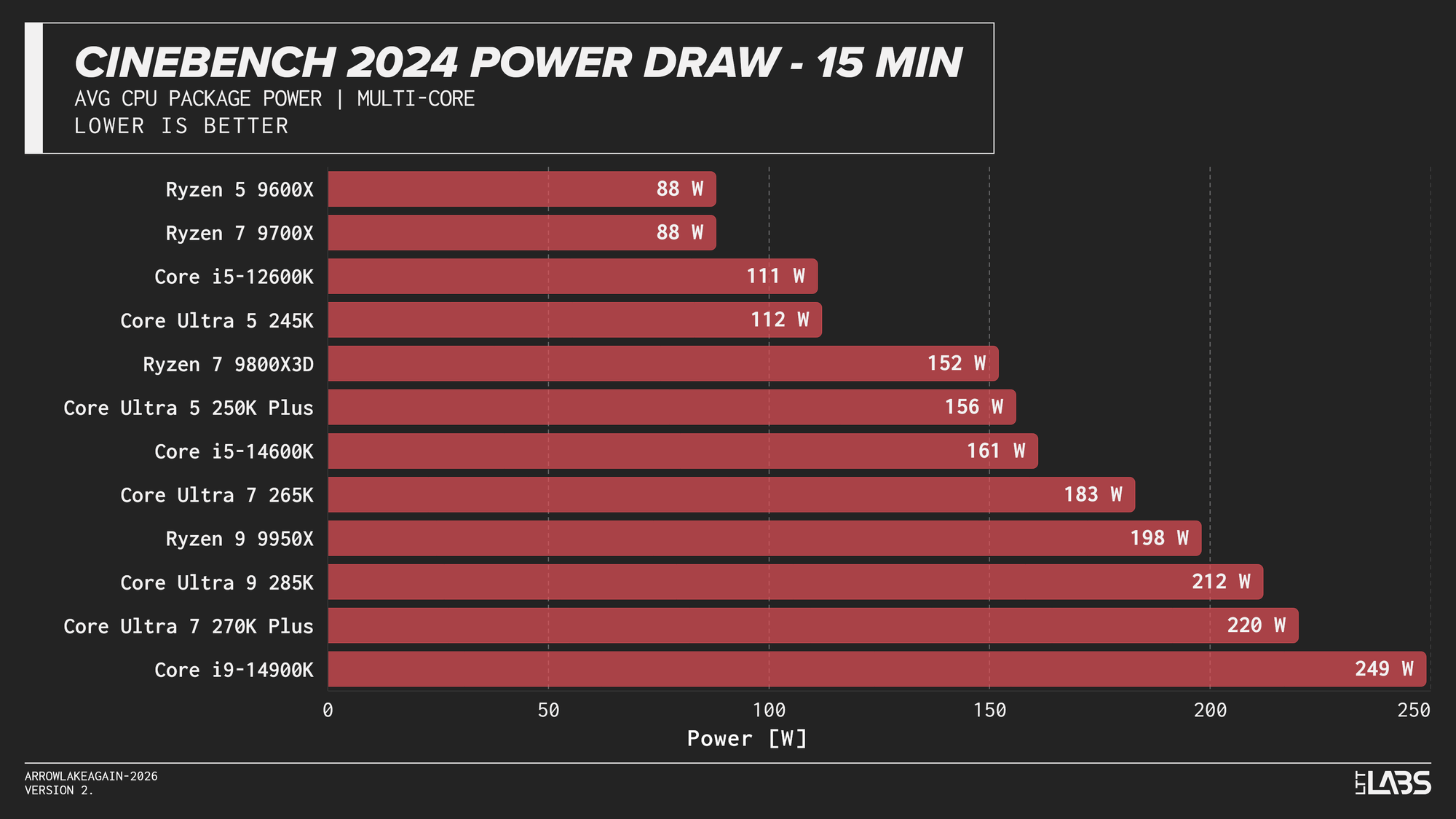
Average Power Draw - 15 minute test
Multi-core, more like Multi-score
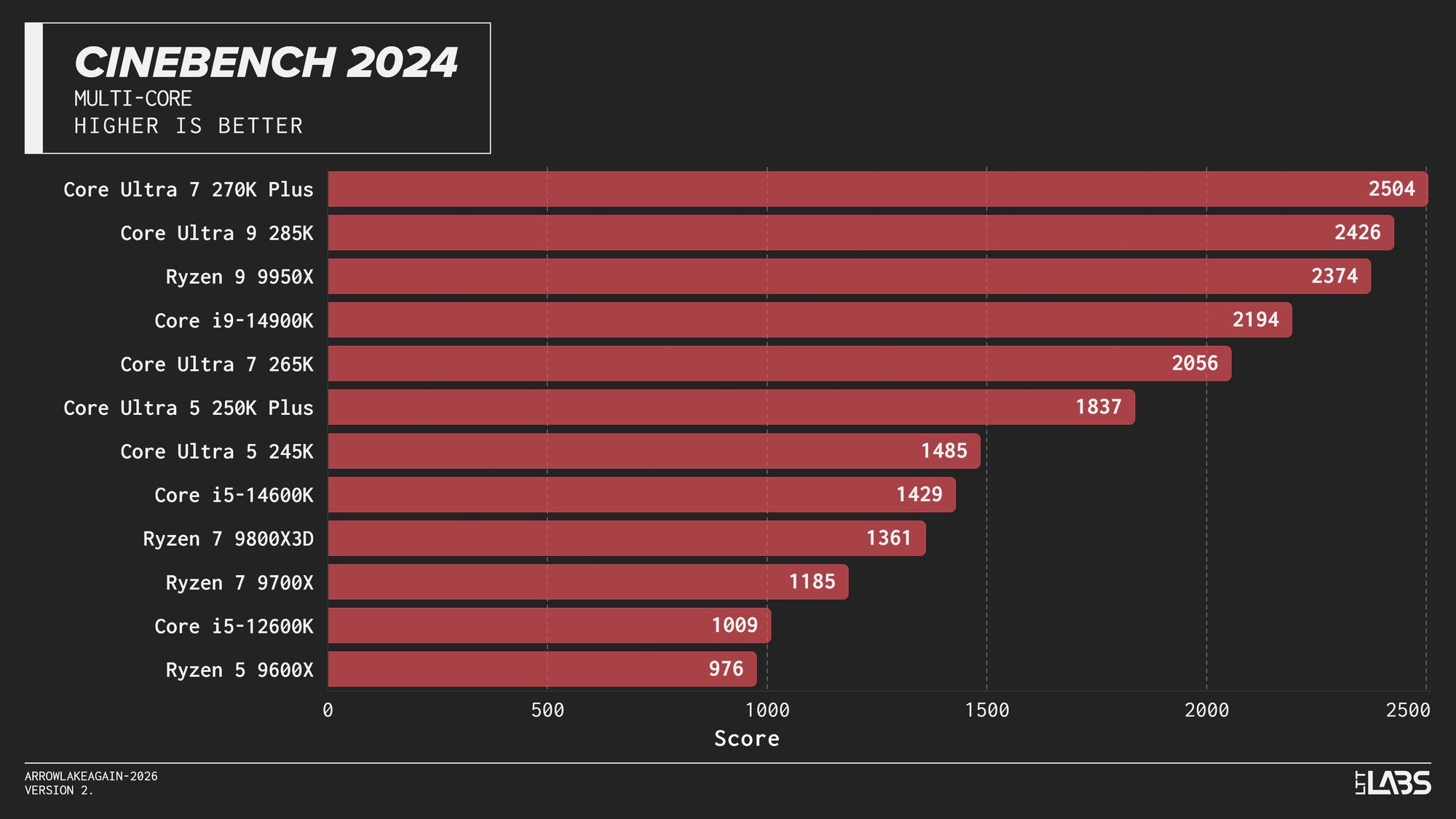
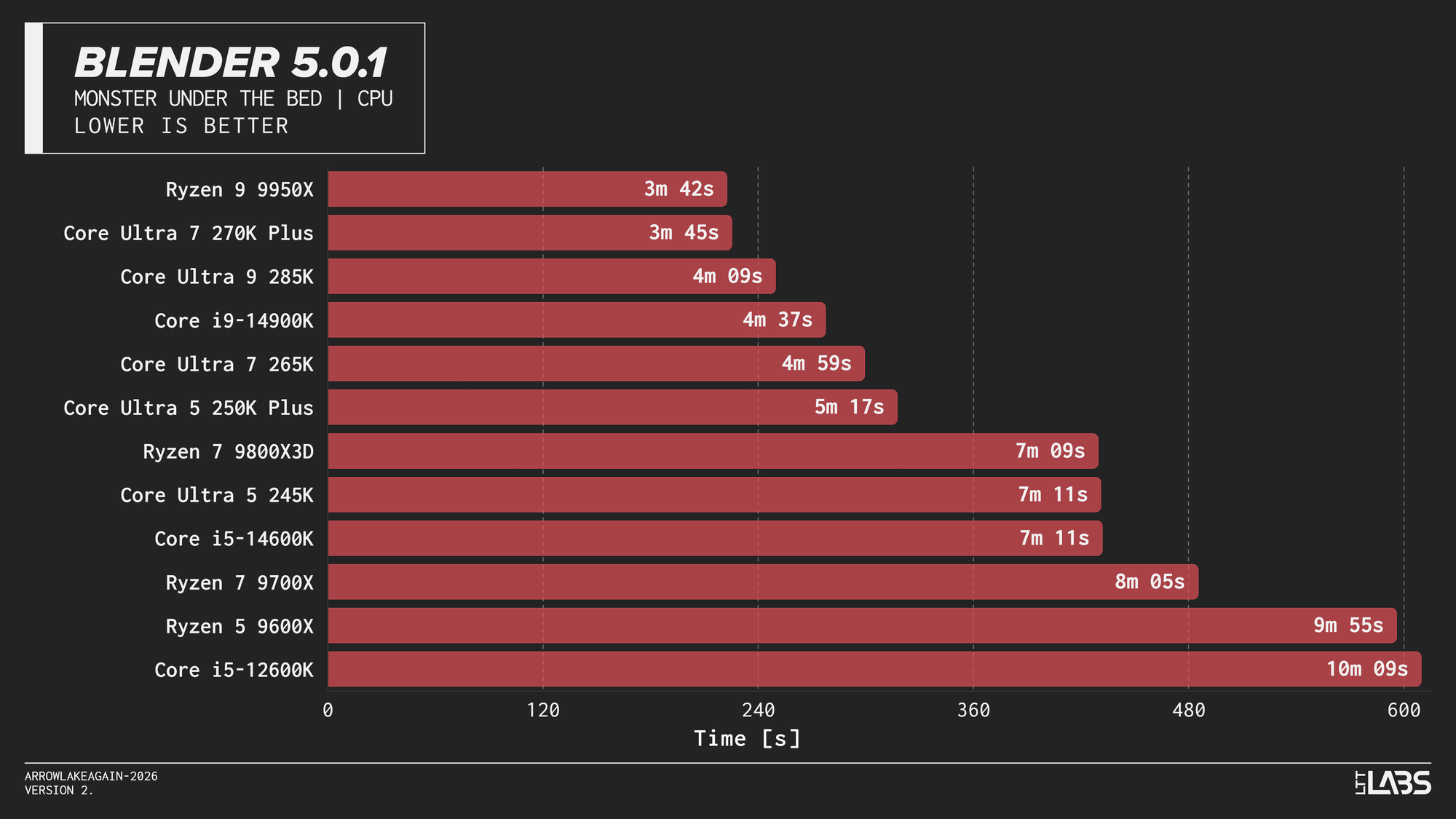
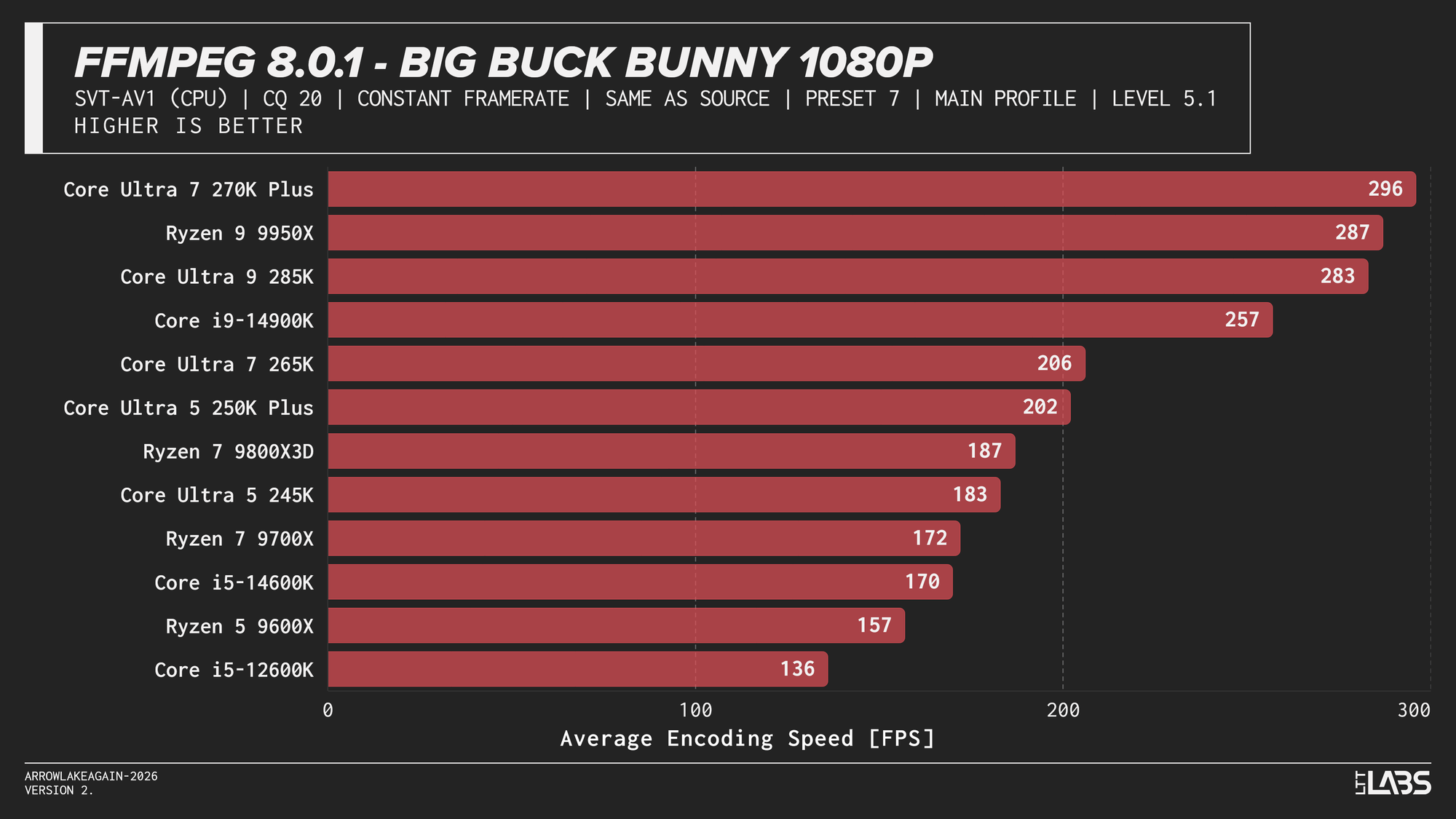
Productivity Results
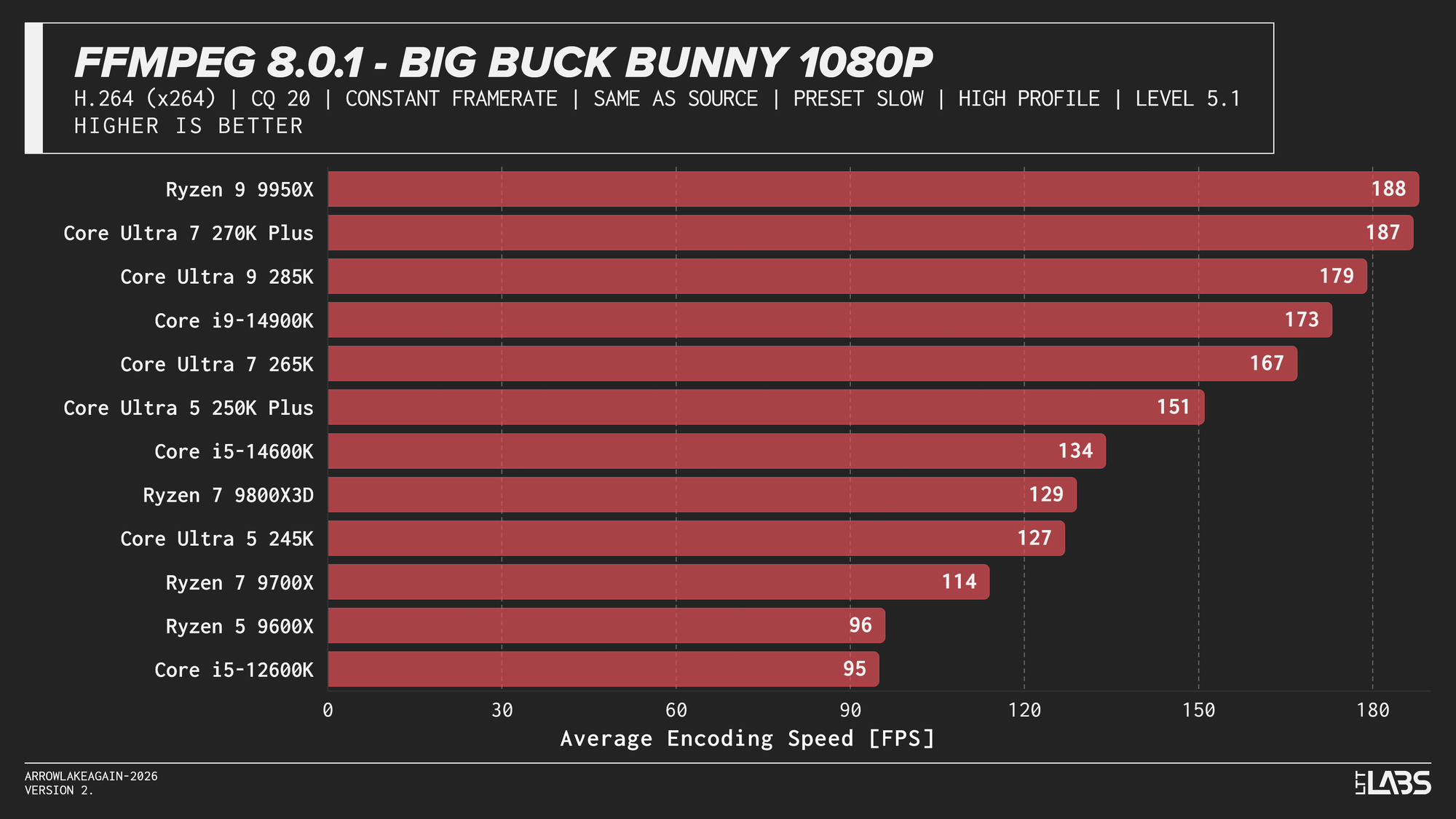
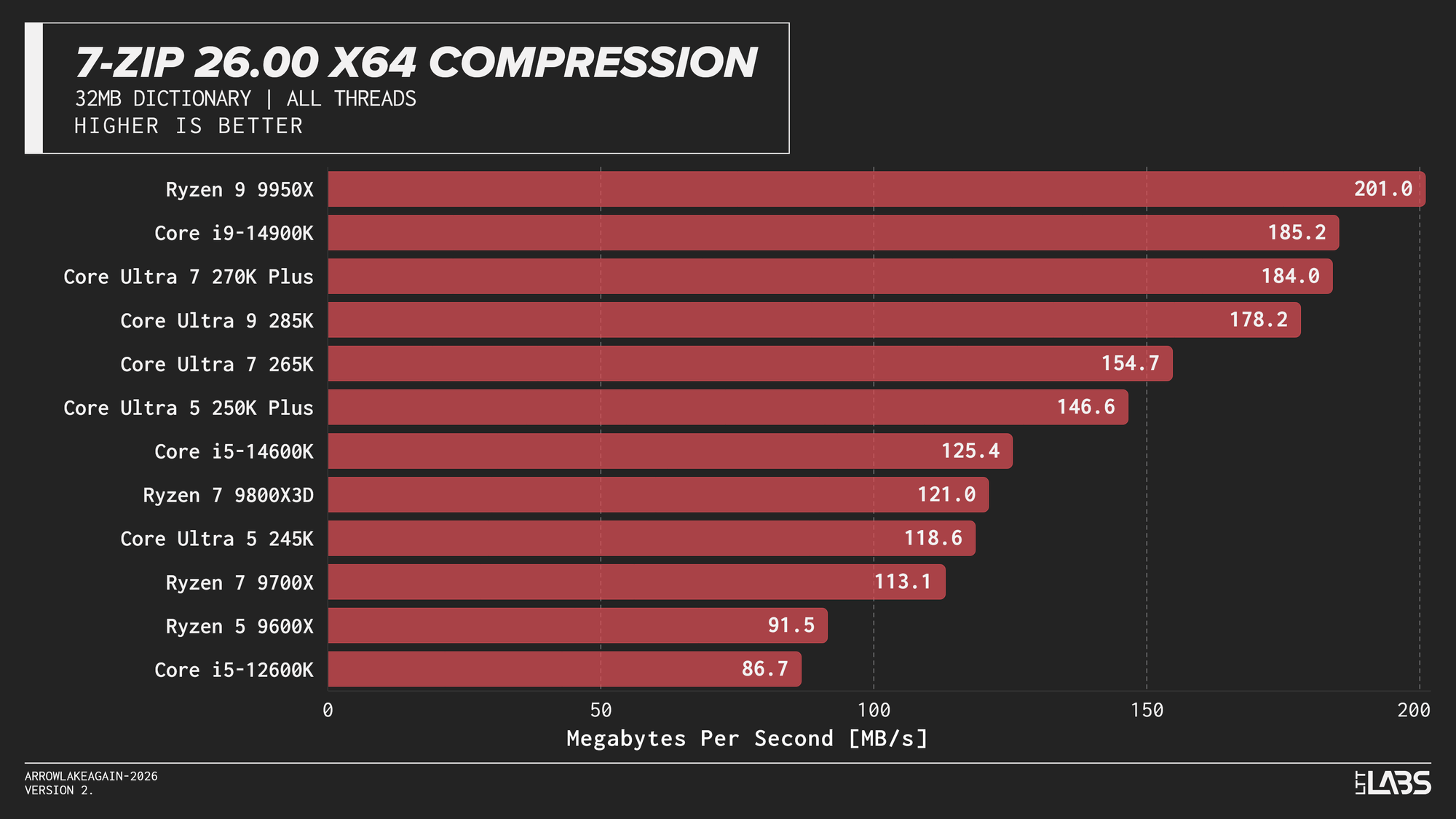
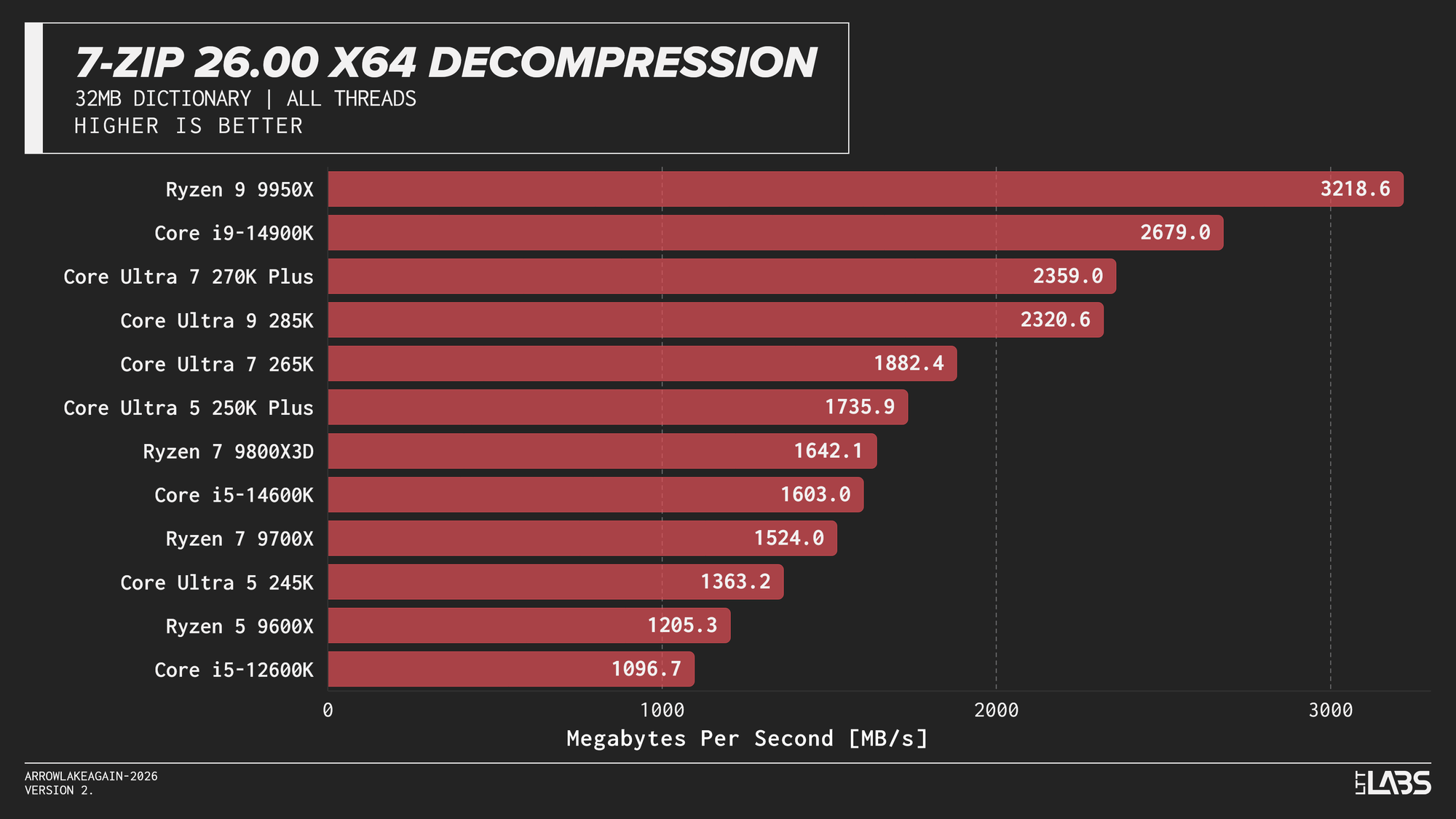
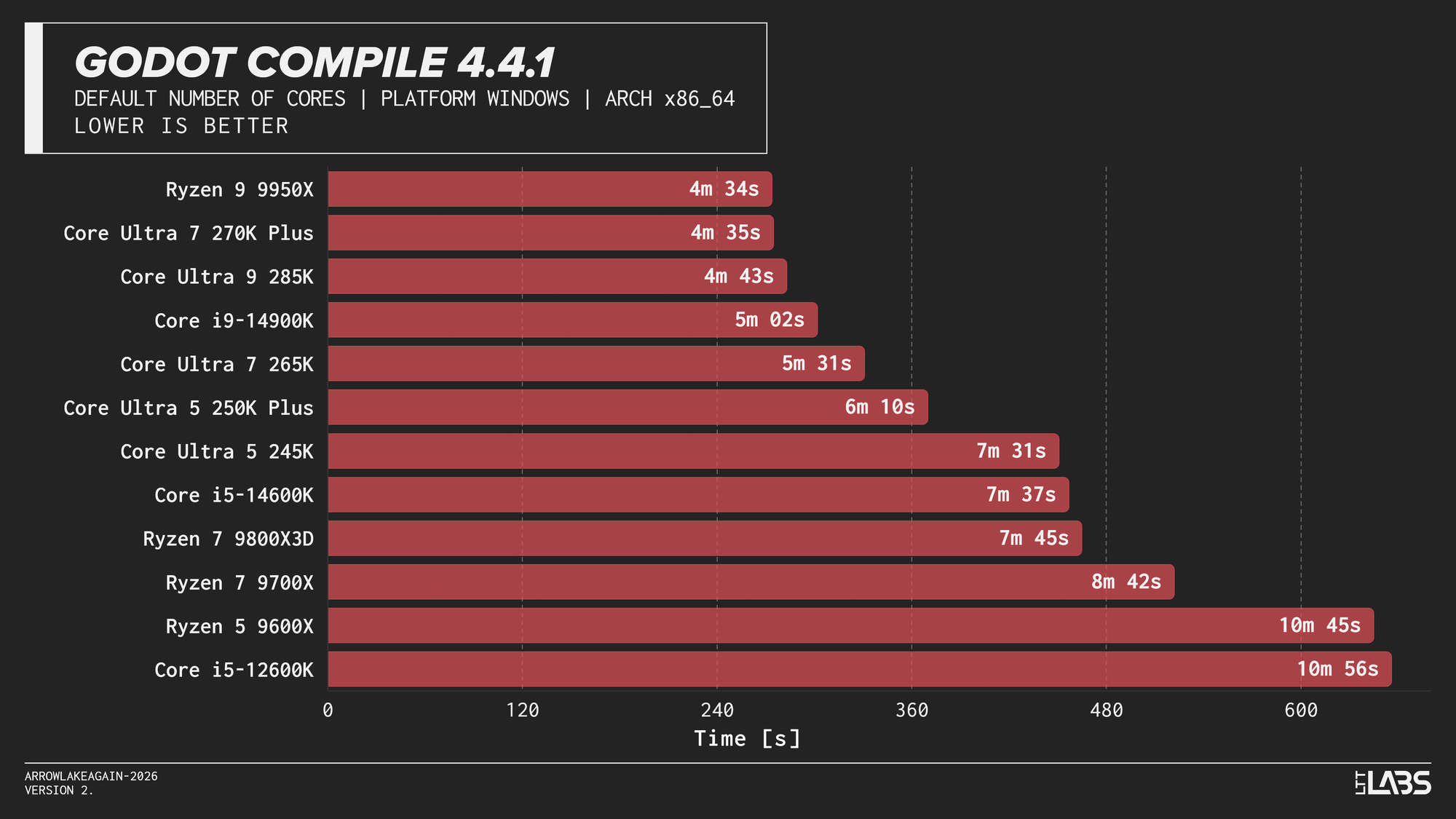
Arrow Lake launched to a tepid response, and the reception for the Core Ultra 5 245K was even weaker than that. Move aside 245K, the 250K Plus is here to rectify the situation. The 250K Plus is much faster than the 245K in these tests, and is impressive how much the other improvements like the 900 MHz {{tooltip: I/O tile to compute tile}}die to die{{/tooltip}} are working to nearly overcome the 265K’s P-core advantage.
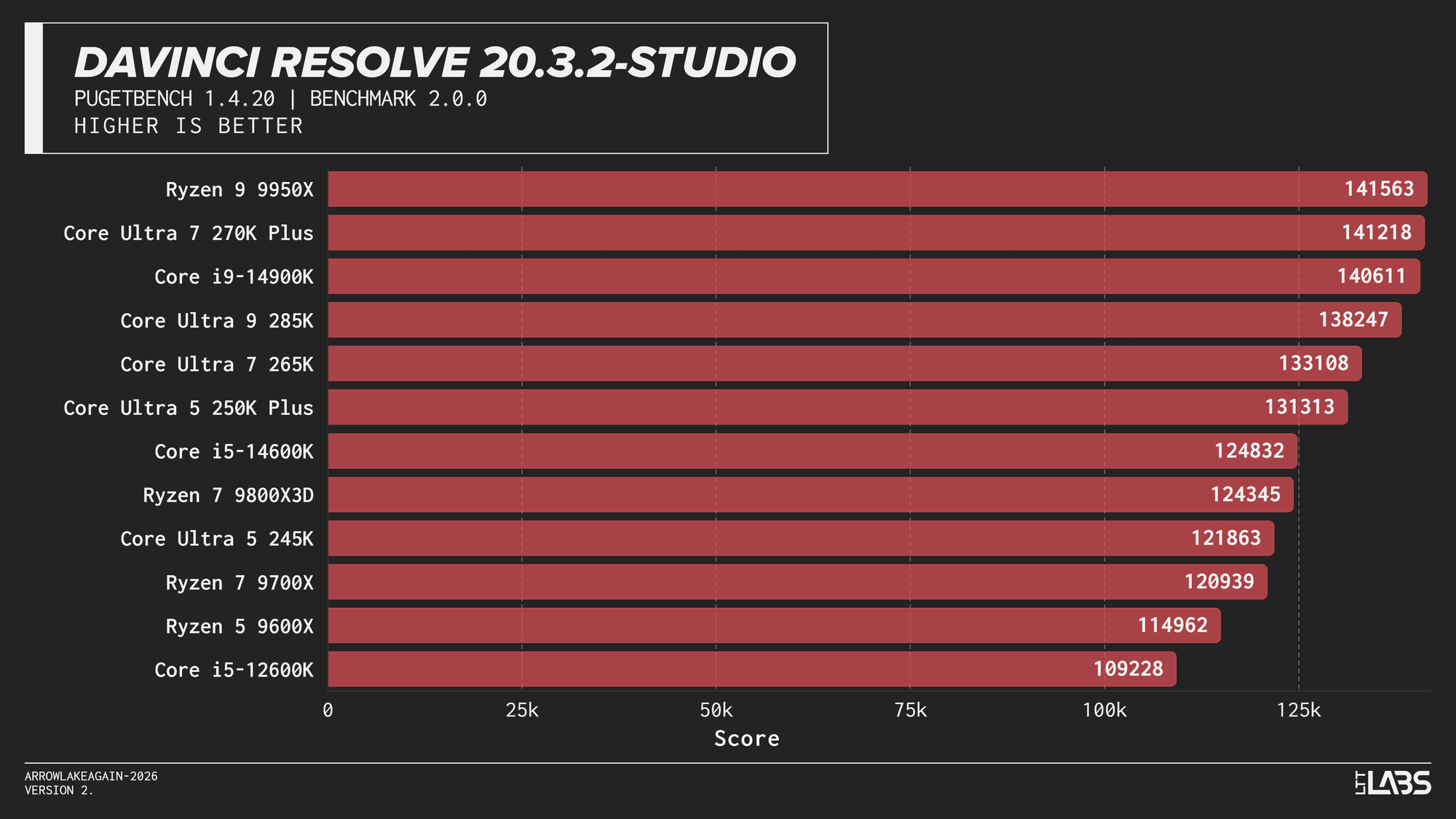
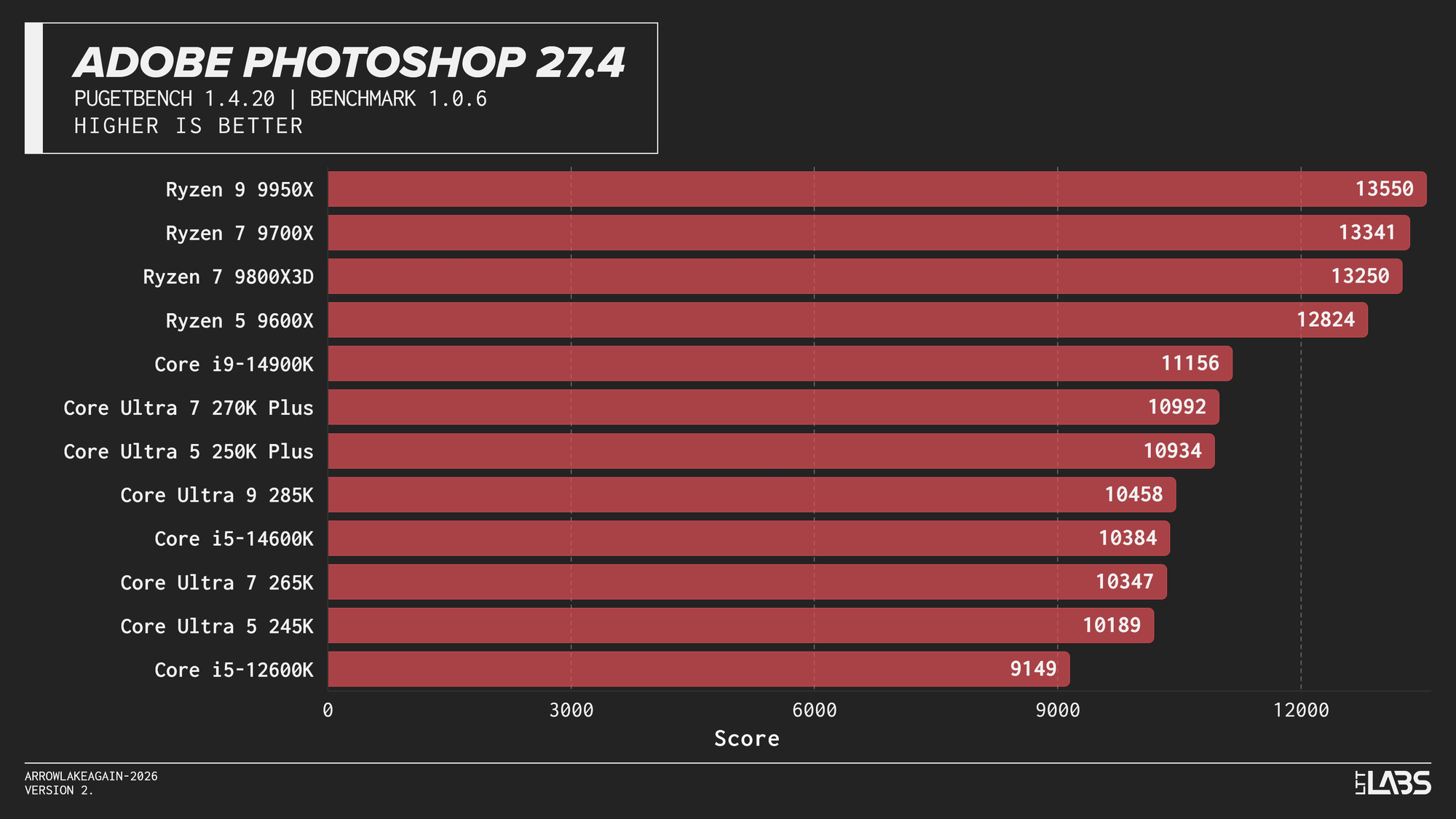
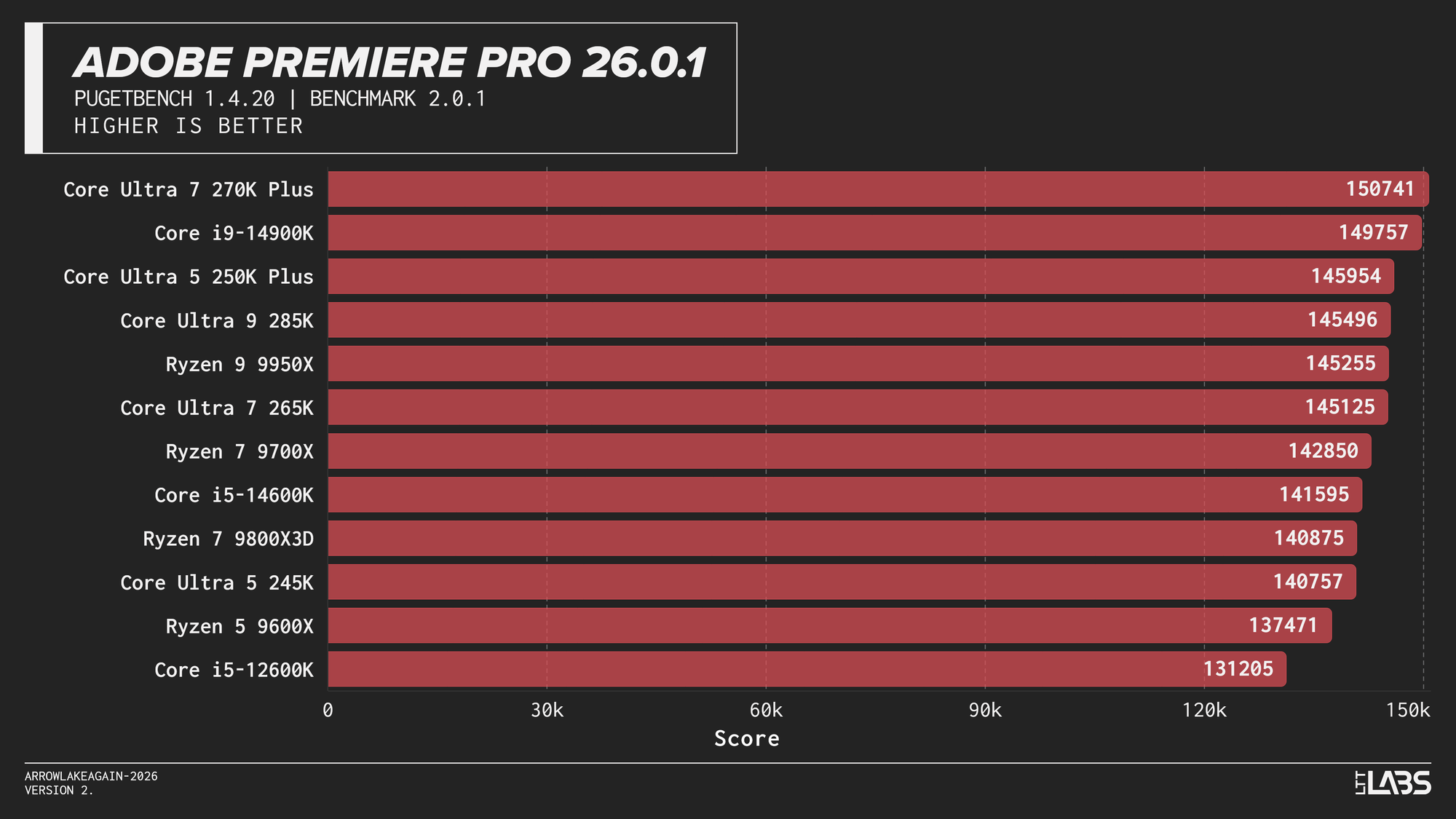
The {{tooltip: This is the last time I'm fully typing this out.}}Core Ultra 7 270K Plus{{/tooltip}} is either winning or competing for the top spot in all of our tests. The 270K Plus doesn’t have the same 5.7 GHz single core boost that the Core Ultra 9 285K is capable of, but in the age of multithreading, that’s not the determining factor anymore.
The results from the Puget Bench Creator suite continue the same story. Aside from Photoshop where AMD is dominant. I guess if all you do is Photoshop and literally nothing else, these chips aren’t for you.
Puget Bench Results
What about Gaming?
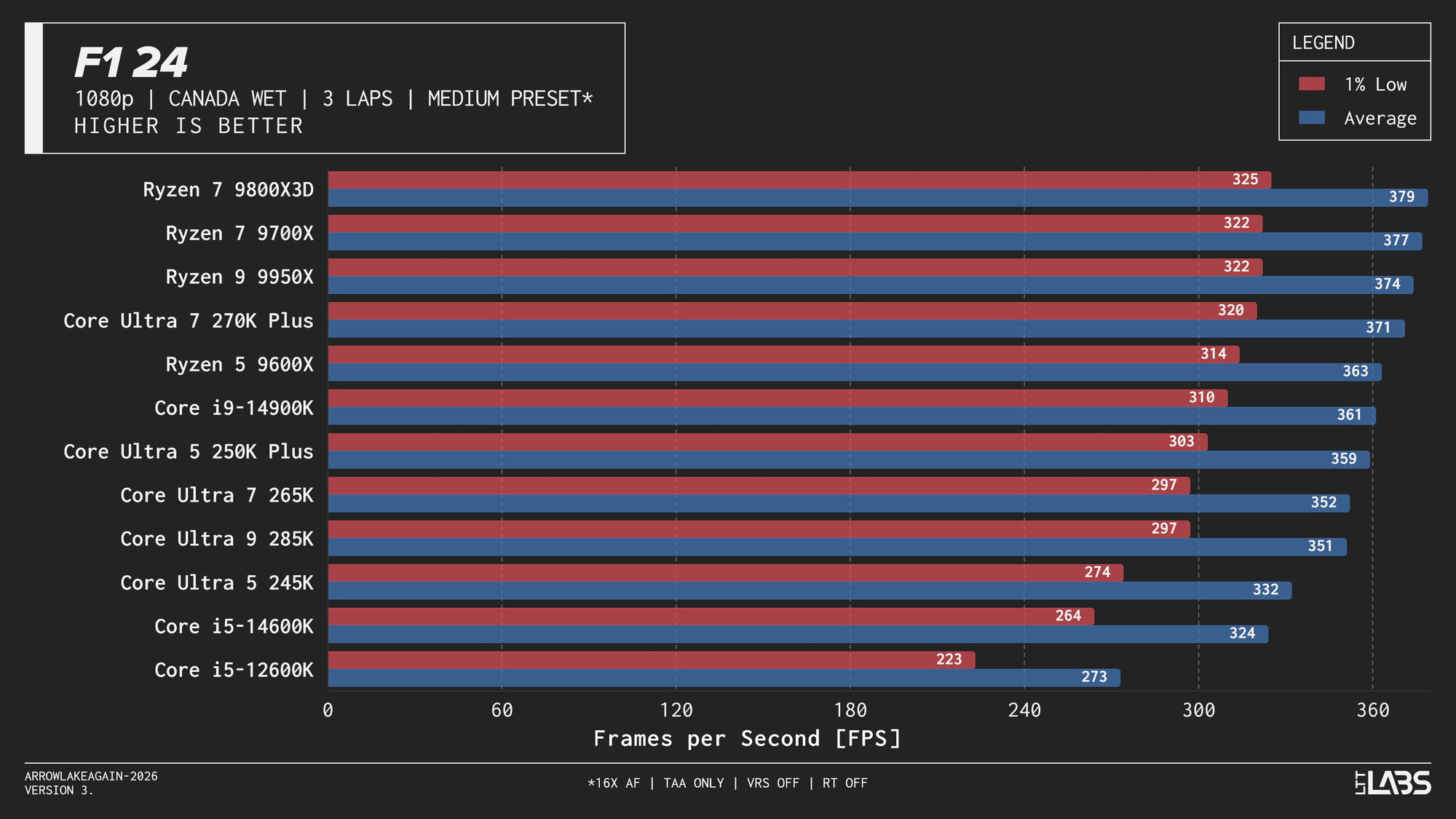
AMD’s 3D V-Cache technology retains gaming dominance through its Ryzen 7 9800X3D and 9850X3D incarnations, but at the price to performance Intel is launching the 270K Plus, the AMD gaming kings don’t look so good to the wallet. However, AMD will remain the technical gaming king until Intel learns to PB+J their chips with velvety smooth cache as well.
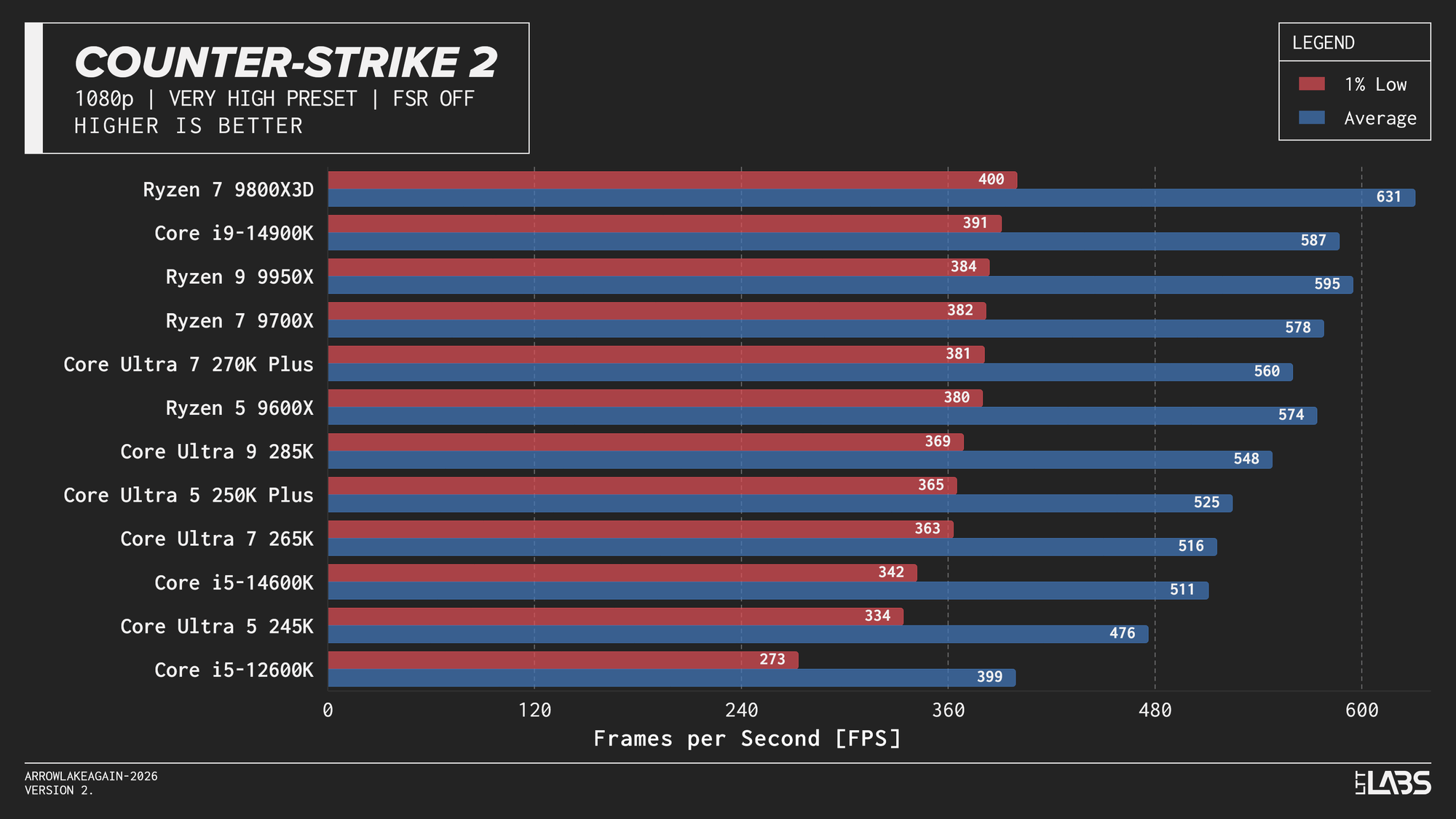
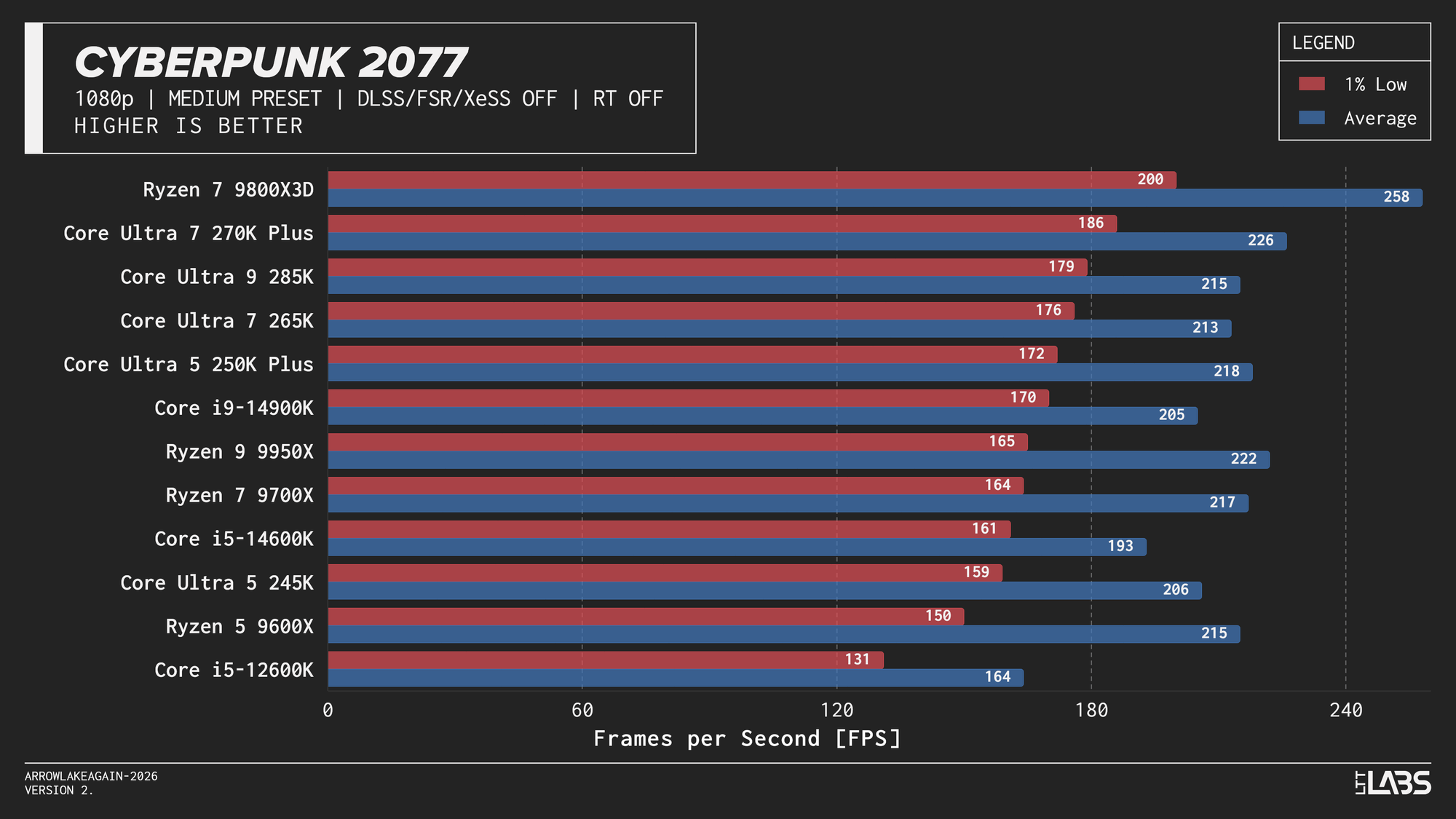
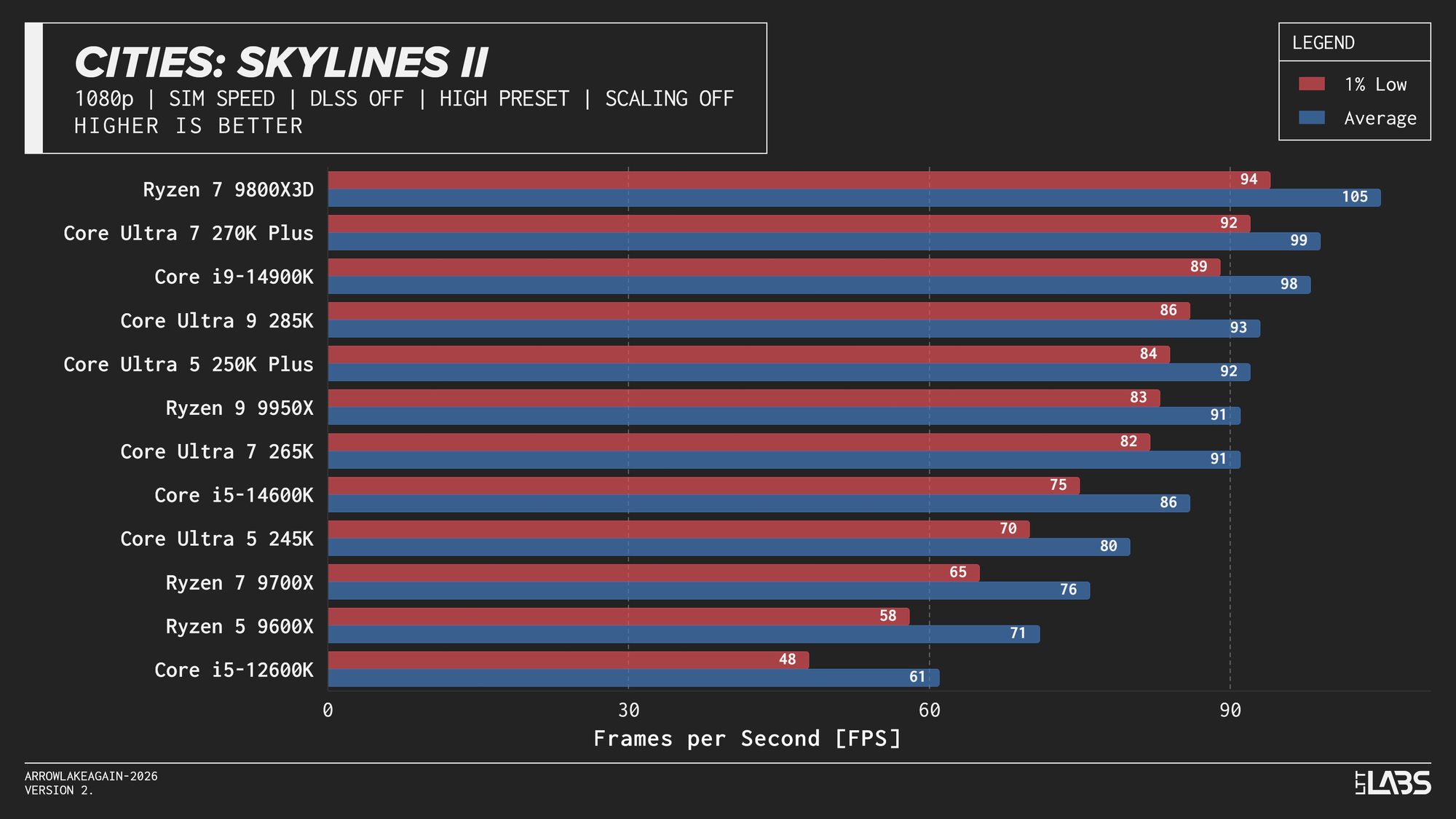
Gaming Results
I’m only noticing now that we almost only tested games that start with the letter C, I promise that’s a coincidence. The 270K Plus continues to impress for its {{tooltip: please be real}}$299 price point{{/tooltip}} and doesn’t sacrifice productivity for gaming performance. This should help our case when we say we need a new CPU “for work”..
In our most recent previous processor review of the 9850X3d, we tested most of our games at very low settings in an effort to isolate the processor, and this is common amongst reviewers. However we encounter repeatability issues in some titles, so we upped our target to medium presets this time around. This is intentional foreshadowing for a looming article we are writing about game testing on processors. Suffice it to say, it’s hard to get it right as a reviewer. We want to eke out a hierarchy of performance amongst all the available SKU’s while also generating relatable results.

Few word do trick
You may have noticed you have already reached the end of this text and we haven’t talked about a plethora of things such as power envelope and thermals, Intel Application Optimization with Binary Optimization, or the new Intel Performance Package installer. We feel the video covers these topics very well, but we will be testing these chips over the next few weeks and providing some more deep dives on these topics and others. Let us know what you would like to see us investigate with these new chips!