iPhone 17e Performance and Power Test Results
This is a companion article to the iPhone 17e ShortCircuit video and included are results from our expedited testing over the last few days following the release of the iPhone 17e, comparing against its predecessor, the iPhone 16e, and the next level up, the iPhone 17.
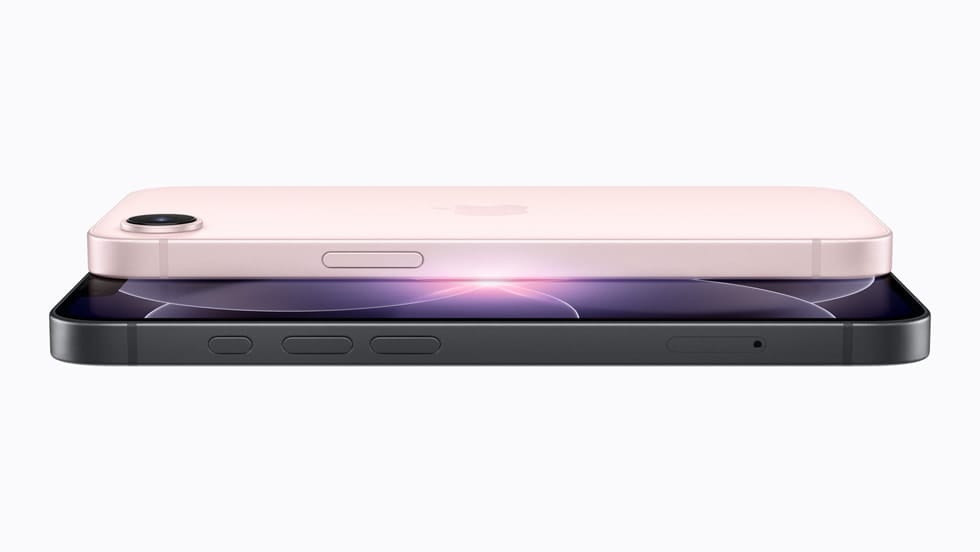
Apple just released their latest contender for the 'budget' category of smartphone, the iPhone 17e. While it isn't a true budget option, listed at $599 USD, it is the least expensive way to get into the iOS ecosystem while still benefiting from the latest processor and software support.
This is a companion article to the iPhone 17e ShortCircuit video and below are results from our expedited testing over the last few days following the release of the iPhone 17e, comparing against its predecessor, the iPhone 16e, and the next level up, the iPhone 17.
For expanded results of the entire iPhone 17 lineup released in the fall, see this previous article from September! Not all results will be directly comparable because software updates can sometimes have large effects on tests like battery life.
Performance Benchmarks
Performance Benchmarks
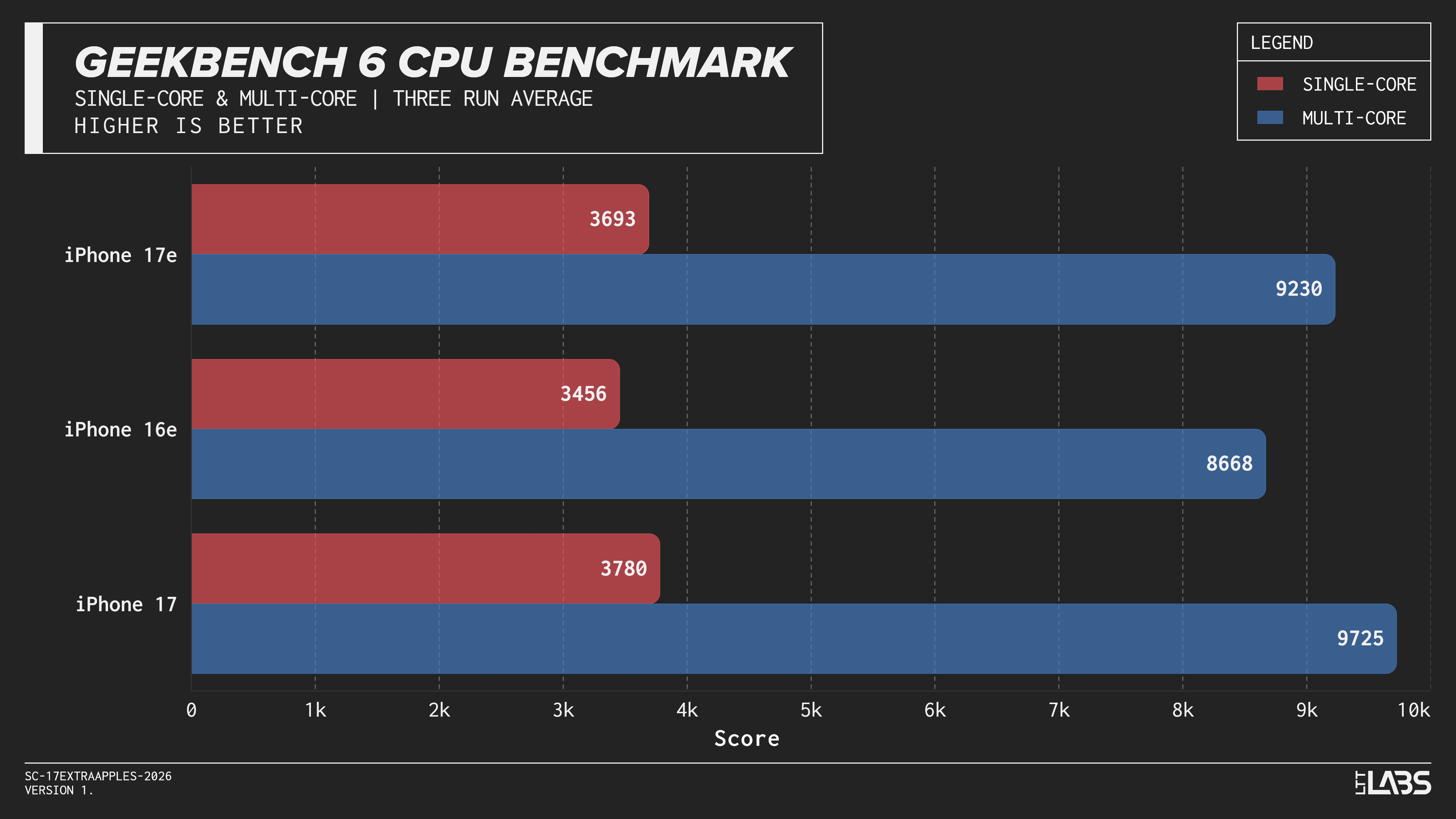
The iPhone 17e has the same A19 processor as the iPhone 17, but one of the GPU cores has been disabled. The similarity of the processors is shown in the CPU focussed Geekbench 6 CPU benchmarks where the iPhone 17e has 2-5% lower performance than the iPhone 17 over the average of three runs.
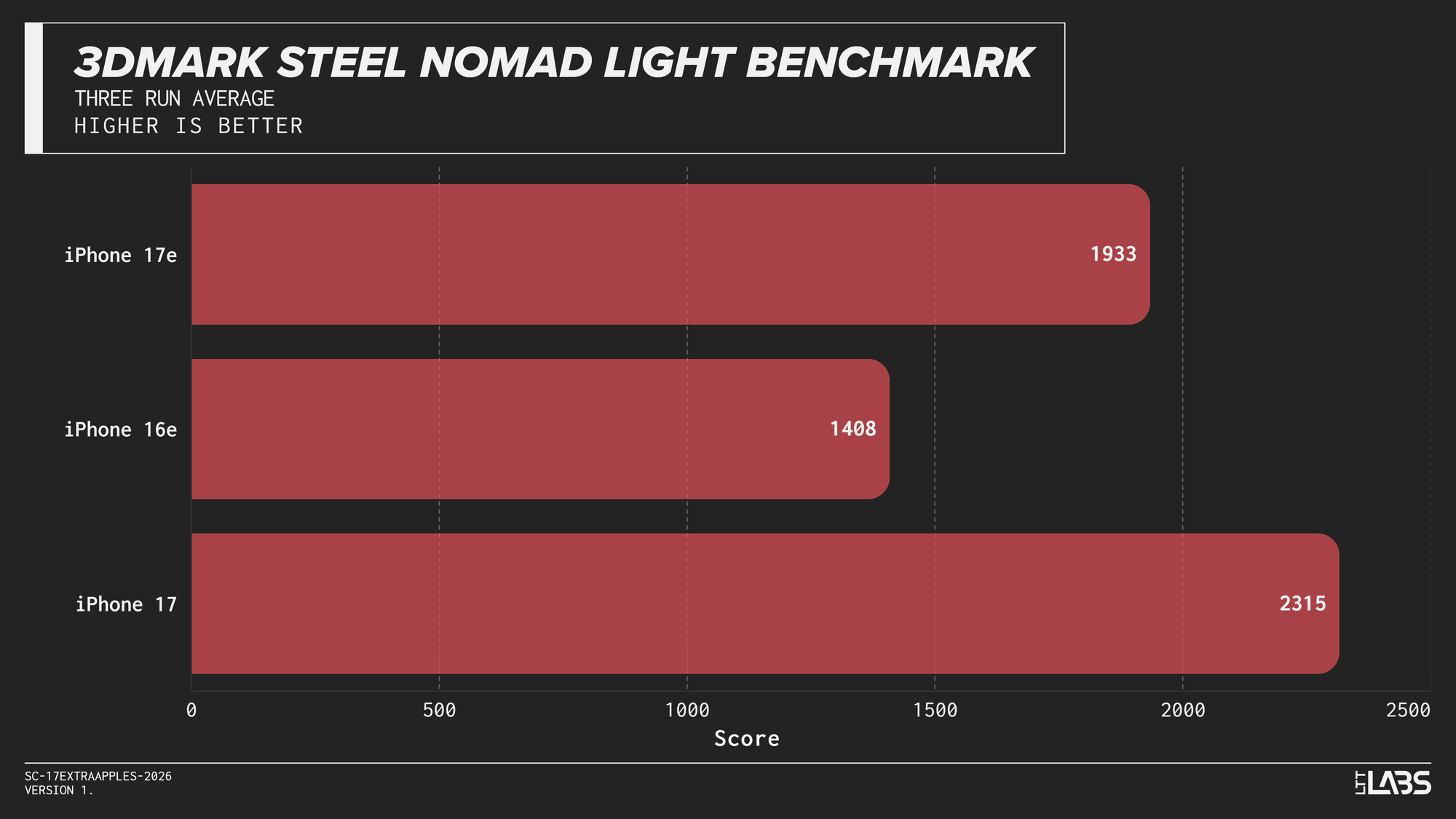
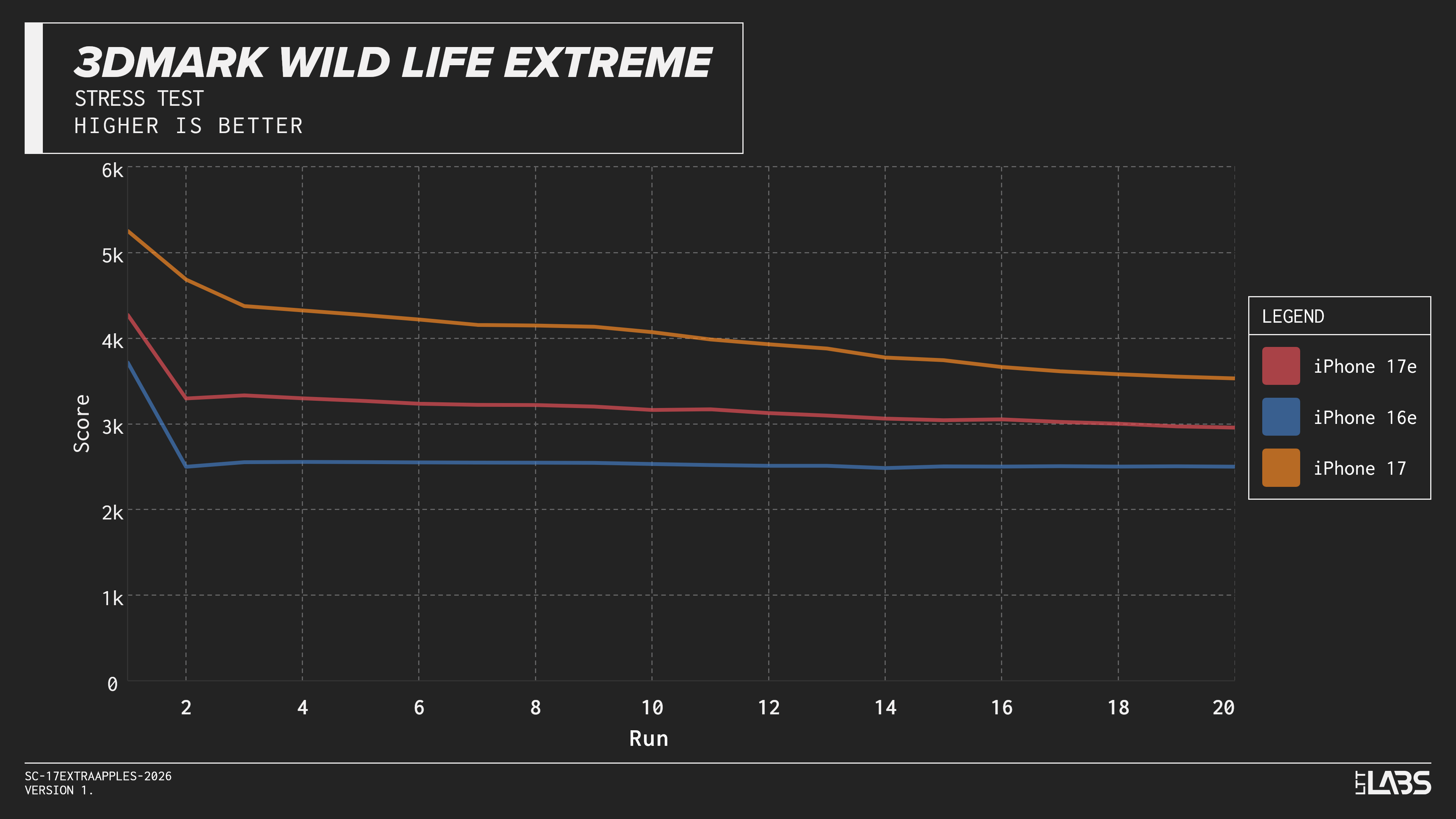
The GPU focused 3DMark benchmarks highlight the difference that the extra GPU core of the iPhone 17 can make, where the iPhone 17 scores 20-23% higher. This will be noticeable in gaming, but the iPhone 17e still has enough power to ensure smooth animations during regular use. This is helped by its lower refresh rate 60 Hz display compared to the 120 Hz display of the iPhone 17.
Battery Discharge Test
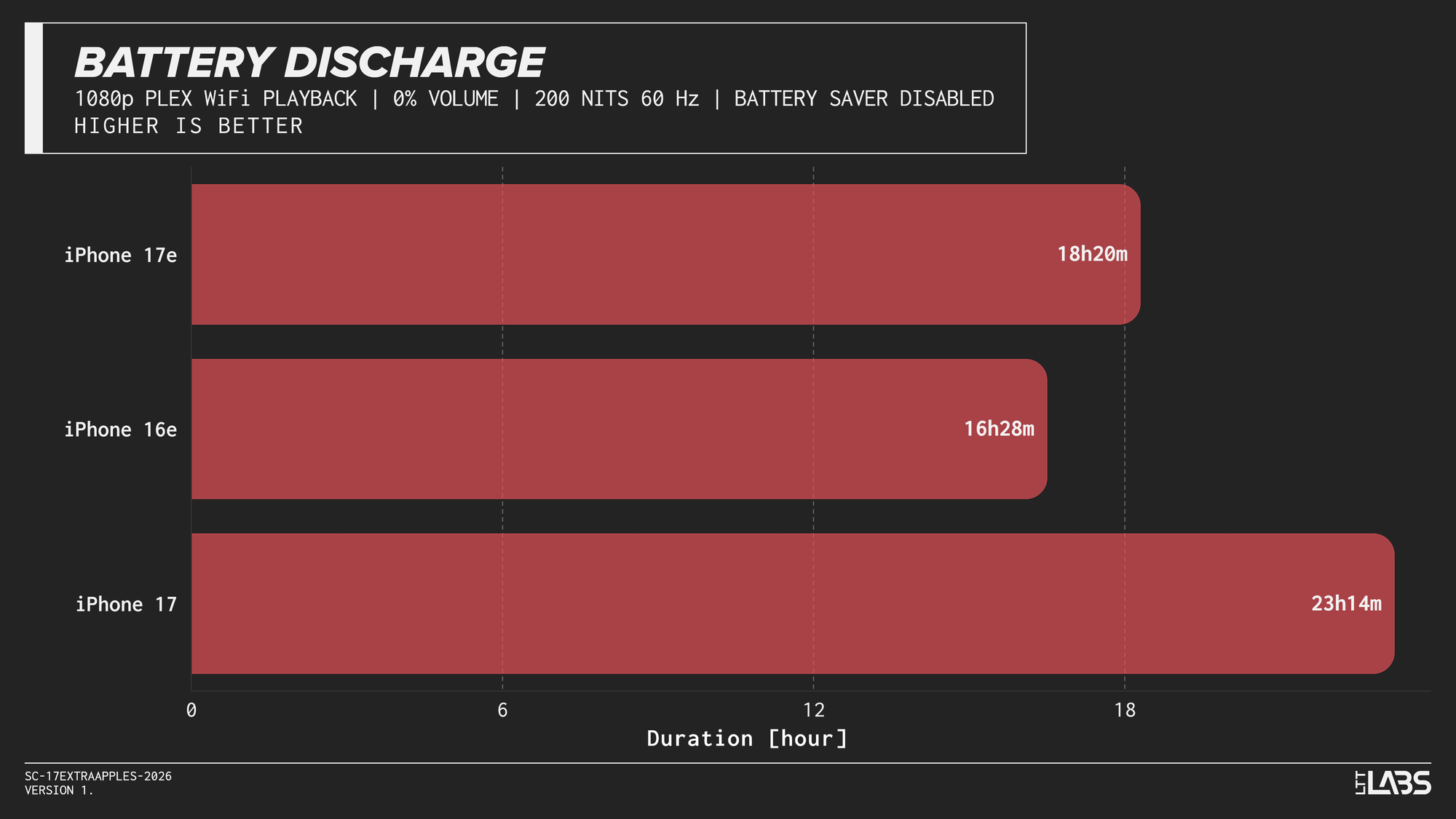
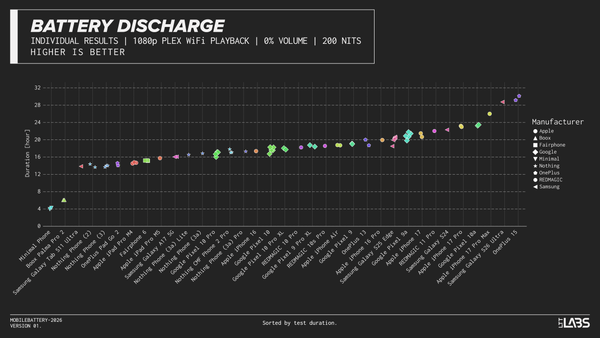
In our battery discharge test where the device streams 1080p video from a local Plex server until the battery is drained, we see that the iPhone 17e has a battery life improvement on the iPhone 16e, while still falling significantly short of the iPhone 17. These tests were performed identically but there is variance to the battery life testing, as explored in this previous article.
The iPhone 16e, iPhone 17, and iPhone 17e have reported battery capacities of 4,005 mAh, 3,692 mAh, and 4,005 mAh respectively. The iPhone 17e battery life increase over the iPhone 16e can be expected due to a more efficient A19 processor, but it is counterintuitive that the iPhone 17 lasts much longer despite its smaller battery capacity. This could potentially be due to a more efficient Pro Motion display of the iPhone 17.
These tests are supported by the battery life claims on Apple's website, listing that the iPhone 17 has greater battery life in their similar tests.
Battery Charge Test
| Device | iPhone 16e | iPhone 17 | iPhone 17e |
| Charge Duration [min] | 123 | 102 | 110 |
| Charge Duration [hr:min] | 2hr 3min | 1hr 42min | 1hr 50min |
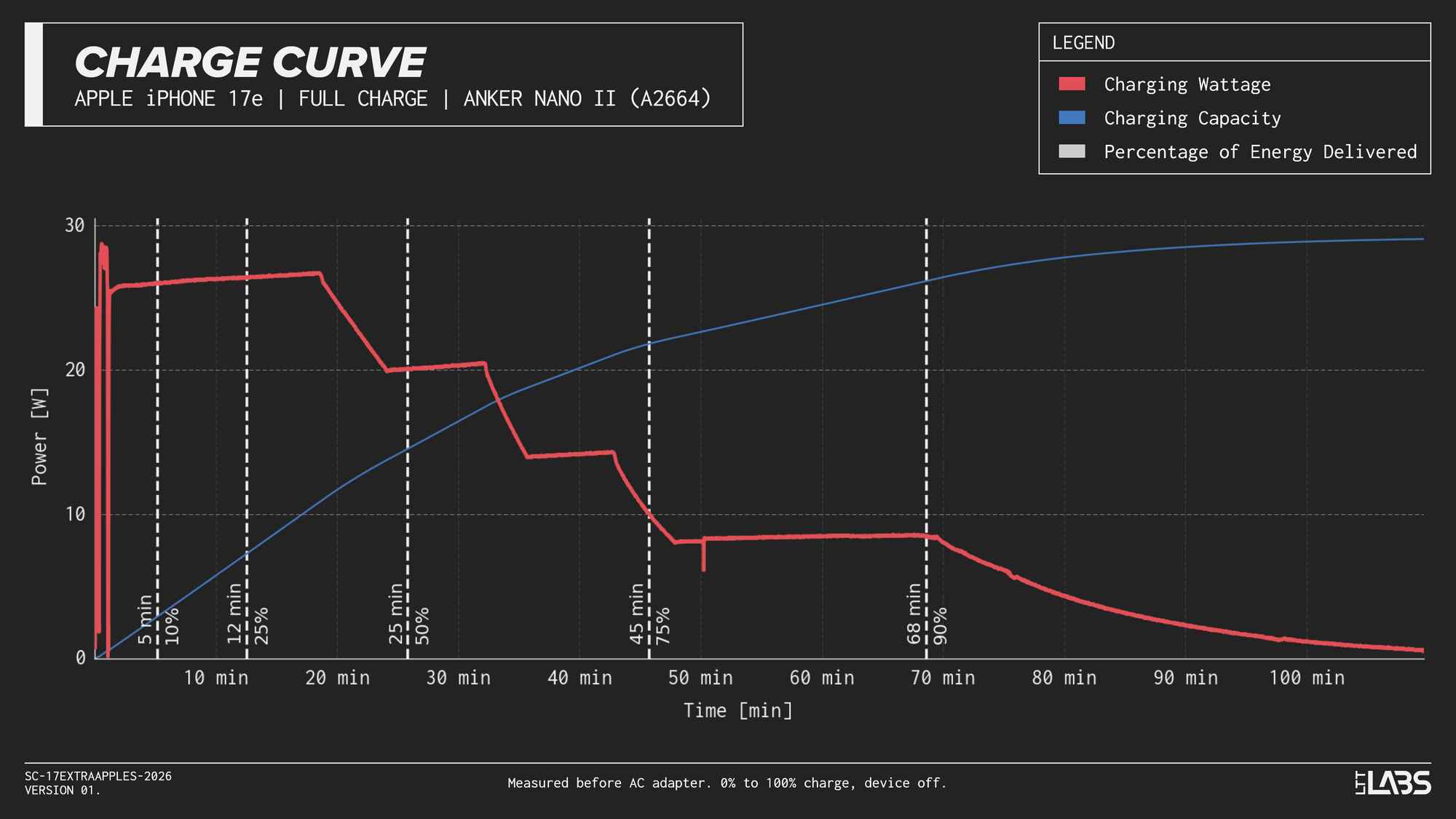
We are able to confirm Apple's claim of 50% charge in 30 minutes by measuring the energy delivered to the iPhone through a 45 W USB Type-C power adapter. The iPhone 17e did also achieve the claimed 20 W charging, the same as the iPhone 16e.
The iPhone 17 is able to charge faster, delivering 50% charge in 20 minutes due to its ability to charge at up to 40 W. iPhones charge very slowly past 80% to preserve the battery health, so the charge time to 100%(as displayed in the table above) doesn't fully reflect the difference in maximum charge rate.
Note that the graph above displays power delivered to the power adapter and not directly to the device, the inefficiencies of the power adapter mean that the power displayed in the graph is higher than the power delivered to the device.
Display Luminance
The luminance values below are measured with an LS-150 Luminance Meter while 1%, and 100%, of the iPhone 17e was illuminated with a white rectangle("window").
Standard Dynamic Range (SDR)
| Auto-brightness | Window Size | iPhone 17e Luminance [nits] |
| Off | 1% | 815 |
| Off | 100% | 829 |
| On | 1% | 801 |
| On | 100% | 828 |
High Dynamic Range (HDR)
| Auto-brightness | Window Size | iPhone 17e Luminance [nits] |
| Off | 1% | 812 |
| Off | 100% | 828 |
| On | 1% | 1183 |
| On | 100% | 1159 |
The 800 nits SDR/typical and 1,200 nits HDR/peak of the iPhone 17e are identical to the display of the iPhone 16e that it is replacing, and in our luminance testing, we were able to confirm Apple's claims. While not the level of brightness you see in modern flagship devices, 800 nits is plenty of brightness for regular use, and 1,200 nits HDR isn't as high as the 1,600 nits of the iPhone 17 display, but will still provide a great experience for viewing HDR photos and videos.
The iPhone 17e was also able to achieve the claimed 800 and 1,200 nits independently of the window size. The display will not become less bright if a large section of it is illuminated.