Which Devices Benefit from 50 W Chargers?
What does a higher charging wattage mean, is it better, and how does it actually help?
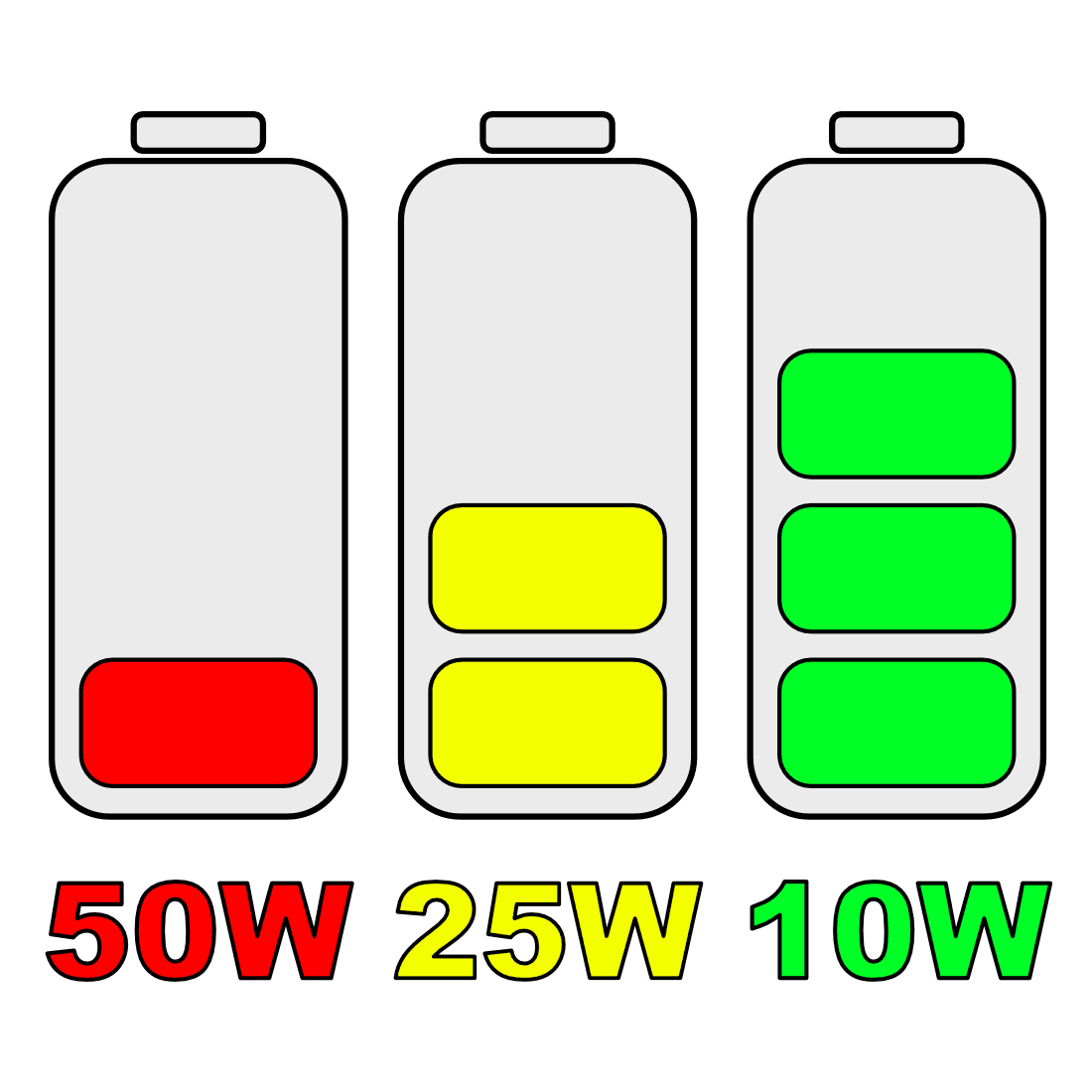
We all want a phone with infinite battery life. Failing that(it has been elusive so far), we'd settle for a phone that charges in an instant. Material scientists and engineers are working towards both goals, but in the meantime the two objectives slightly oppose each other. Batteries that hold ever more energy, take ever longer to charge. All of this has resulted in the arms race of charging wattage; advertising 40 W, 50 W, 80 W, and even 100 W charging. What does a higher charging wattage mean though, is it better, and how does it actually help?
Most people know just enough about electricity to avoid it, so there isn't a great understanding of the complicated rules governing battery charging rate or which charger you should use. The actual charging behaviour of devices will be explored further below with some interesting graphs and other takeaways, but if you're just here for the short answer:
Higher wattage devices and chargers allow faster charging, though typically only when at lower battery percentages(<60%). As the device fills up, it will step down to lower wattages like 10 W, 5 W, or lower. The advertised wattage is often the maximum rate possible and provides large gains in the 0-60% battery range, but less so at higher battery percentages.
Charge Curves
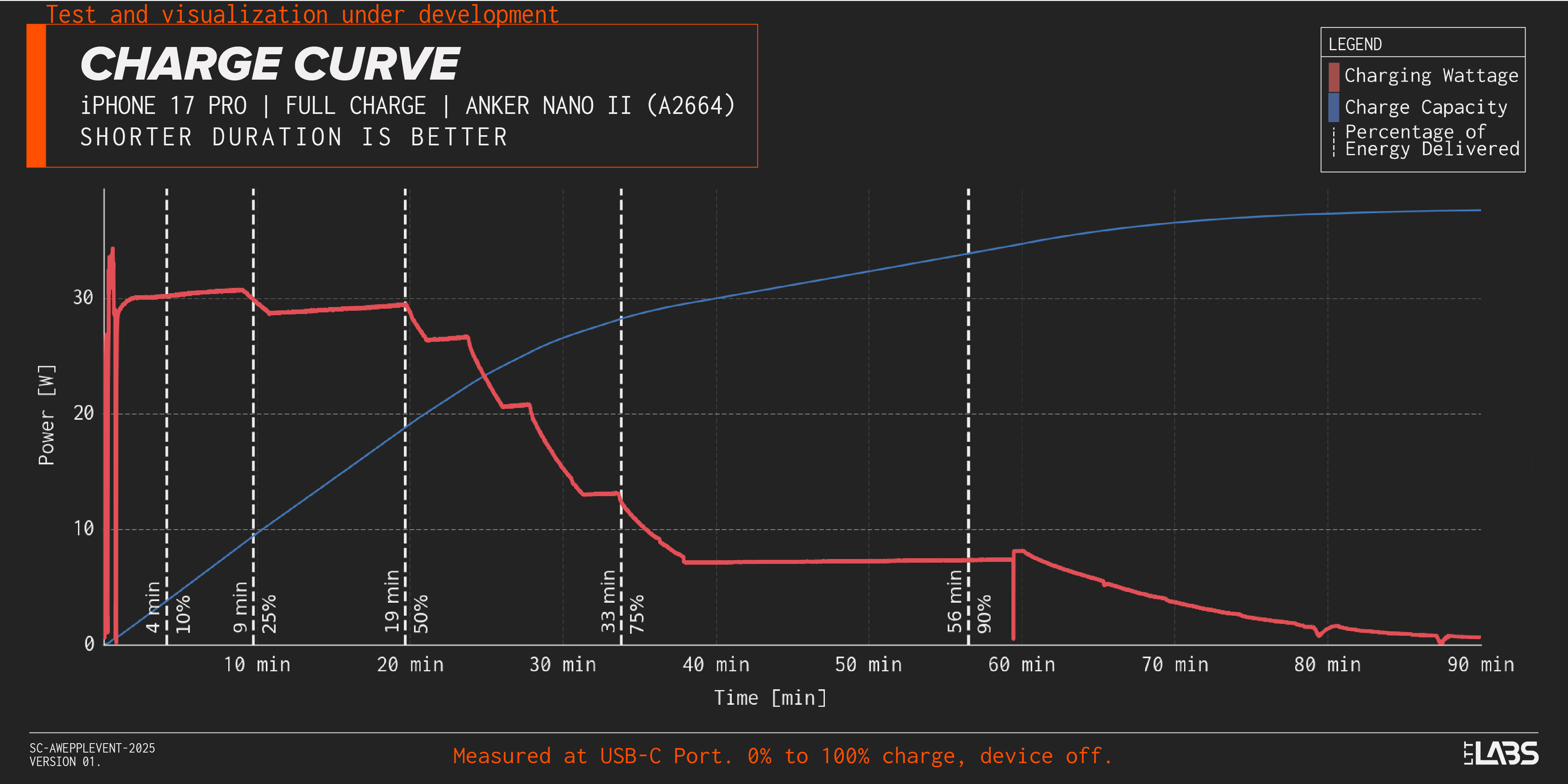
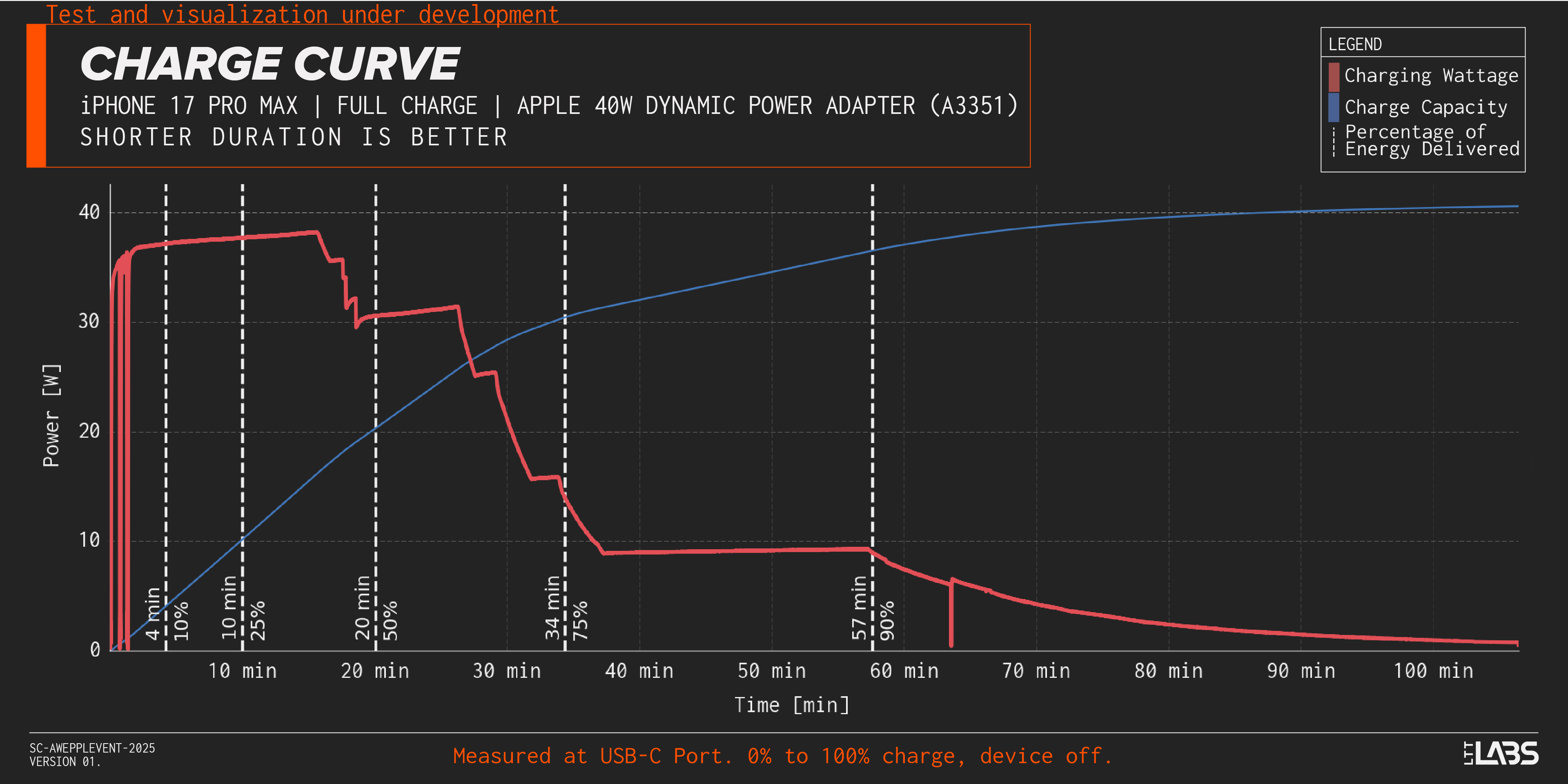
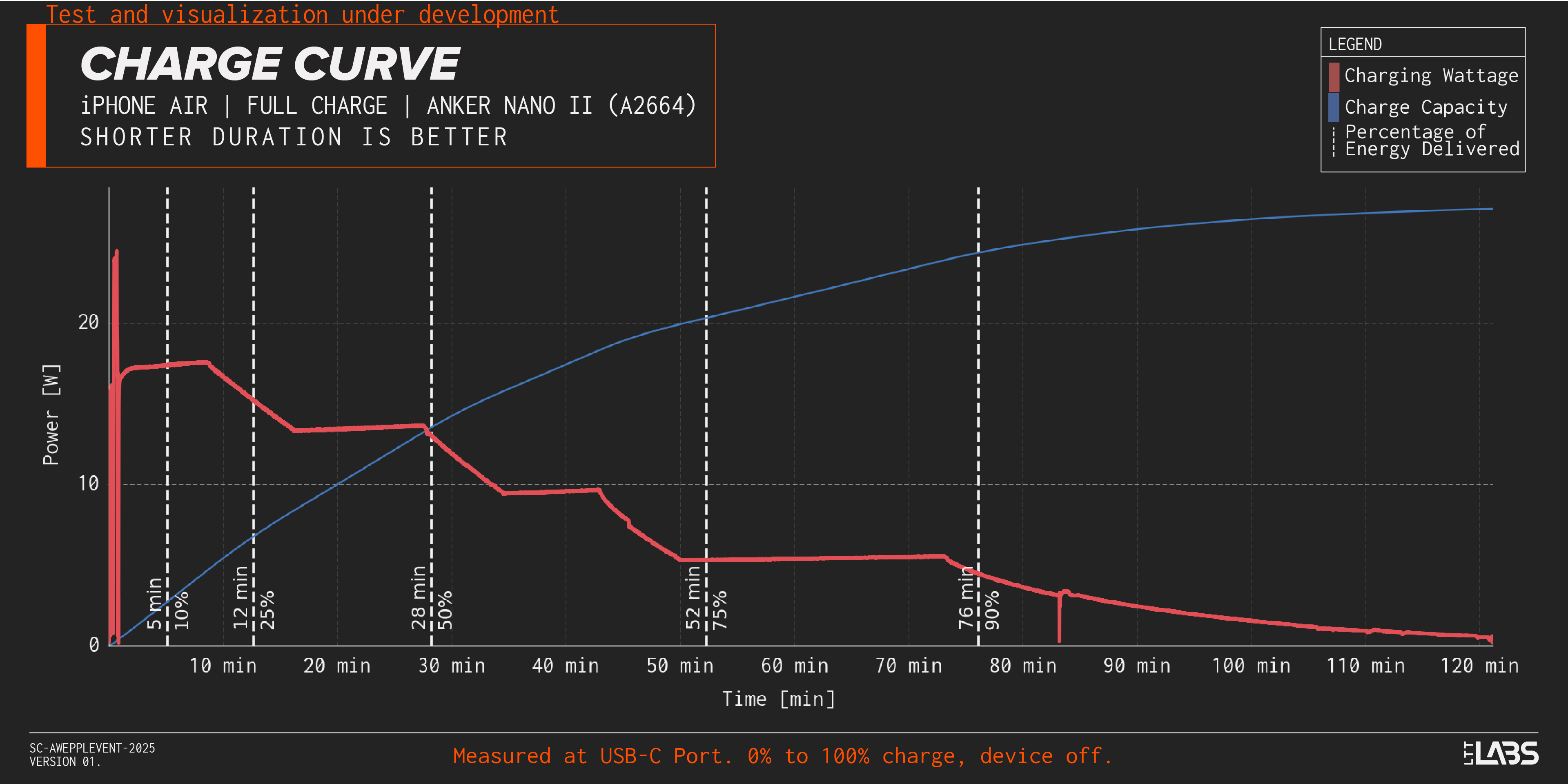
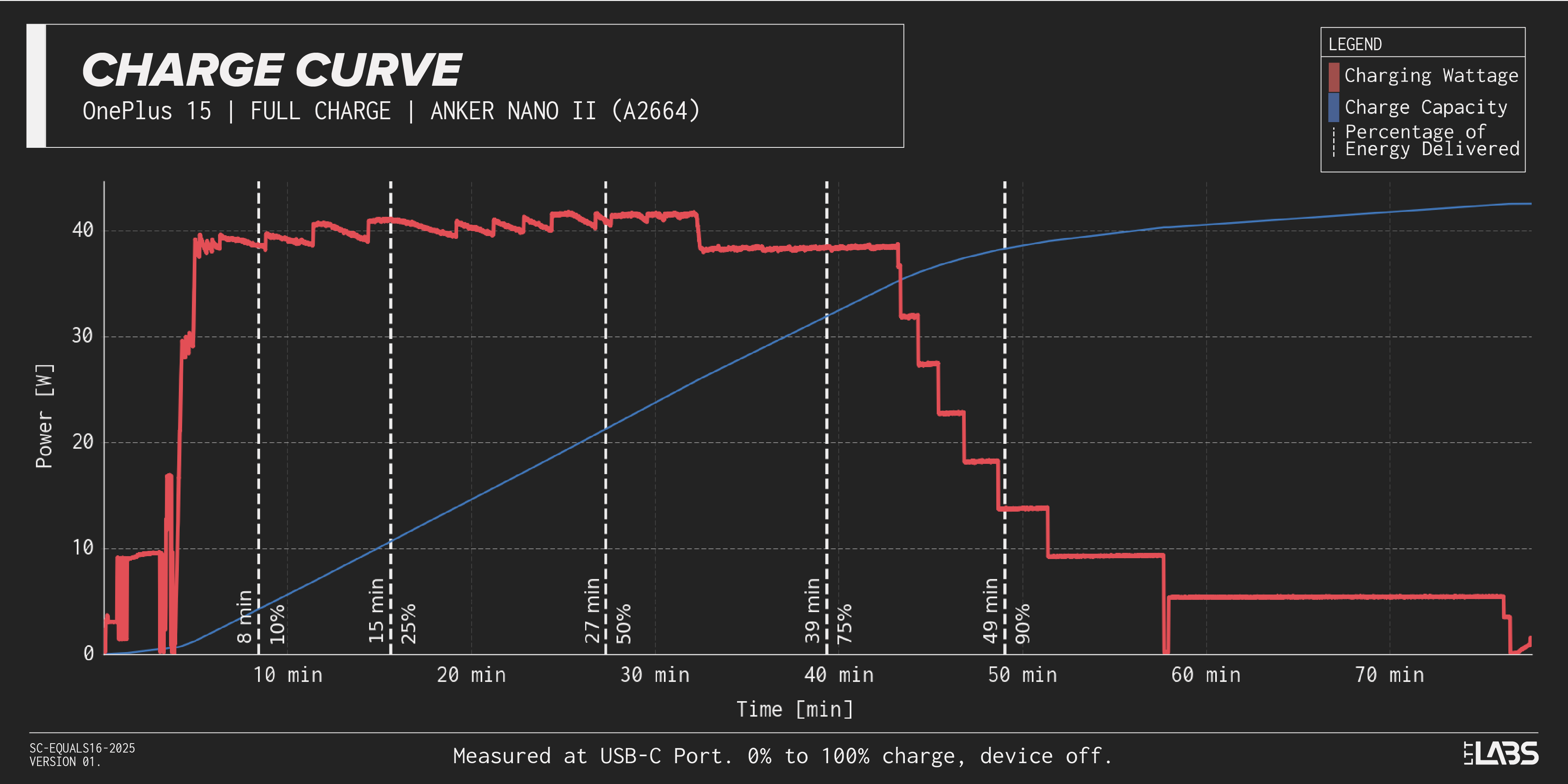
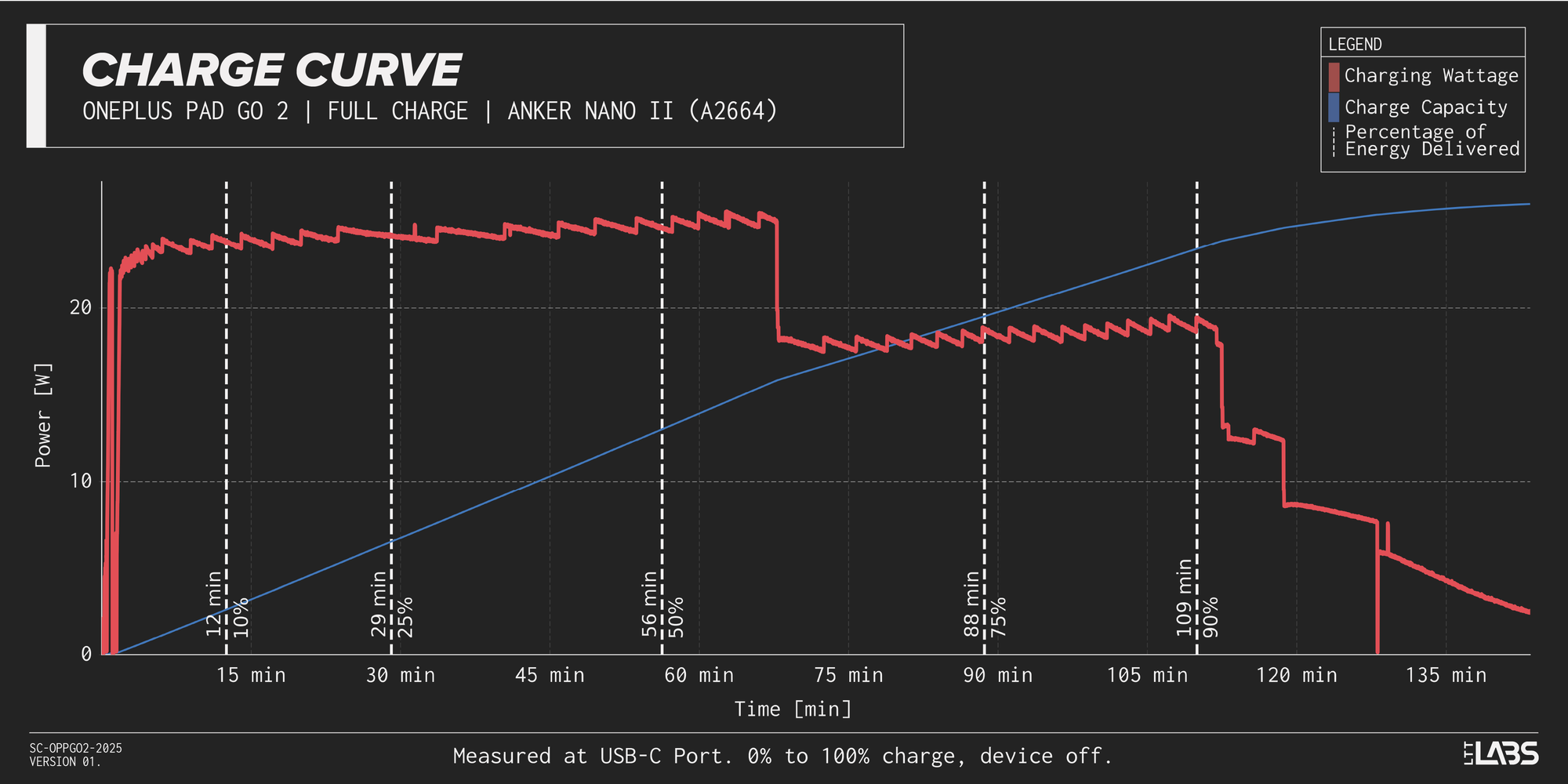
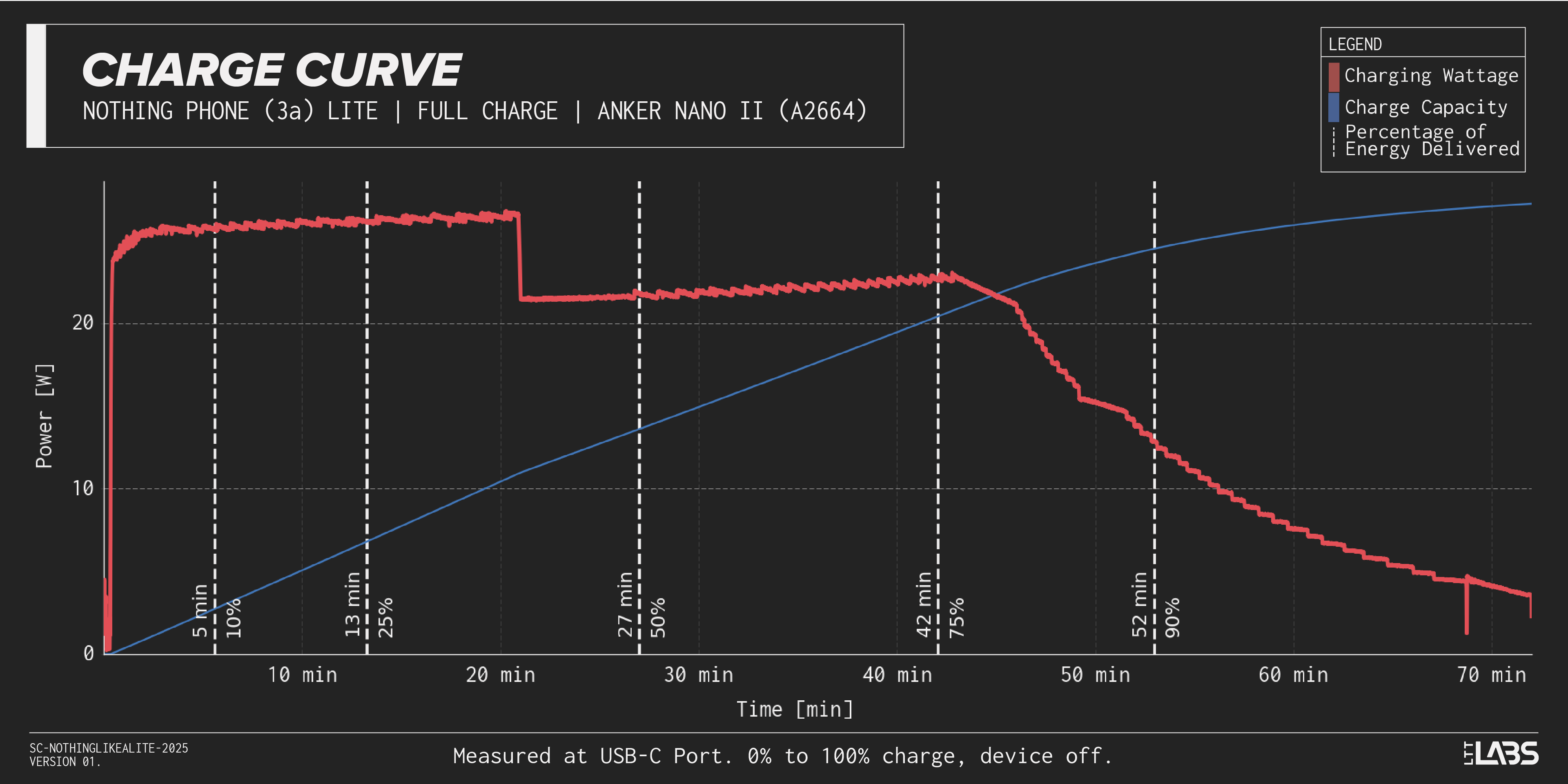
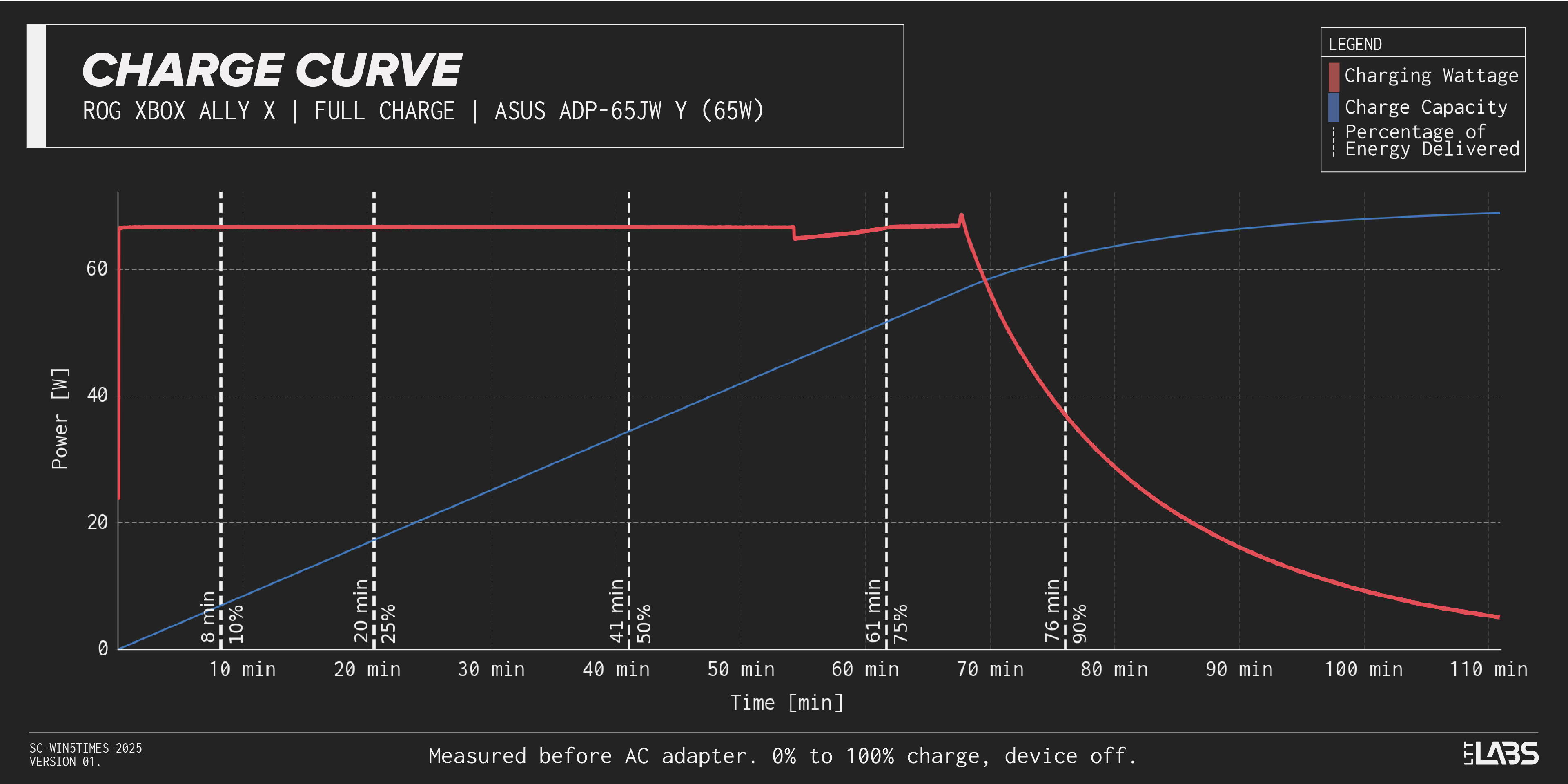
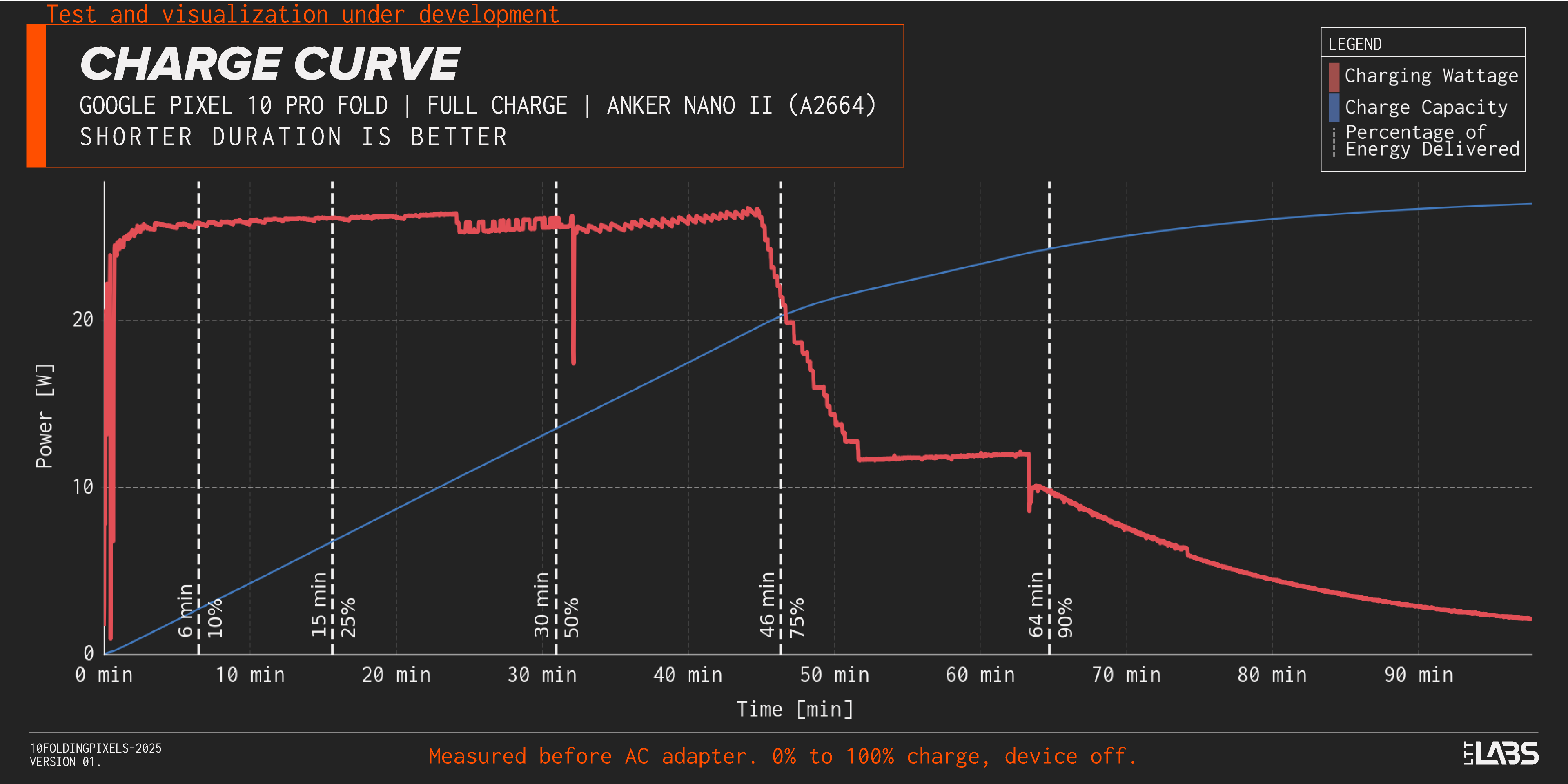
Below are a variety of charge curve graphs for devices that we've tested recently. For these tests we deplete the device battery and monitor the input wattage until power delivery ends and the device is at 100% battery. The graphs plot the wattage on the y-axis with time on the x-axis, showing the wattage delivered to the phone over the duration of the charge cycle. The area under the red curve represents the total energy delivered from the wall or power adapter to the device. See this article for more detail on the setup, measurement, and display of these results.
{{slide}}Charge Curve - iPhone 17 Pro{{/slide}} {{slide}}Charge Curve - iPhone 17 Pro Max{{/slide}} {{slide}}Charge Curve - iPhone Air{{/slide}} {{slide}}Charge Curve - OnePlus 15{{/slide}} {{slide}}Charge Curve - OnePlus Pad Go 2{{/slide}} {{slide}}Charge Curve - Nothing Phone (3a) LTE{{/slide}} {{slide}}Charge Curve - ROG Xbox Ally X{{/slide}} {{slide}}Charge Curve - Google Pixel 10 Pro Fold{{/slide}}
Each device has their own charge profile(how the device determines at which wattage to charge, and for how long) with some being far more aggressive than others. Some will charge at a higher wattage(energy per second) for a longer portion of the charge cycle, generating more waste heat and potentially slightly impacting battery health. Other devices will choose more conservative charge profiles to assist with longevity of the battery cell and device. Diligent manufacturers will specify a charging profile to best fit the use-case of the device. Below are some notable charge profiles from different devices.
'Traditional' Batteries
The Nintendo Switch 2, Boox Palma Pro 2, ROG Xbox Ally X, and GPD WIN 5 display more traditional charge curves. The flat beginning section is a 'constant current' mode where the charging rate is controlled by maintaining a maximum current delivered to the battery. The second section is 'constant voltage', where the charging management circuitry maintains a constant cell voltage and the delivered current tapers off in the characteristic curve.
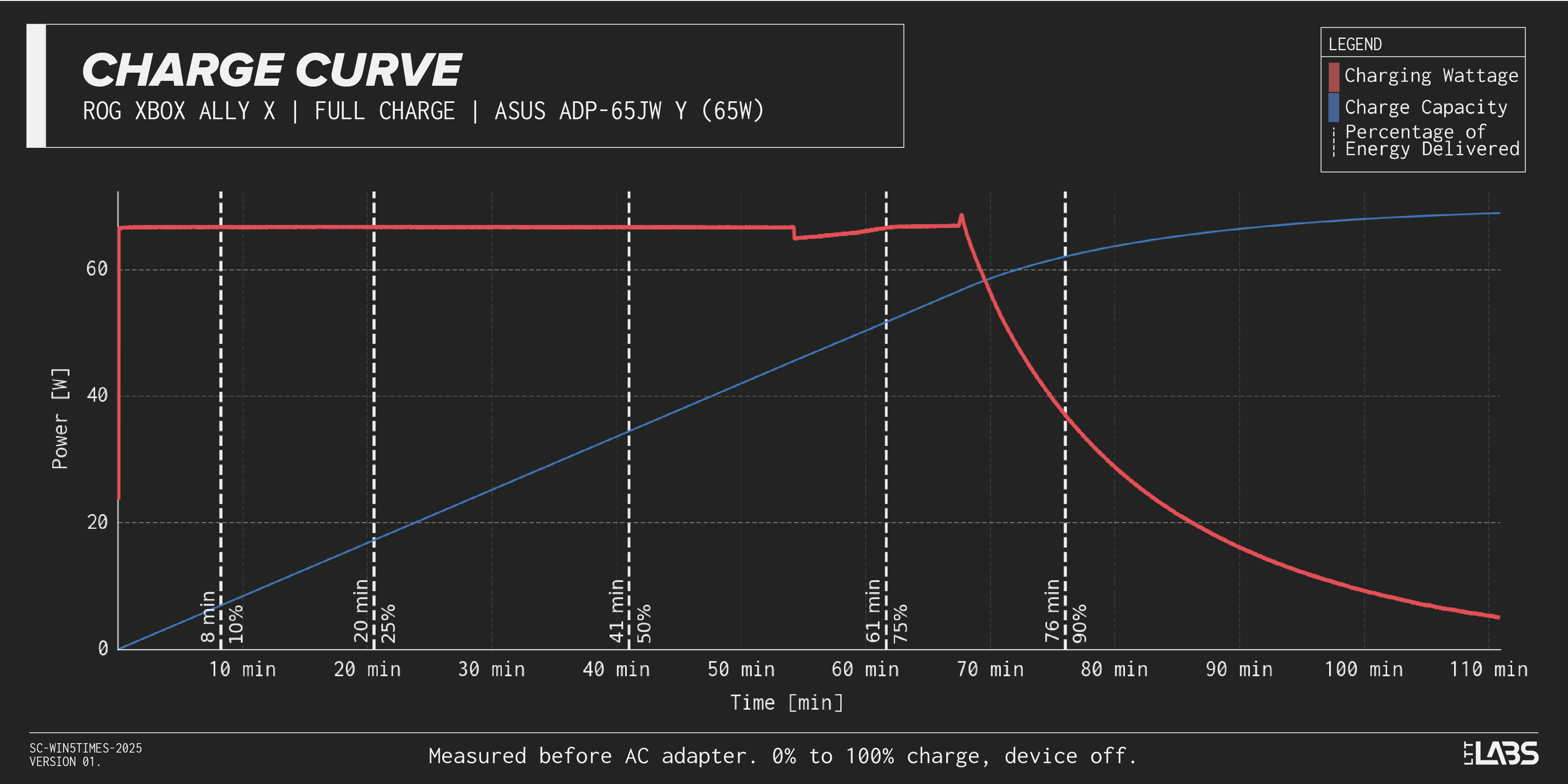
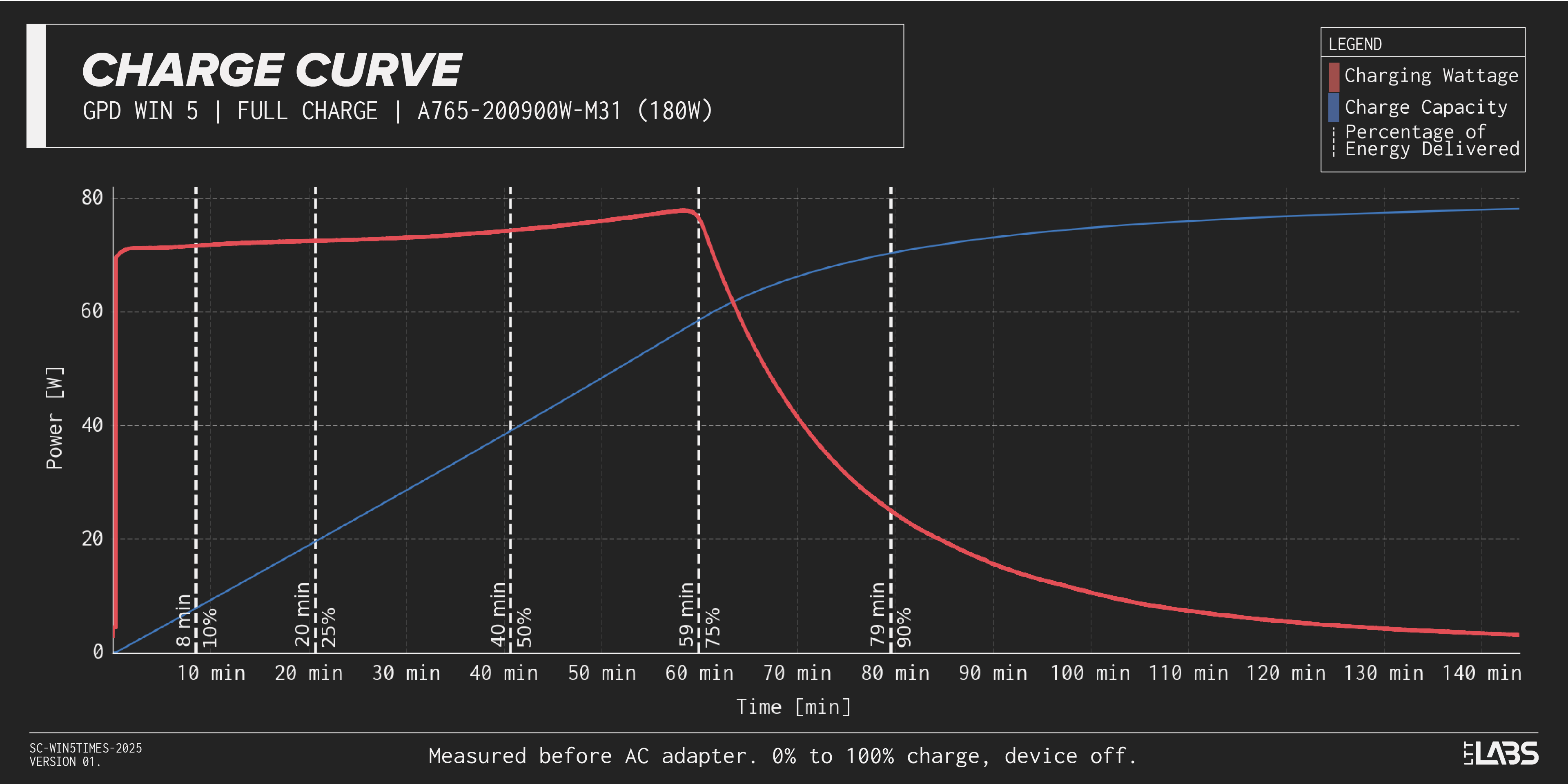
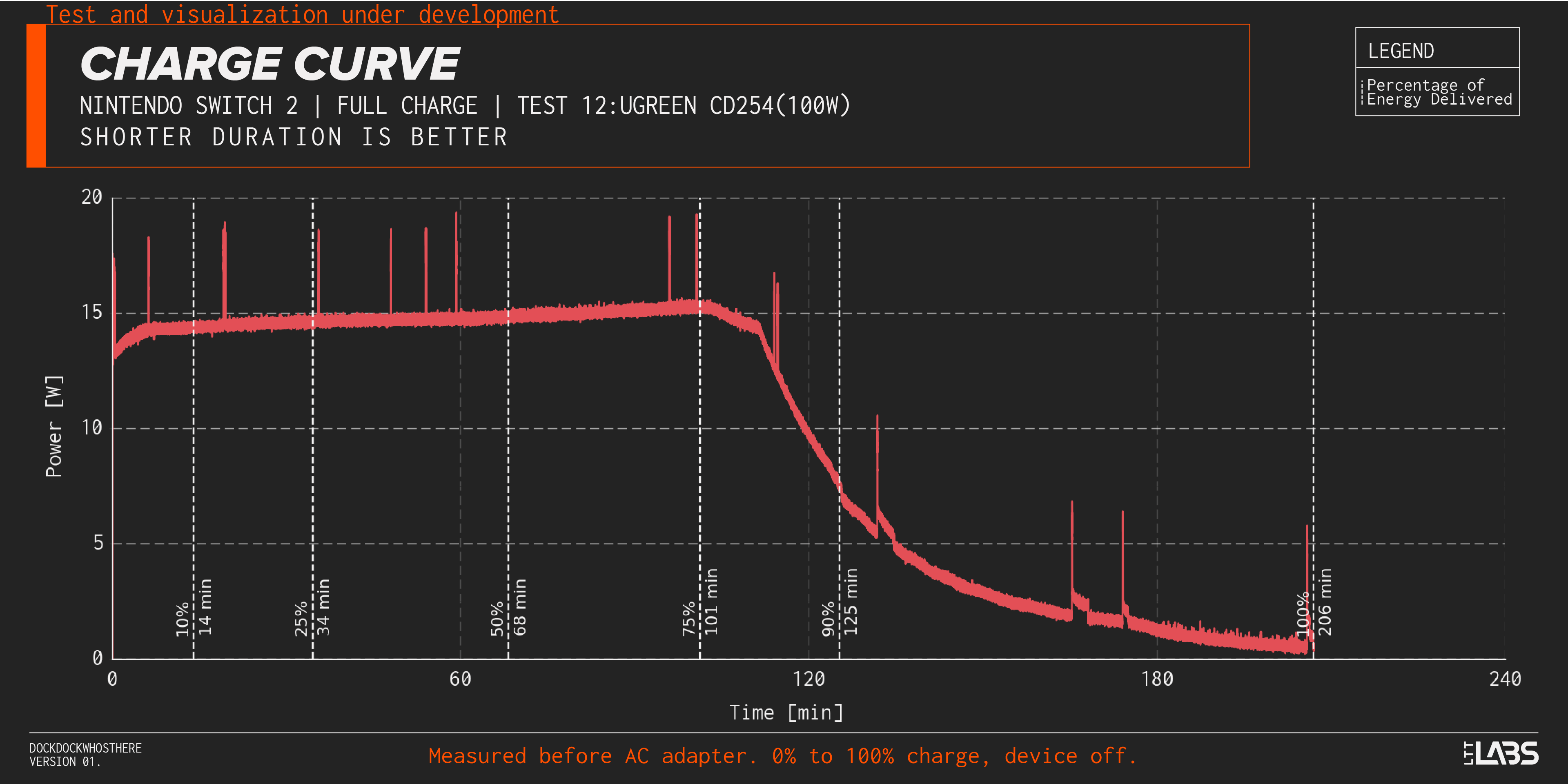
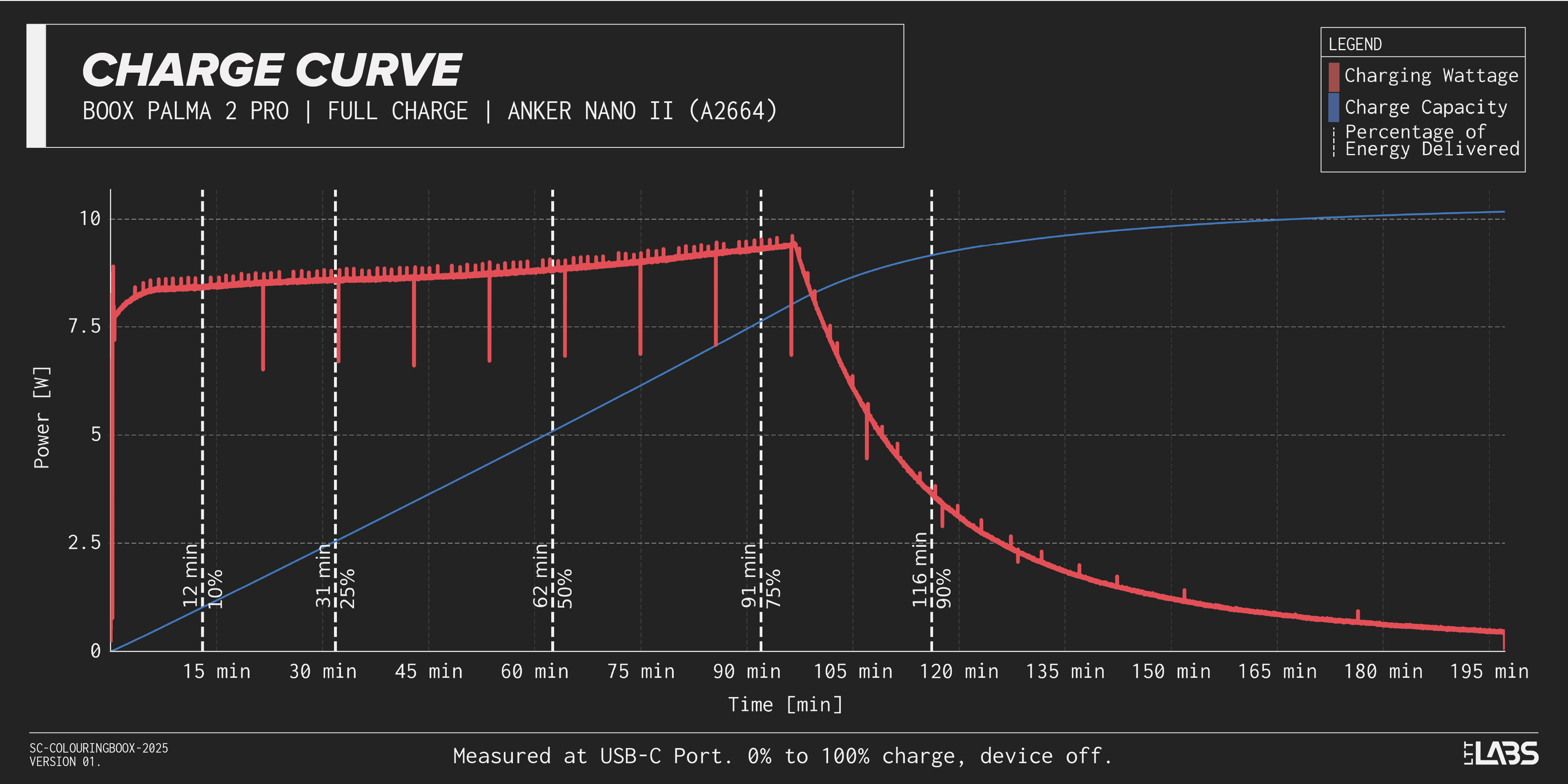
{{slide}}Charge Curve - ROG Xbox Ally X{{/slide}} {{slide}}Charge Curve - GPD Win 5{{/slide}} {{slide}}Charge Curve - Nintendo Switch 2{{/slide}} {{slide}}Charge Curve - Boox Palma 2 Pro{{/slide}}
These stages can also be seen with other devices and mobile phones, but phones often do additional 'micro-managing' of the power delivery to find other optimizations.
REDMAGIC 11 Pro
One of the more notable charge curves is of the REDMAGIC 11 Pro which was able to charge its 7500 mAh battery in under 60 minutes, reaching 50% charge in only 21 minutes. This is done by briefly achieving the aforementioned 80 W charging at low percentages, and staying above 40 W for a large portion of the charge. It is impressive to have over double the battery capacity of the iPhone 16 Pro and maintain the ability to reach 50% charge in roughly 20 minutes.
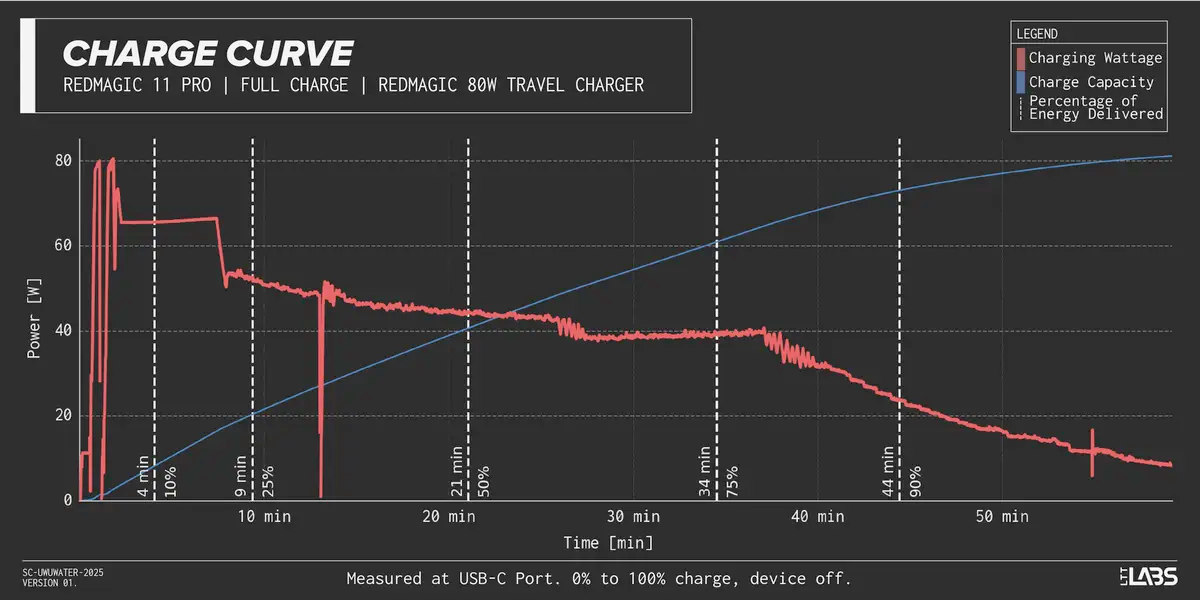
This device advertises their 80 W charging, but as we can see, that really is only applied for a short period before stepping down to a lower level. It is still incredibly quick, but less than you might imagine when hearing that the device is capable of 80 W charging.
Apple iPhones, Google Pixels, and the Like
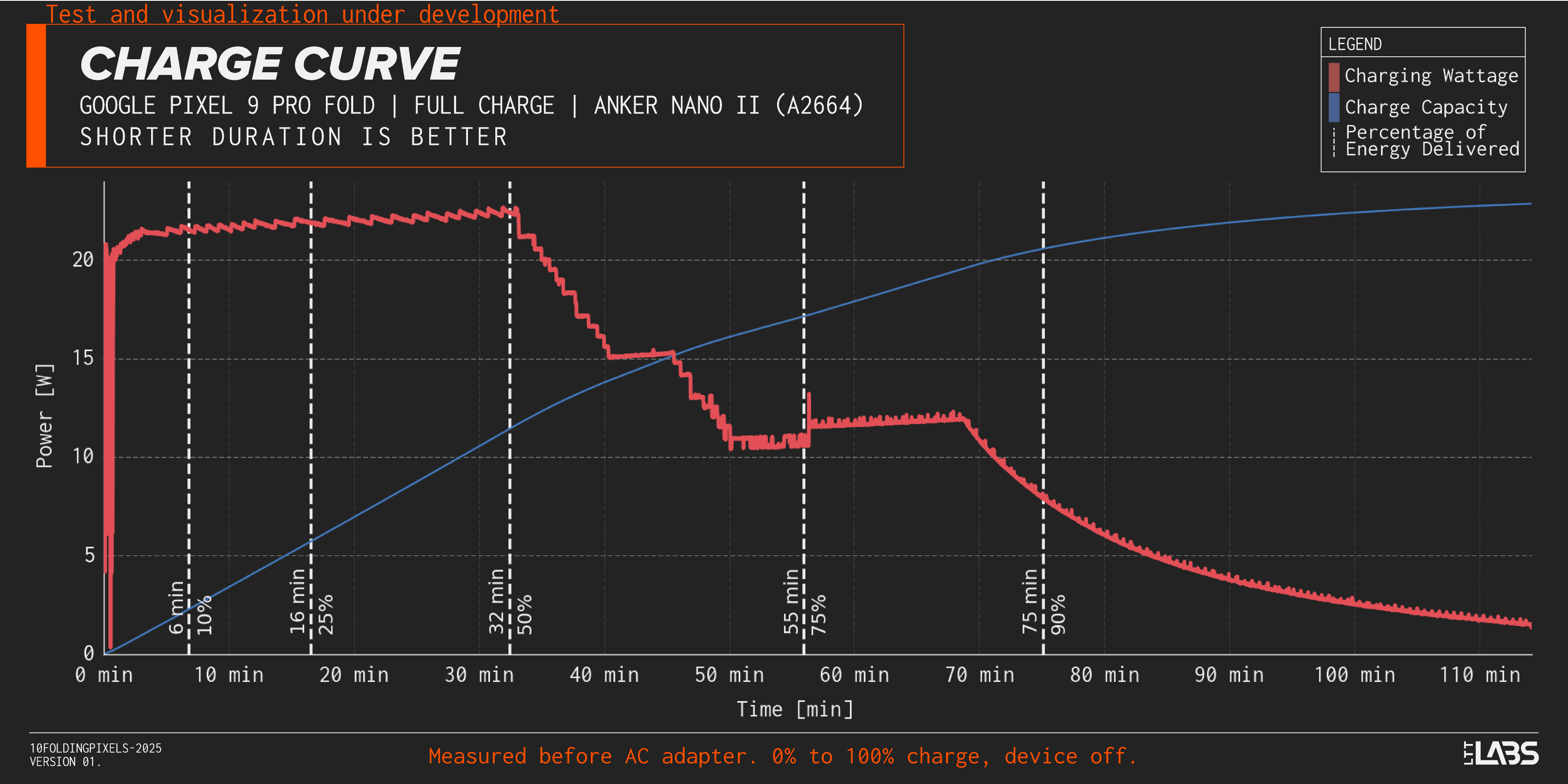
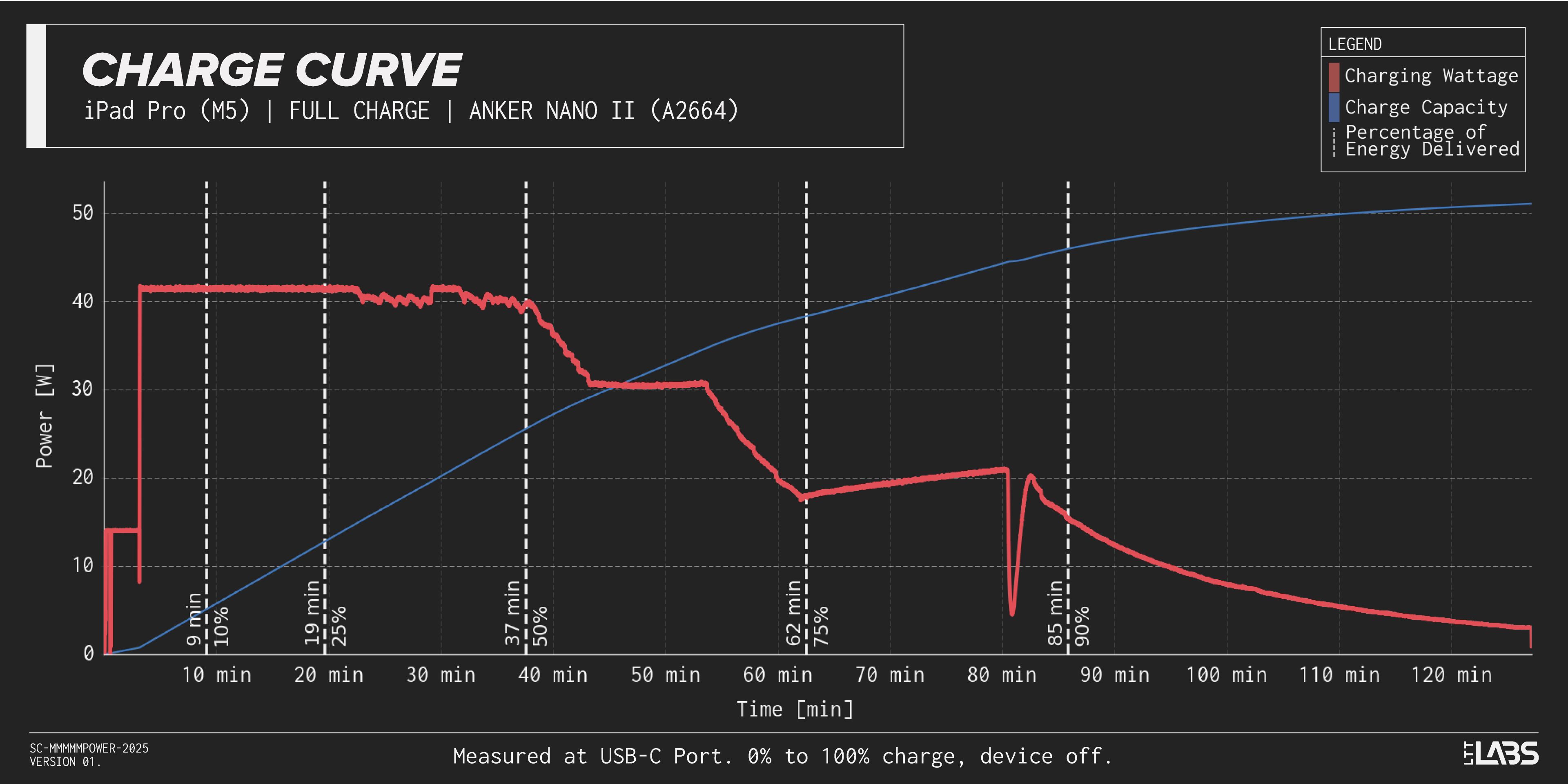
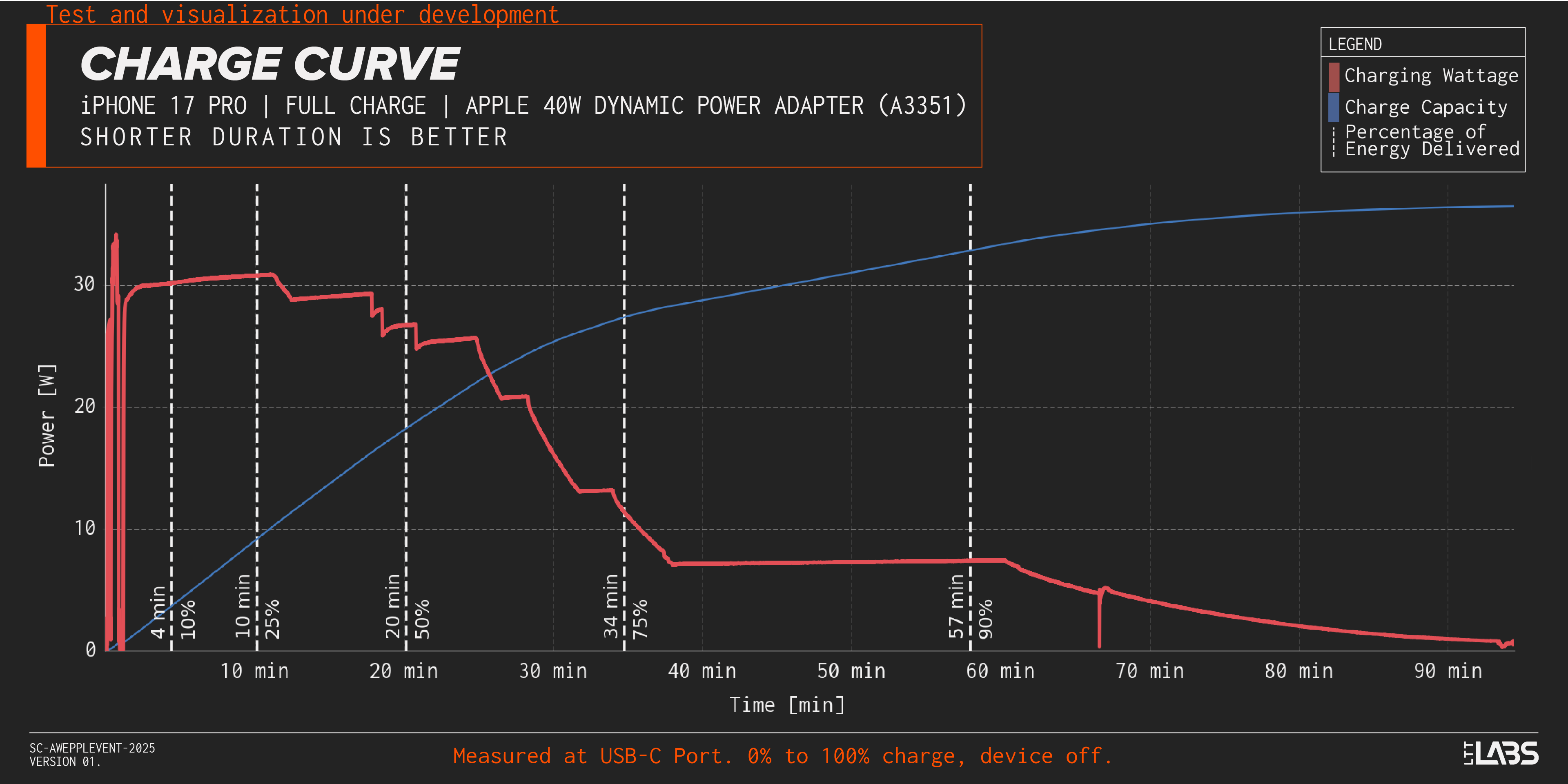
Phones and devices that want to enable quick charging for emergency low battery scenarios while also preserving the overall health of the cells will implement more complex charge curves as shown below.
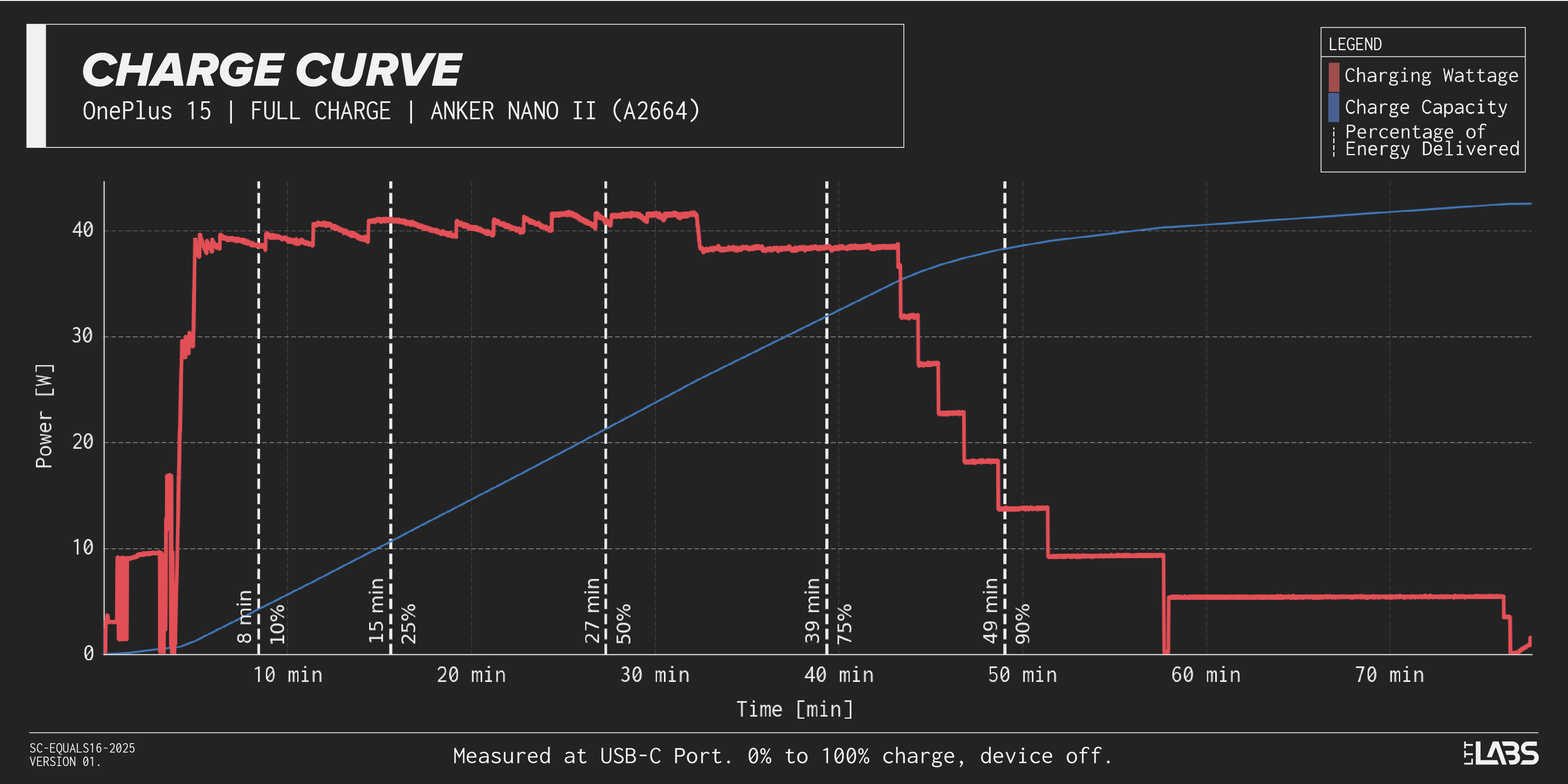
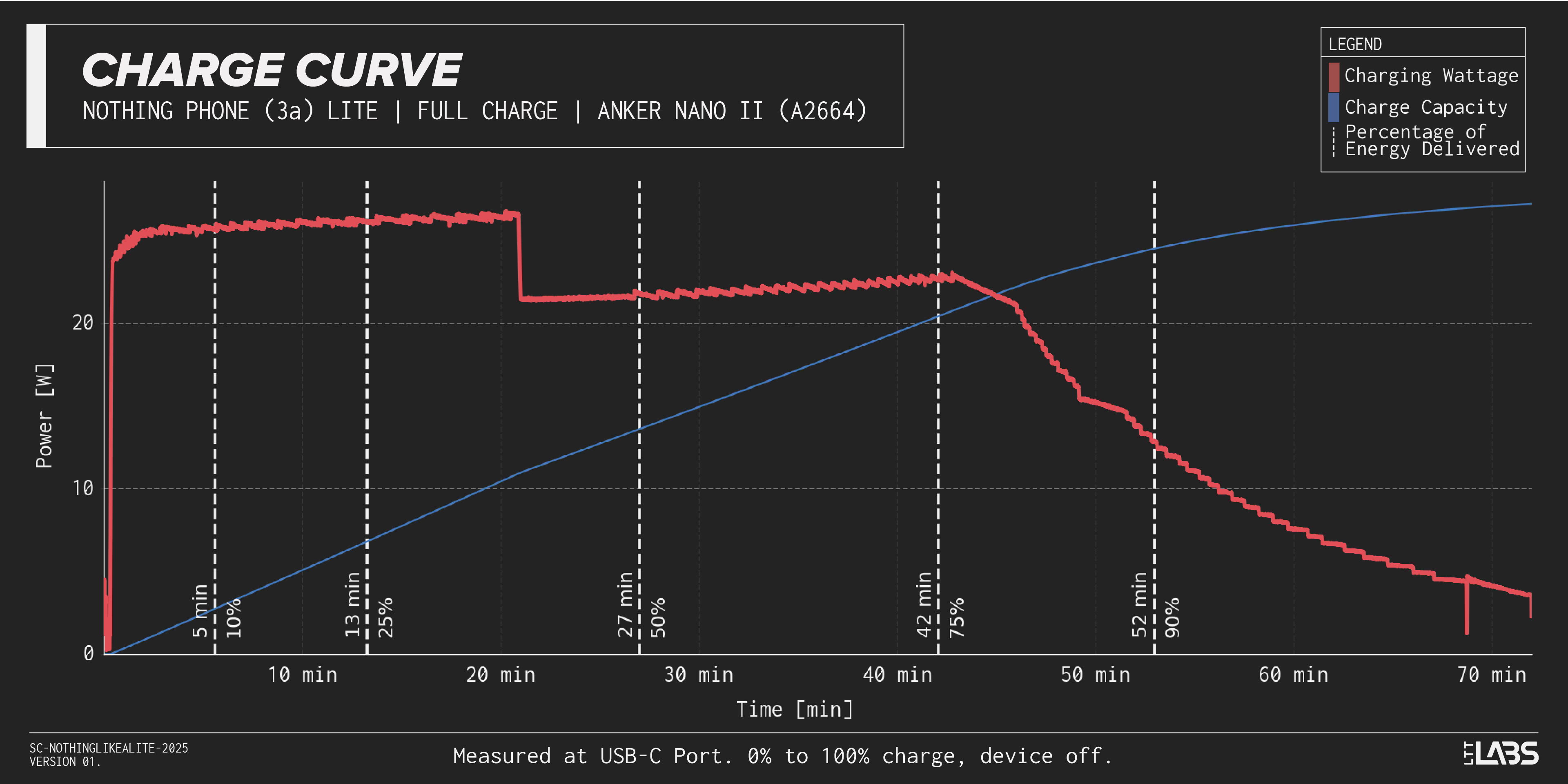
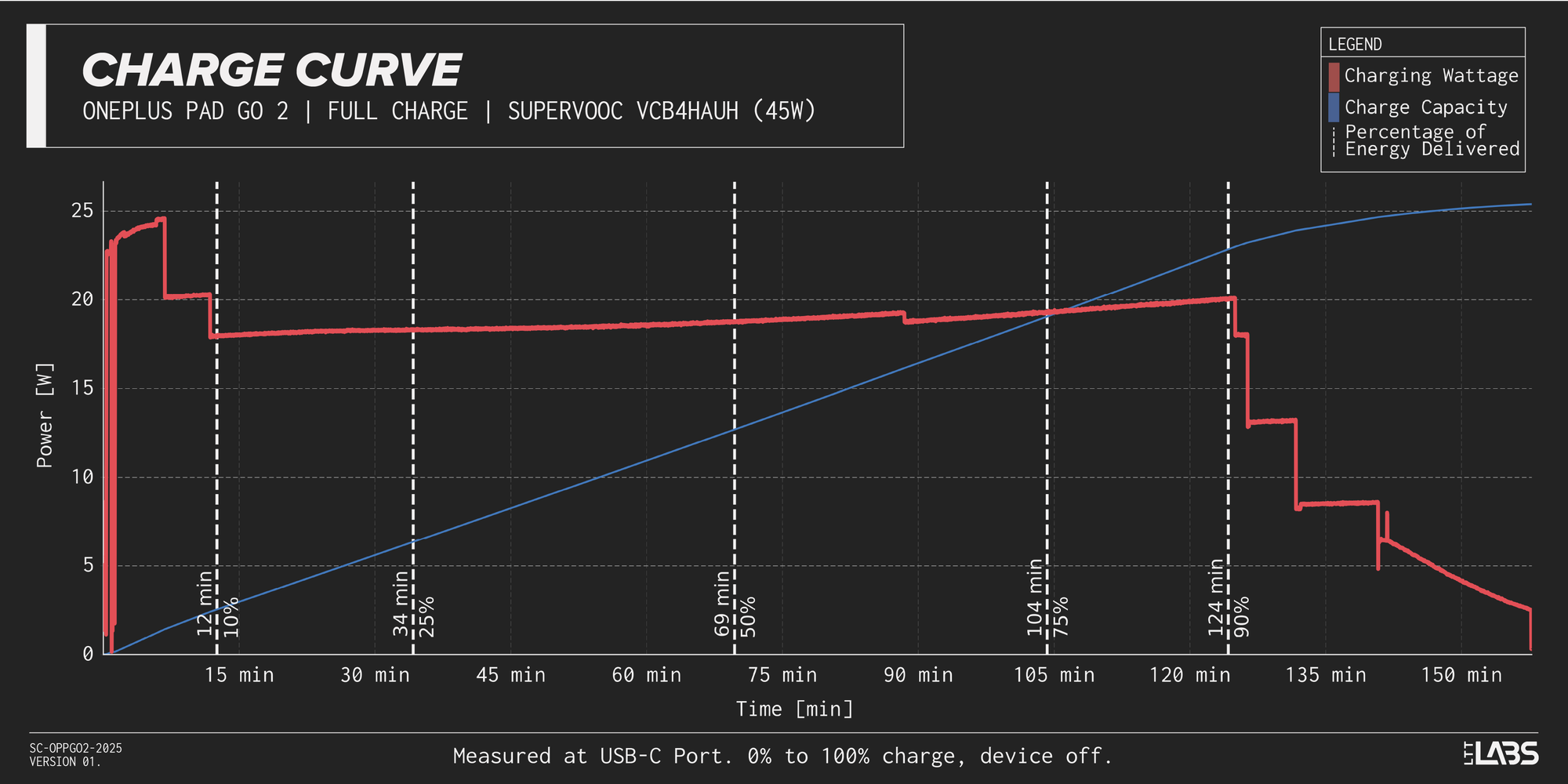
{{slide}}Charge Curve - Google Pixel 9 Pro Fold{{/slide}} {{slide}}Charge Curve - iPad Pro (M5){{/slide}} {{slide}}Charge Curve - iPhone 17 Pro{{/slide}} {{slide}}Charge Curve - OnePlus 15{{/slide}} {{slide}}Charge Curve - Nothing Phone (3a) LTE{{/slide}} {{slide}}Charge Curve - OnePlus Pad Go 2{{/slide}}
These combine the high wattage charging at low percentages with a (sometimes incredibly long) taper as the device approaches a complete charge. In the iPhone charge curves above, the charge rate slows drastically by the time roughly 80% of the energy has been delivered to the battery.
The material scientists, engineers, and developers at these manufacturers have spent countless hours optimizing for the best experience while preserving battery health. Some will say that manufacturers intentionally harm your battery and performance so that you purchase a new phone, but manufacturers are also incentivized to keep the used market prices high and avoid a reputation of their batteries only lasting a year.
Charger/Power Adapter
With the advancement of phone charging wattages we've seen included chargers follow the same wattage escalation, culminating in just not being included in the box at all. Most companies now assume that you already have a good/powerful charger so they exclude the charger to save money the environment.This means that you are on your own to buy one. Thankfully chargers are getting really good now and you often can't go wrong even when buying one sold by a furniture company. There are some important things to keep in mind while figuring out what is best for you.
Charger Considerations
Capacity
Despite some of the marketing, a 20-30 W charger is sufficient to support the fast charging of most modern phones, even some slightly lower wattage chargers won't hold you back. To future proof yourself and have some capability with larger devices, I would suggest a 40-45 W charger. If it is used to regularly charge your laptop then a 60-100 W charger will really speed up the process. I will also note that you can do no harm by using a higher wattage charger on a device rated for only lower wattages. Power is ‘pulled’ by the device and not ‘pushed’ by the charger, so the phone/device will only request the power that it can handle. They now make chargers that can output 240 W for a single device, and these can be used with any lower powered device.
Compatibility/USB-C PD Spec
As USB-C PD is relatively new and emerging, there are some modes and capabilities that aren't supported by all chargers. Some chargers have the ability to update their firmware, but they're usually stuck with the version they come with. As of December 2025, you should be looking for a charger that supports USB-C PD 3.1. These updates to the USB-C PD specification usually provide support for higher wattages and more efficient charging through optimization of the voltage and current balance.Multi-port chargers will also come with a graphic/map showing how the wattage can be split between devices. Make sure that this is compatible with your use-case.
Reputation
This is not a blanket statement - see Anker recall - but larger, more established companies will typically have more rigorous development and testing of their products. They're more likely to make quality products and provide support if/when they break. They will also have their equipment tested by a certification body like UL, Intertek, or CSA Group. Indicated by markings and a symbol on the equipment.I am a bit of an Apple fan so I have no issues with their offering but I know they have occasional compatibility issues for higher wattages with other devices so brands like Anker and UGREEN provide a variety of form factors and solutions.
Good Choices for Small Devices
As previously mentioned, there are a lot of good chargers available now, so you should be set if you follow the guidance above. Otherwise I’ve listed a couple chargers below that we’ve had success with. There are many other good options but I haven’t tested them and don’t have experience with them so I can’t officially recommend them.
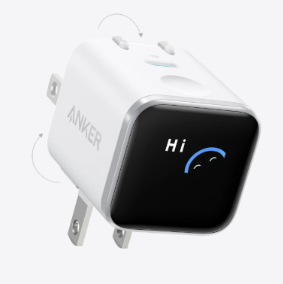
Anker Nano Charger - 45W
- We use the previous version of this for our charge tests, it has had good compatibility with the devices we've tested.
- Very small for the wattage it supports and has folding prongs.
- This new version has a screen for some reason, but more flexibility with the prong rotation.
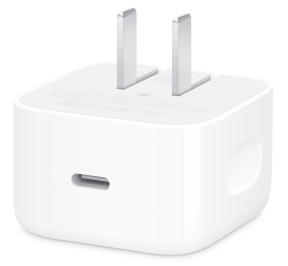
40W Dynamic Power Adapter with 60W Max
- Small size, prongs fold in to make it smaller. Larger than the Anker Nano II 45W but it can boost to higher wattages.
- 60 W 'boost' allows for some faster charging of large devices and despite not sustaining 60 W indefinitely, this is compatible with the charge curves that we've seen above.
50 W Charging Isn’t Necessary, but It Can Be Nice
While {{tooltip:within reason}}any{{/tooltip}} consumer charger will charge your phone, hopefully the above can help you choose one that will meet your needs. The additional information about the device charge profiles might also allow you to optimize your charging patterns. For example, you can relatively easily maximize your ‘away from the wall’ Nintendo Switch 2 playtime by only charging to 80% and then unplugging for more comfortable playing. We'd love to hear if you have any further questions!